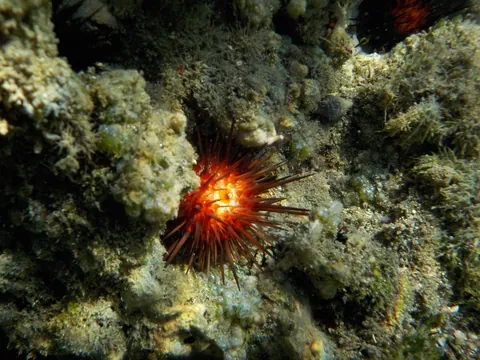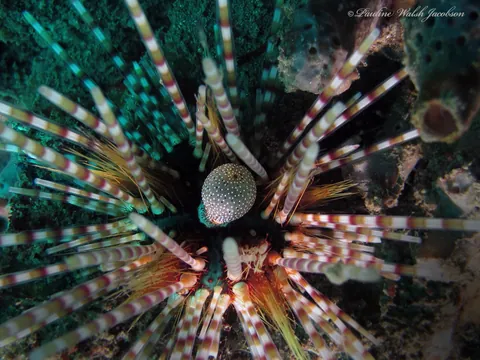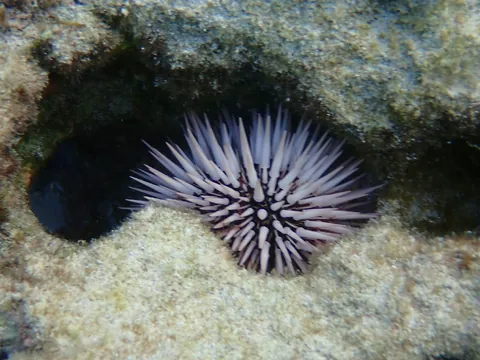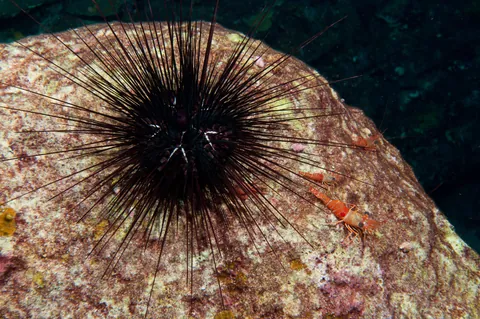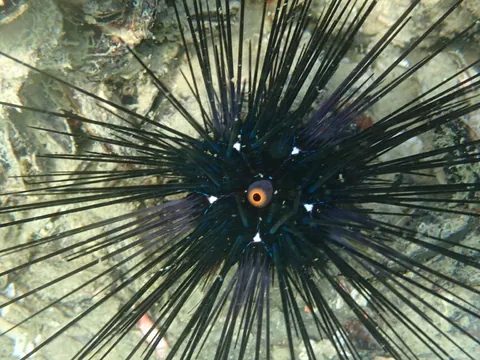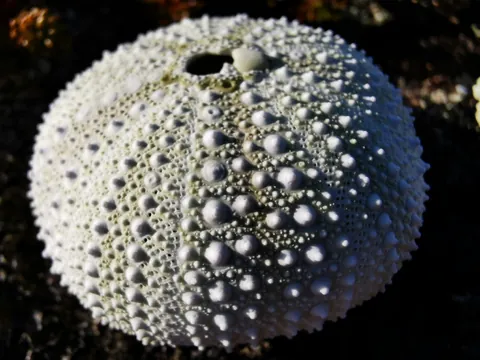
Arctic Green Sea Urchin
Strongylocentrotus droebachiensis
Lytechinus variegatus
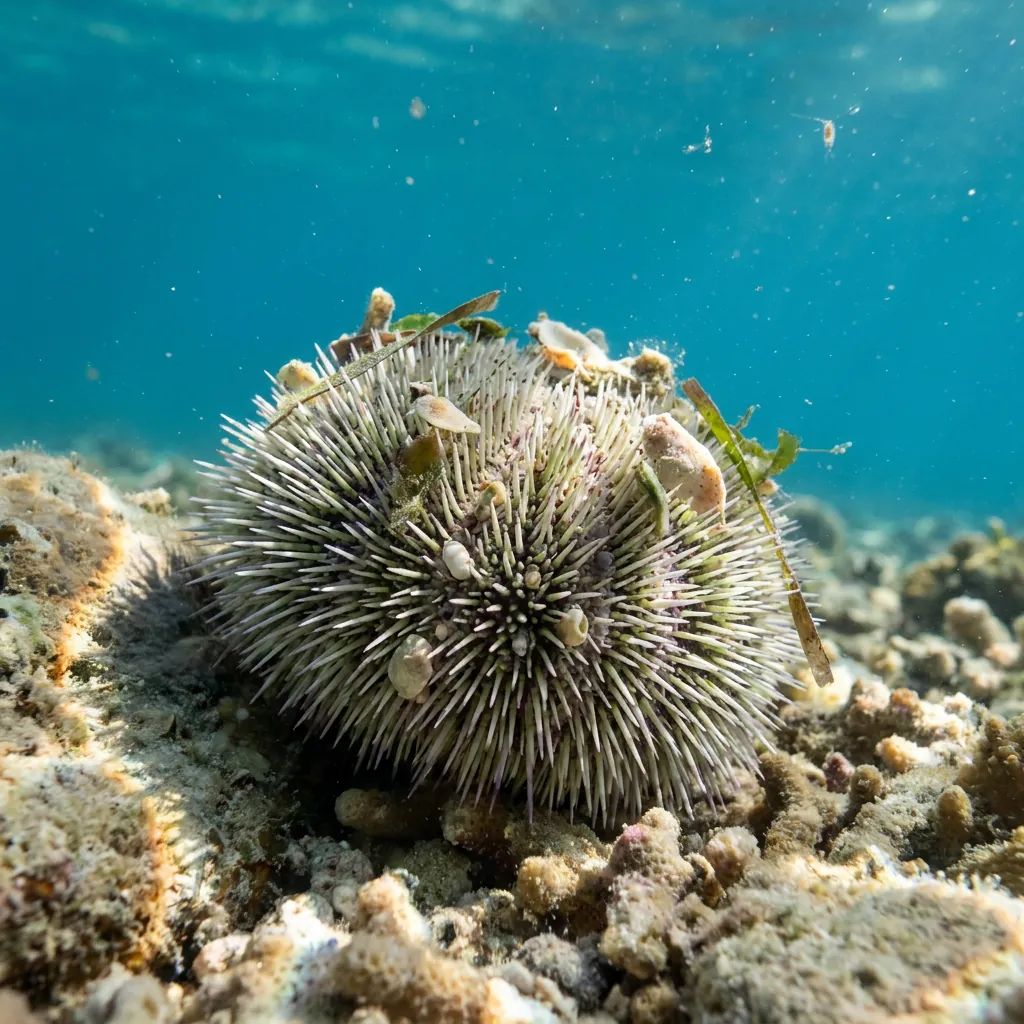
The variegated sea urchin is a colourful, spine-covered grazer of Caribbean seagrass beds and reefs, growing up to about 11 cm across, that often disguises itself under a layer of debris.
Also known as: variable sea urchin, green sea urchin
It looks much like the related Lytechinus williamsi, but the small pincer-like structures between its spines are white, where williamsi's are purple.
This urchin has a rounded, spine-covered test that can be purple, green, or dull red, often blotched with white. Most spines are short, with a few longer ones standing out. Colour can even differ between the base and tip of a single spine. Green test paired with green or white spines is the most common look in the Caribbean. Between the spines sit small white pincer-like structures called pedicellariae.
It lives in warm western Atlantic and Caribbean waters, from southern Florida and the Yucatan to northern Brazil, down to about 50 m. It favours seagrass meadows, especially turtle grass beds, along with rocky reefs, sandy or muddy bottoms, and lagoons near mangrove cays, sometimes gathering in dense numbers.
This urchin often covers its upper surface with bits of algae, seagrass, and shell, held in place with its tube feet. This may protect it from strong sunlight in the shallow, clear water it prefers, and it also helps the urchin stay put when waves surge. It grazes mainly on seagrass, using a five-toothed mouth part called an Aristotle's lantern. Its tube feet and spines also help it catch and hold passing scraps of food.
This species is split into four subspecies. One of them is known only from fossils and no longer exists, while the other three still live across the Caribbean and western Atlantic today.
Describe what you saw and we name it, then keep every species you find in your Oceandex.