Frogfish
frogfish
Antennatus tuberosus
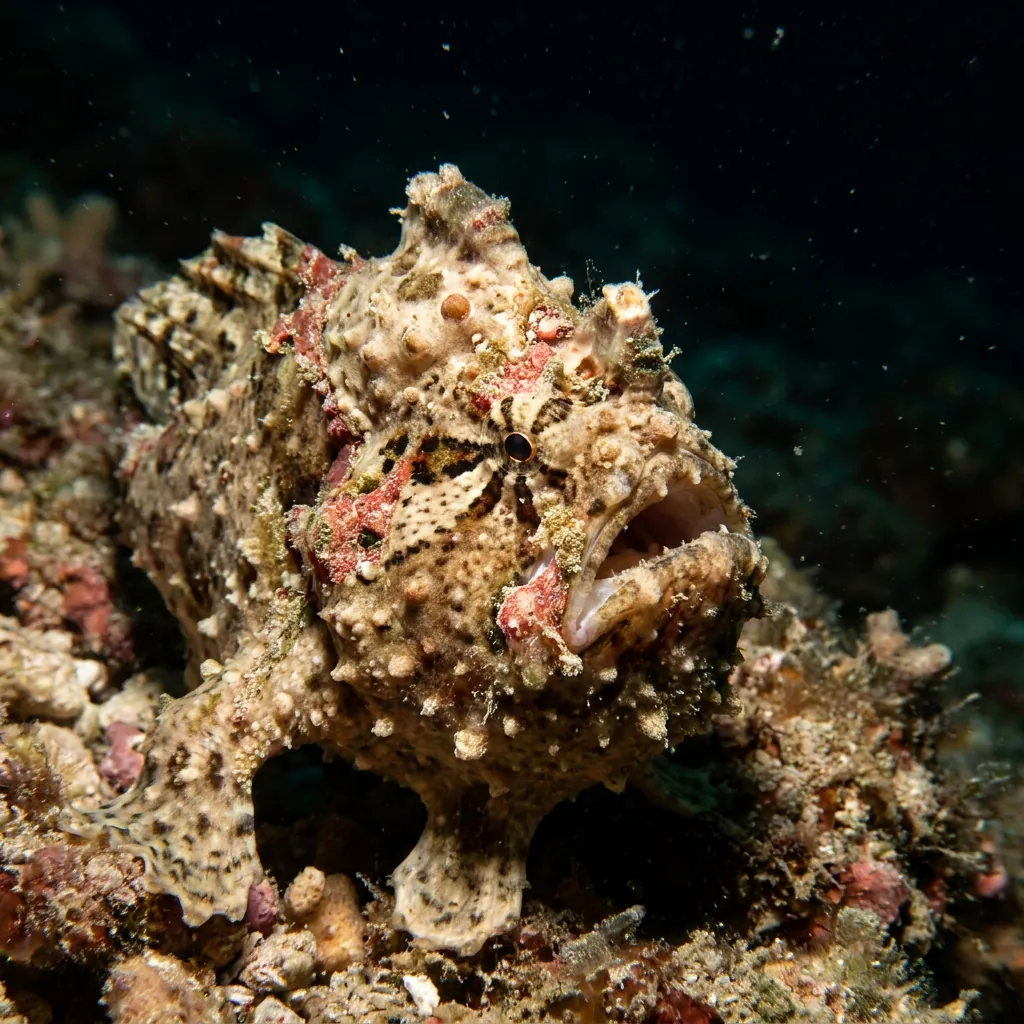
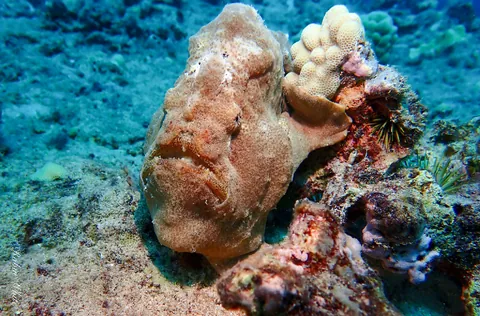
The tuberculate anglerfish is a small ambush hunter that would rather look like a lump of coral than swim. It spends its life sitting still, waiting for a meal to come to it.
Also known as: tuberculated anglerfish, reticulated frogfish
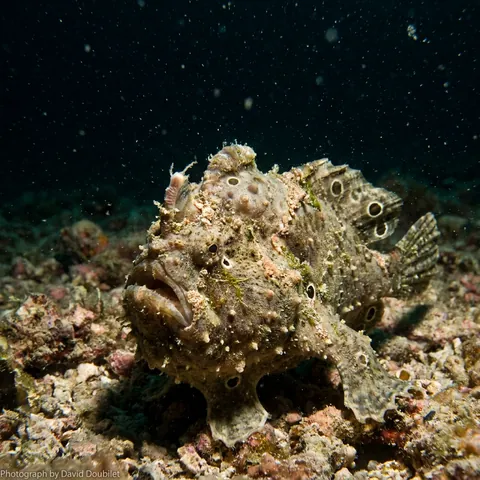
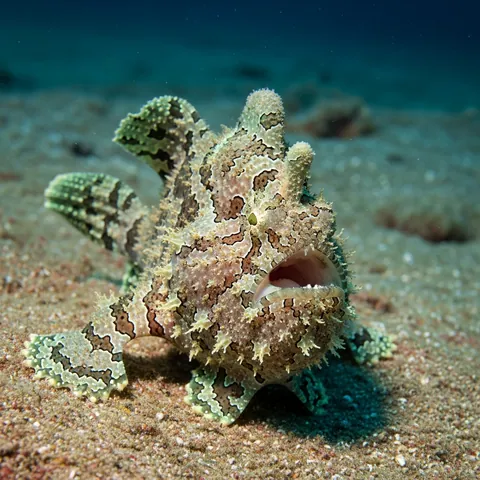
Small reef anglerfish of this type are easy to confuse with each other and with lumps of coral. The dark brown band across the anal and tail fins, with darker margins, is the mark to look for and holds even when the body colour changes.
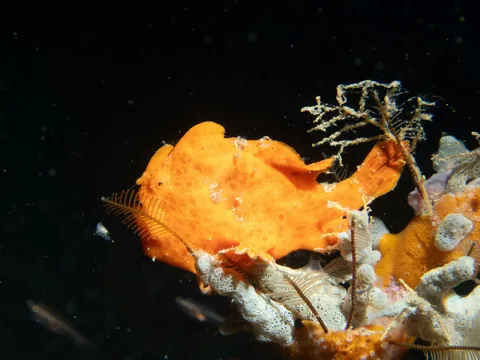
This is a squat, lumpy little fish with no scales and no narrow tail section behind its body. Its skin is thick and covered in small dense bumps, and a row of larger bumps runs above the eye and along the back. Colour varies from cream or yellow to slate grey, broken up by dark brown mottling and marbling, with a whitish crusty-looking pattern on the face. The anal fin and tail fin carry an obvious dark brown band with darker edges. On its snout it carries a long fishing-rod spine tipped with a lure, used to draw prey toward its large mouth. Its pectoral fins work like little limbs, bending at an elbow-like joint so the fish can walk over the reef.
It lives on inshore coral reefs across the Indian and Pacific Oceans, from East Africa to Hawaii and the Pitcairn Islands. Divers usually find it in the top 10 m, sitting motionless among the branches of hard corals, though it can occur as deep as 73 m.
This is an ambush predator. It stays camouflaged against the reef and twitches its lure to draw fish within range before snapping them up with a sudden lunge. It is a solitary species, usually found alone rather than in groups. Females lay their eggs in a floating ribbon of jelly-like mucus called an egg raft.
Describe what you saw and we name it, then keep every species you find in your Oceandex.