Frogfish
frogfish
Antennarius commerson
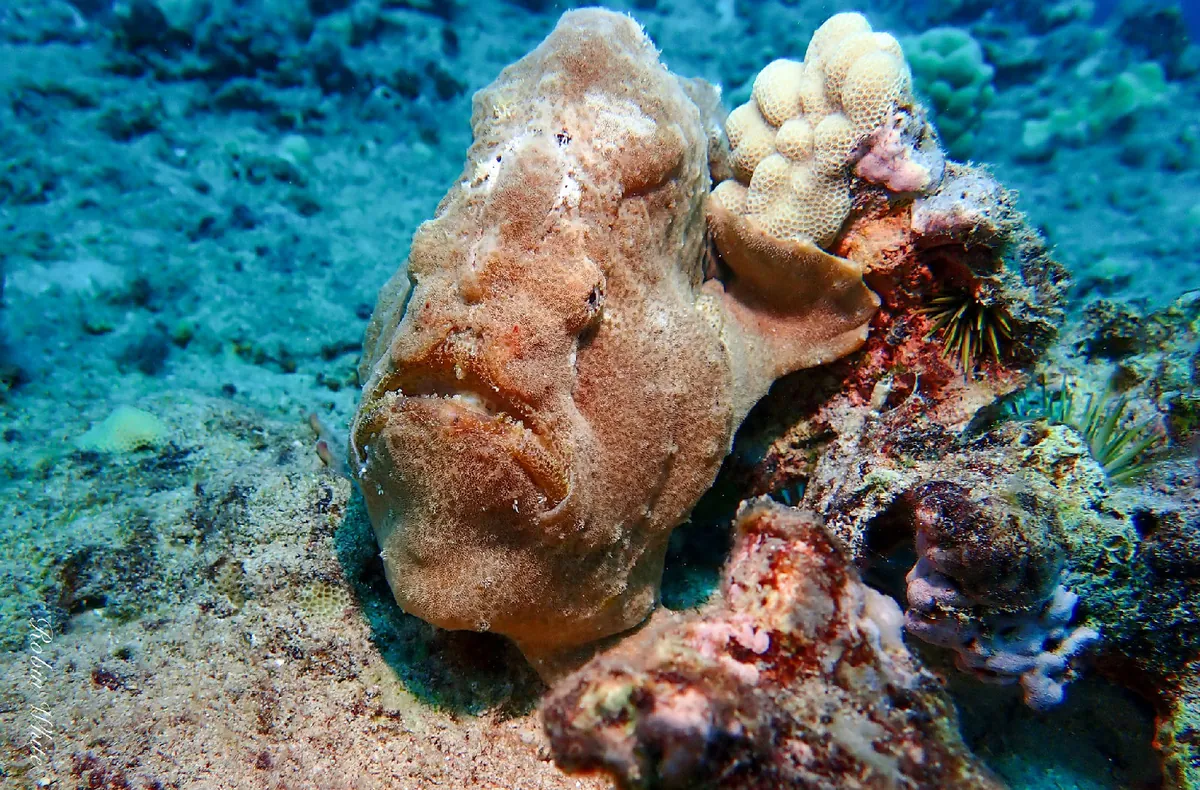
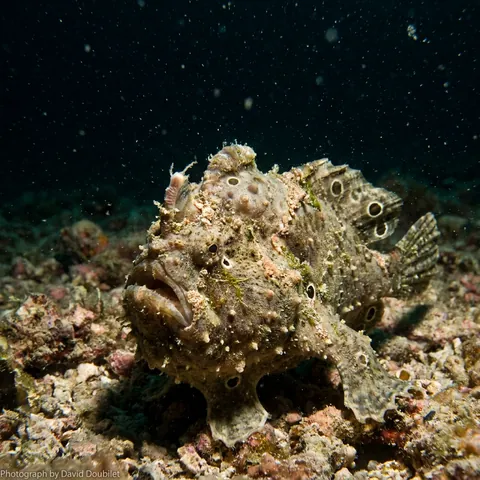
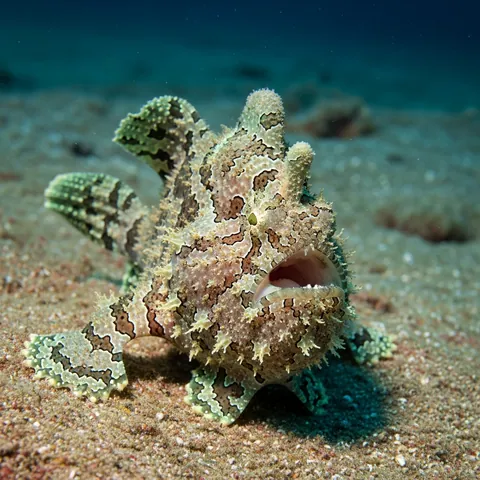
The giant frogfish is one of the largest members of the frogfish family, an ambush hunter shaped more like a lump of coral or sponge than a fish. It sits motionless on the reef, relying on expert camouflage to disappear into its surroundings.
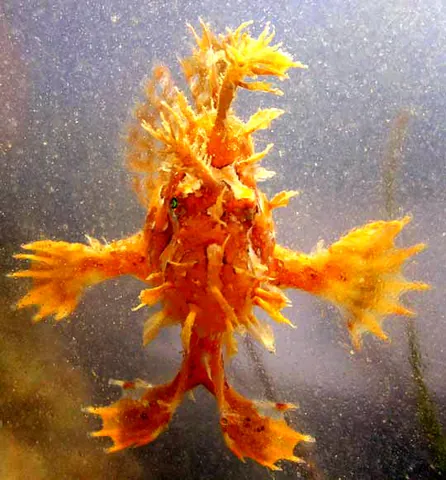
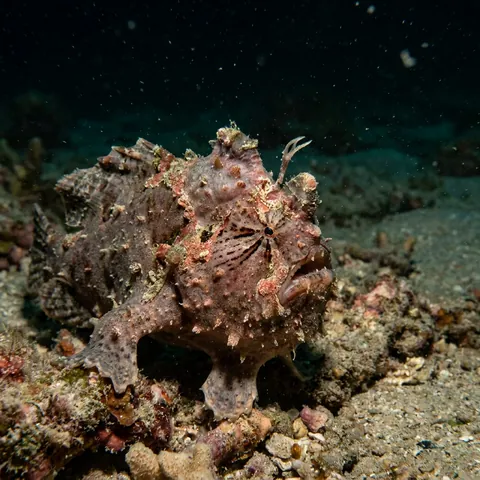
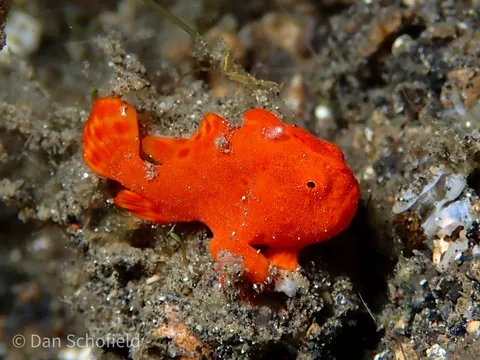
Small giant frogfish look almost identical to the painted frogfish and the clown frogfish, which share the same reefs. The clearest clue is size. Painted and clown frogfish stay small, but the giant frogfish keeps growing well past that. A notably large frogfish on the reef is most likely this species.
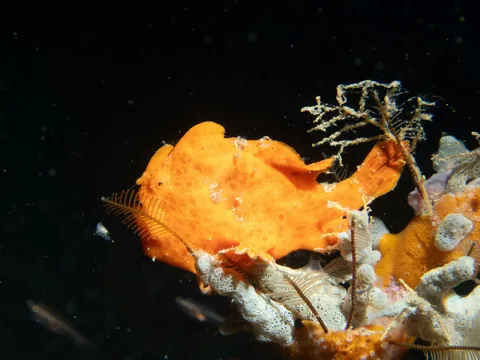
The giant frogfish has a rounded, stretchy body that can reach 45 cm long. Its soft skin is covered in small spiky bumps, wart-like lumps, and scab-like blotches, plus a scatter of small eye-like spots that look like the holes in a sponge. Its large mouth points forward and upward, letting it swallow prey almost its own size. Colour is highly changeable: over a few weeks it can shift between grey, black, cream, pink, yellow, red, and brown, usually keeping darker circular blotches against the background shade.
This frogfish lives on coral and rocky reefs and in lagoons across the tropical Indo-Pacific. It is often found sitting on large sponges, underwater ropes, or jetty pilings, from the shallows down to about 70 metres, though it is most common around 20 metres.
The giant frogfish is a solitary ambush predator that stays still on the reef bottom and attacks any small fish that ventures close, sometimes even others of its own kind. It comes together with another only to mate; afterward the pair no longer tolerates each other, and the female may kill and eat the male if he lingers nearby.
The giant frogfish was first named in 1798, as Lophius commerson, by the French naturalist Bernard Germain de Lacepede, based on a specimen from Mauritius.
Describe what you saw and we name it, then keep every species you find in your Oceandex.