Frogfish
frogfish
Antennarius pictus
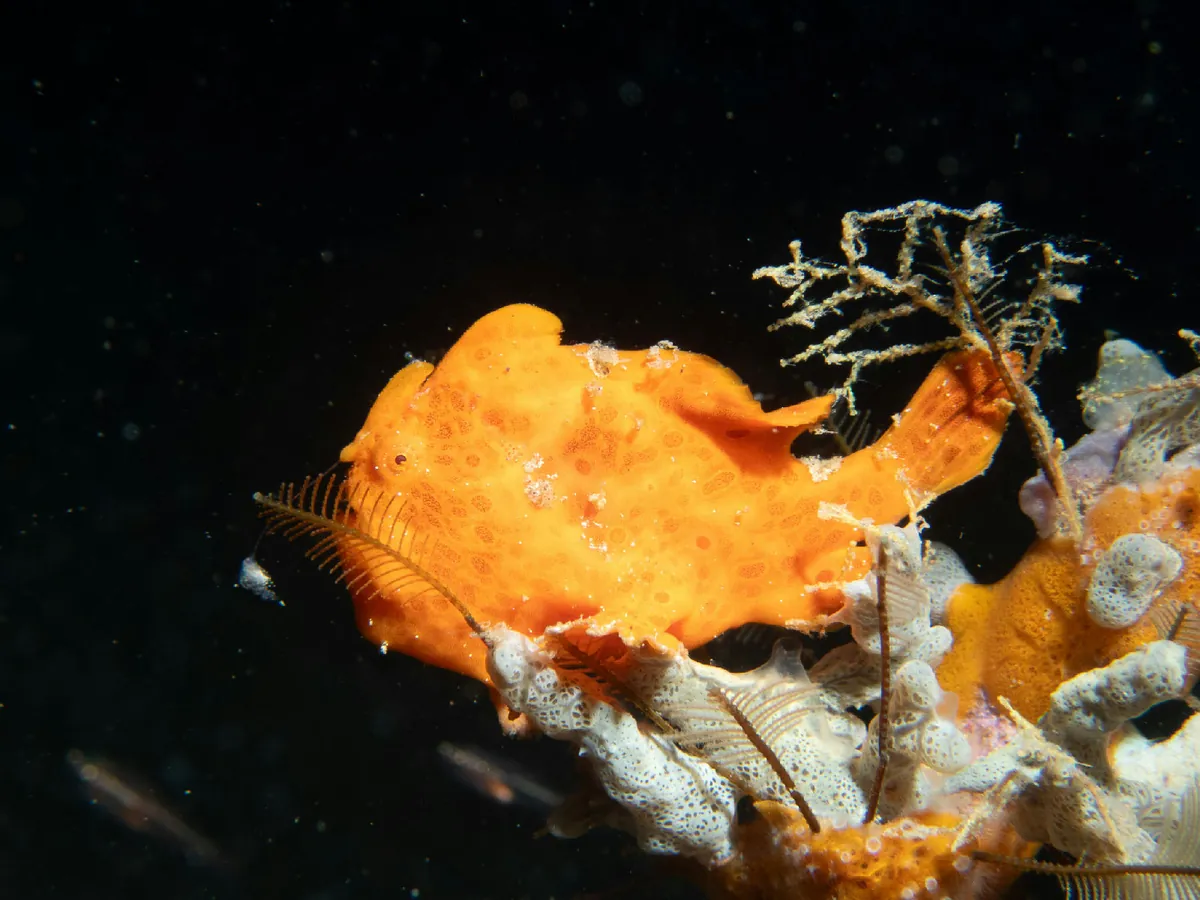
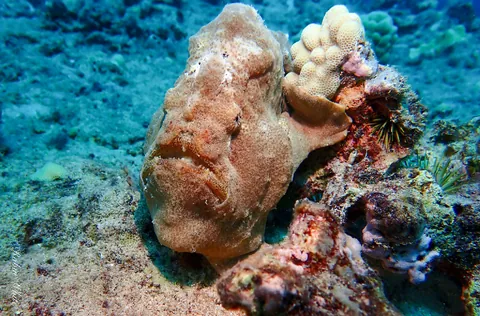
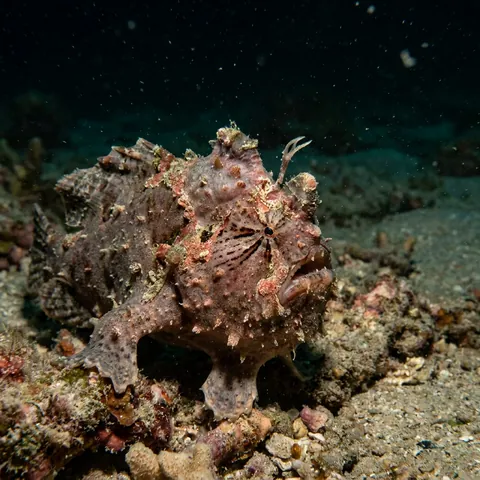
The painted frogfish is a chunky ambush predator that looks more like a colourful sponge or coral lump than a fish. It sits motionless on the reef and lures prey close with a built-in fishing rod on its head.
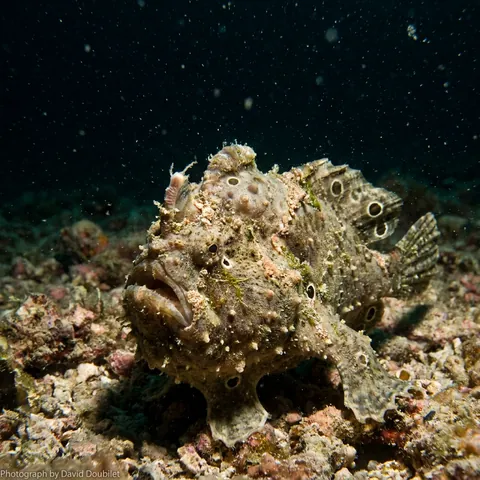
The painted frogfish is often confused with the clown frogfish (Antennarius maculatus). Check the tail fin: the painted frogfish has three eye-like spots there, while the clown frogfish instead shows red or orange edges along all of its fins.
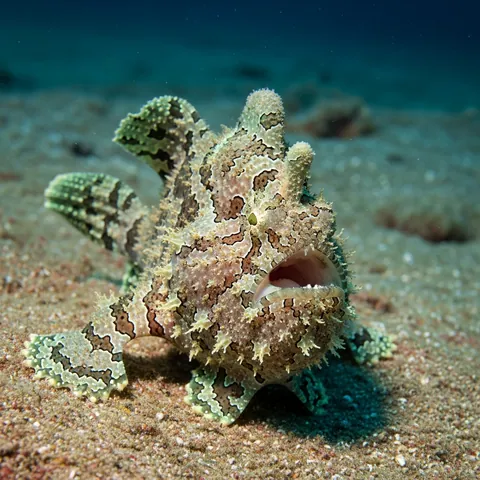
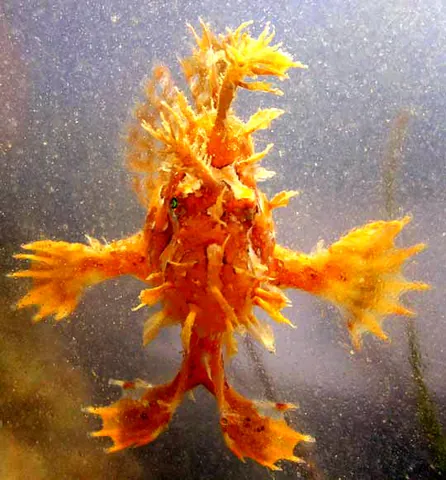
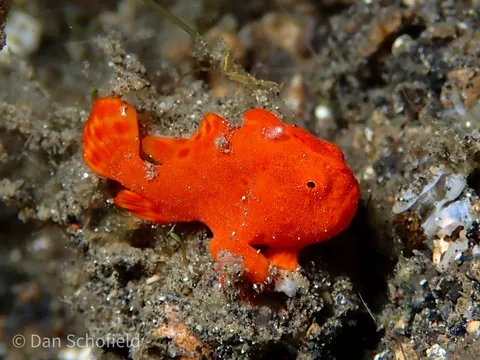
This frogfish has a round, stretchy body covered in small spiky bumps and wart-like lumps, with scab-like blotches and many small eye-like spots resembling holes in a sponge. Its mouth is large and can take in prey close to its own size. Colour ranges from white to black, through cream, pink, yellow, red, and brown, usually with darker circular spots, saddle-shaped patches, or blotches. Juveniles often have a dark background dotted with small yellow spots.
The painted frogfish lives across the tropical and subtropical Indo-Pacific, from the Red Sea and East Africa to Hawaii, and from southern Korea and Japan south to Western Australia. It favours sheltered rocky and coral reefs, and adults usually sit on or near sponges down to about 75 metres, most often near 16 metres. Juveniles can be found more openly on sand or reef, where their shape and colour mimic small sponges or sea slugs (nudibranchs).
This is a solitary, well-camouflaged ambush hunter that grabs any small animal, mostly fish, that strays within reach; its prey can be nearly its own size. It can change its skin colour to match its surroundings and prefers to stay near colourful sponges. Pairs meet only to mate, and afterward no longer tolerate each other - the male may kill and eat the female if she does not move away. Eggs are laid together in a jelly-like floating raft.
The lure at the tip of this frogfish's rod-like first fin spine is shaped and coloured like a small pinkish-brown fish, a built-in decoy used to draw real prey within striking range.
Describe what you saw and we name it, then keep every species you find in your Oceandex.