Frogfish
frogfish
Antennarius multiocellatus
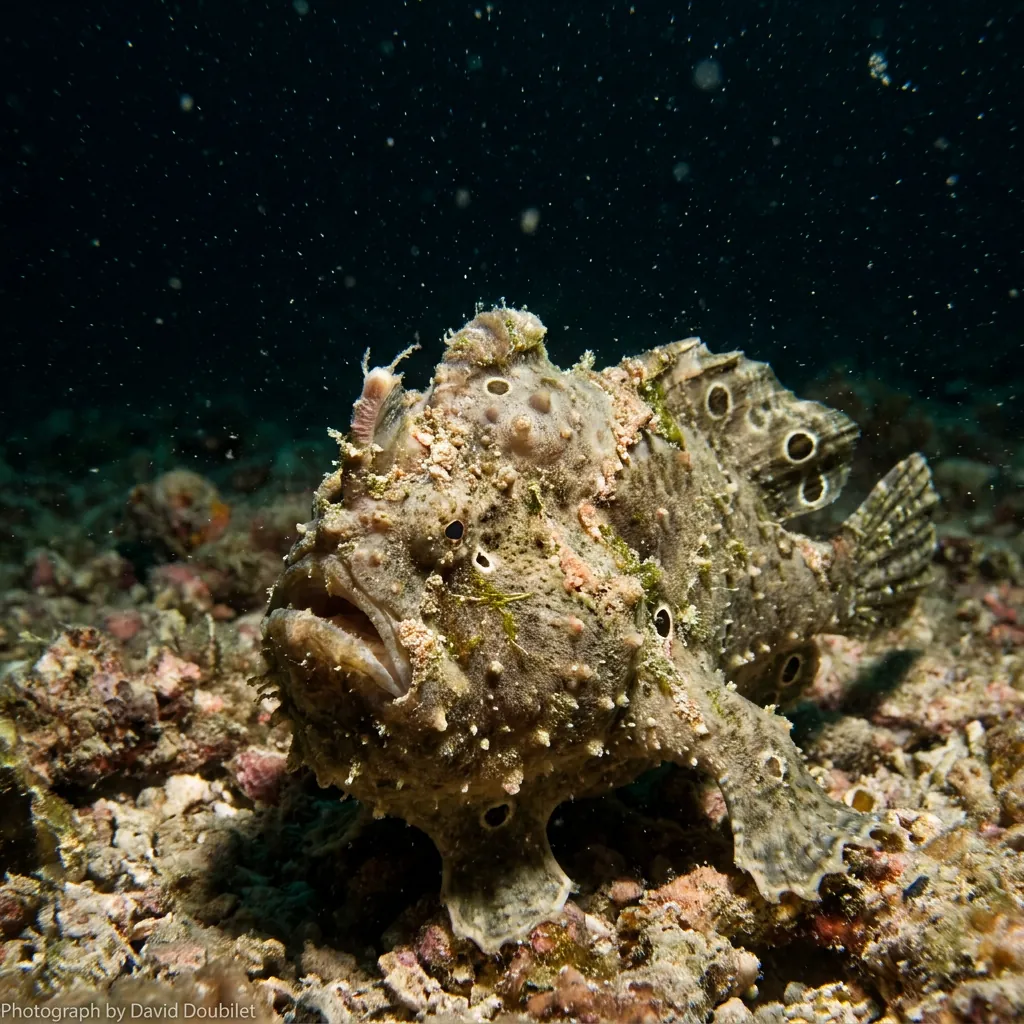
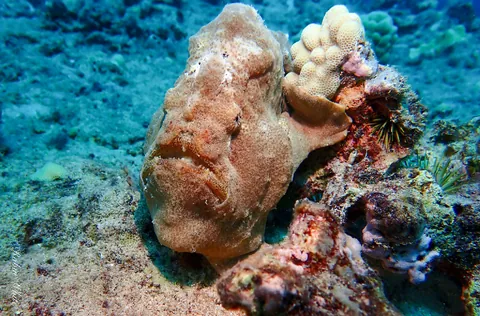
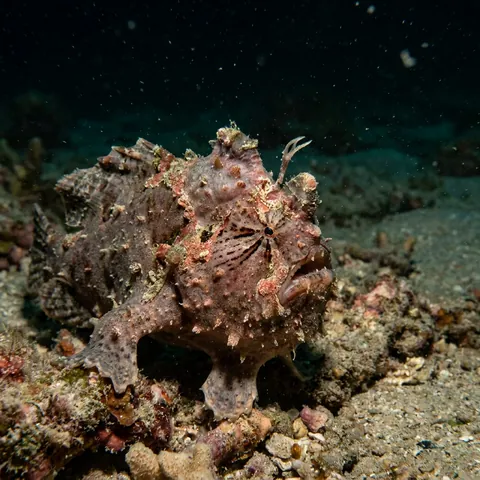
The longlure frogfish looks more like a lump of sponge than a fish, and that is exactly the point: it sits motionless on a reef, wiggling a tiny fishing lure to draw prey within striking range.
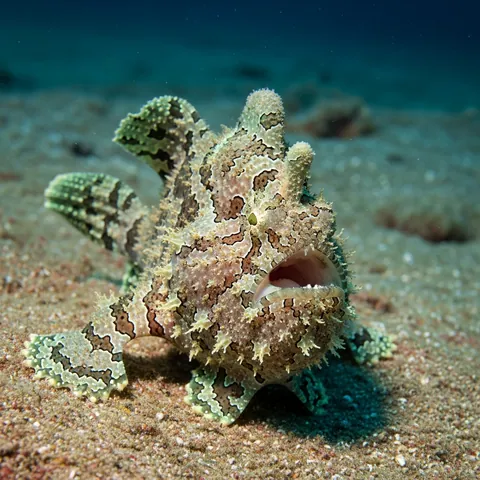
Many reef fish use camouflage, but this species is given away by its stalked, leg-like pectoral fins and its round, sponge-like shape. The lure on its head, when visible, confirms it as a frogfish rather than a true sponge or other camouflaged fish.
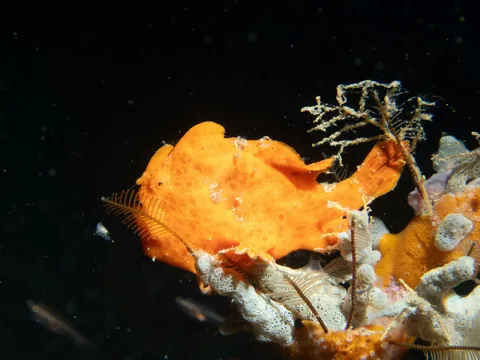
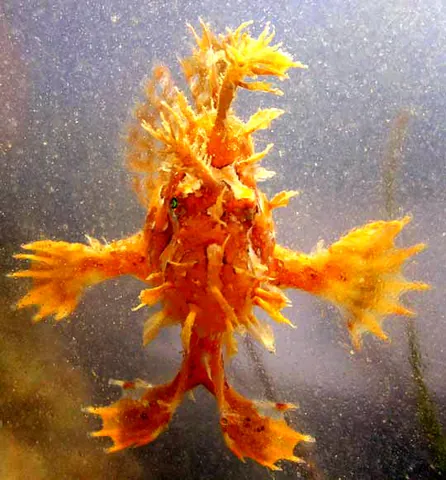
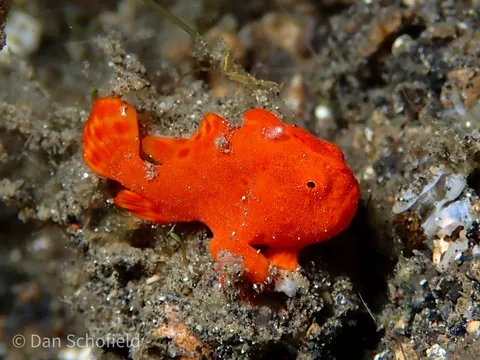
This is a short, fat, round-bodied fish with thick, warty skin, small eyes, and a huge upward-facing mouth. Its pectoral fins sit on stalks that work like little legs. Colour is highly variable, from pale yellow to bright red to dark green or reddish brown, always scattered with black spots and eye-like markings called ocelli.
It lives on shallow reefs with plenty of sponges, matching its colour to whichever sponge species is most common nearby. It is found from Bermuda and the Bahamas through the Caribbean and Gulf of Mexico to the coast of Brazil, usually in water no deeper than 66 m.
It is an ambush hunter that waits still on a sponge and wiggles a rod-like lure on its head to attract fish, crabs, and mantis shrimp within reach. It can swallow prey larger than its own body and strikes in a fraction of a second.
A pair walks across the bottom together before spawning, the female swollen with eggs and the male close behind her. They dash to the surface together, where the female releases a floating mass of eggs bound in mucus called an egg raft. A female may spawn several times over a few weeks.
Its scientific name multiocellatus means "many eyespots", and it is the most common frogfish found in the West Indies.
Describe what you saw and we name it, then keep every species you find in your Oceandex.