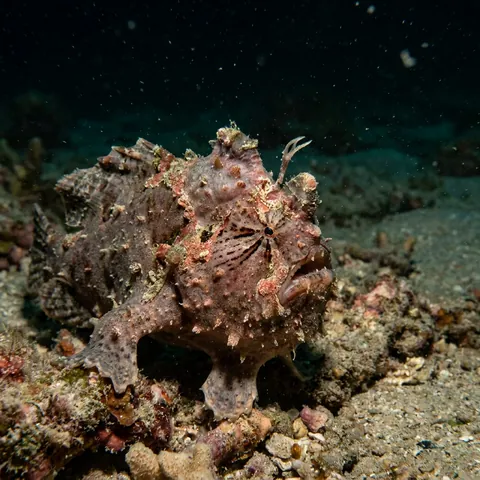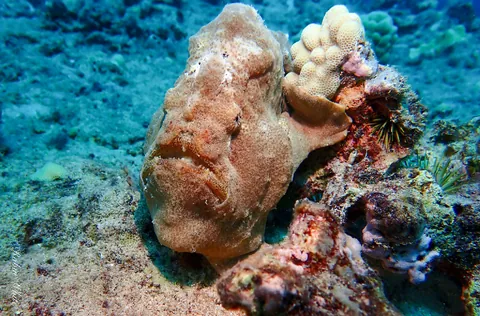
Giant frogfish
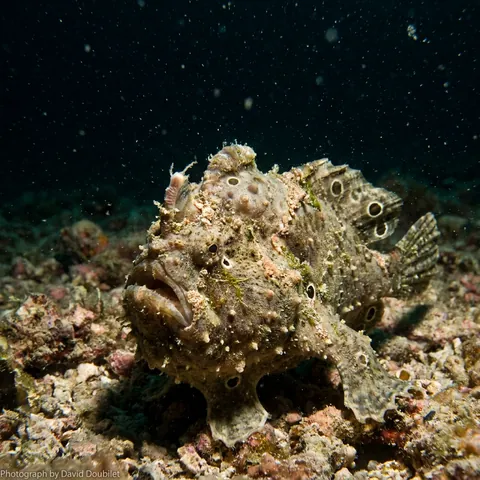
Antennarius commerson
frogfish
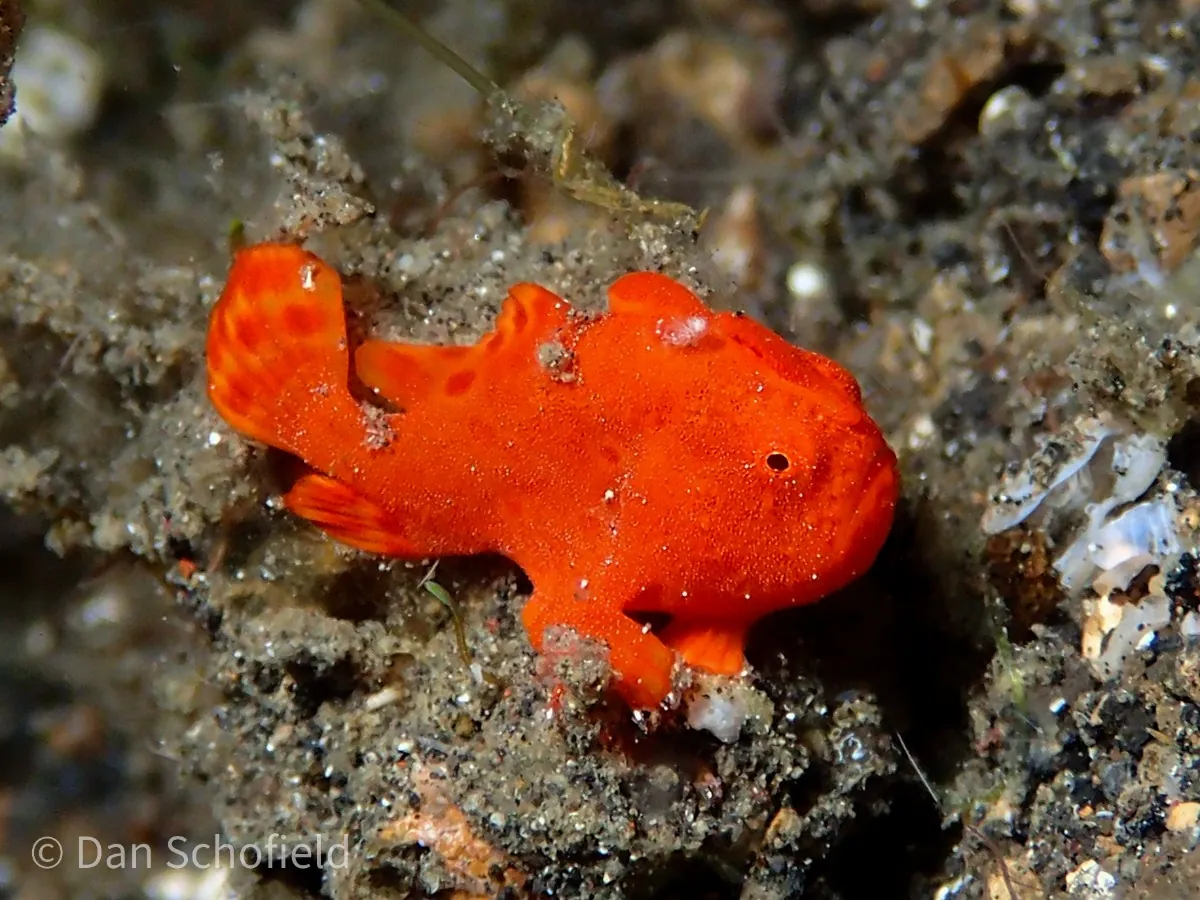
Frogfish are stocky, well-camouflaged ambush hunters that look like lumps of coral or sponge. In this app the group includes the Giant frogfish, Painted frogfish, and Warty frogfish.
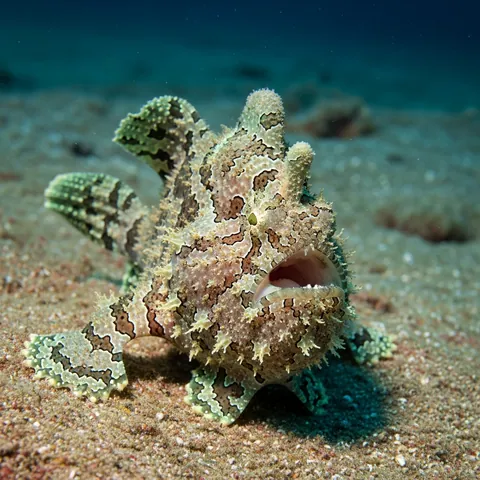
Frogfish are best known by their strange, lumpy shape and their slow, near-motionless behaviour, which sets them apart from most fish. Look for a small, rod-like spine above the mouth tipped with a lure; its shape and the fish's skin texture and colour help tell species apart.
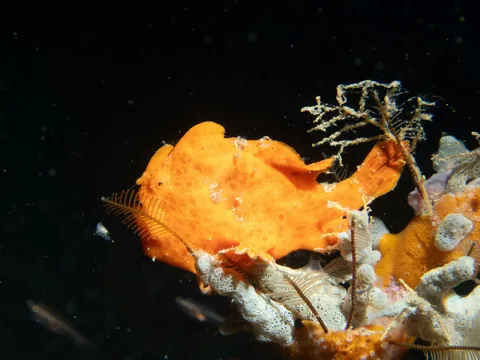
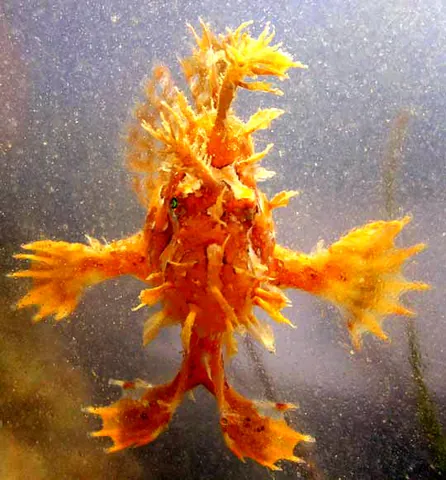
Frogfish have a plump, lumpy body with no scales and an upward-pointing mouth. They range from about 2.5 to 38 centimetres long. Colours vary widely, including white, yellow, red, green, and black, and can vary even within one species, which makes them hard to tell apart by colour alone.
Frogfish live in tropical and subtropical parts of the Atlantic, Pacific, and Indian Oceans, including the Red Sea, mostly where surface water stays above 20°C. They sit on the sea floor around coral or rock reefs, down to about 100 metres. A few kinds live in unusual places, such as brackish water near river mouths or floating clumps of sargassum weed.
Frogfish rely on camouflage to hide from predators, often looking like stone, coral, sponge, or drifting weed. Some can change colour over time, and some can puff themselves up with water as a threat display. They stay mostly still and are usually solitary.
Frogfish eat crustaceans, other fish, and even each other. They lure prey close by wiggling a lure on their head, then snap it up in one of the fastest strikes in the animal world, opening their jaws in as little as six milliseconds.
Most frogfish release eggs and sperm freely into the water rather than laying eggs on the seabed. Before spawning, the female's belly swells with up to 180,000 eggs, and the pair rises together toward the surface to release the eggs and sperm.
A frogfish can suck in its prey in about six milliseconds, faster than the human eye can follow, by suddenly expanding its mouth up to twelve times its resting size.
Describe what you saw and we name it, then keep every species you find in your Oceandex.