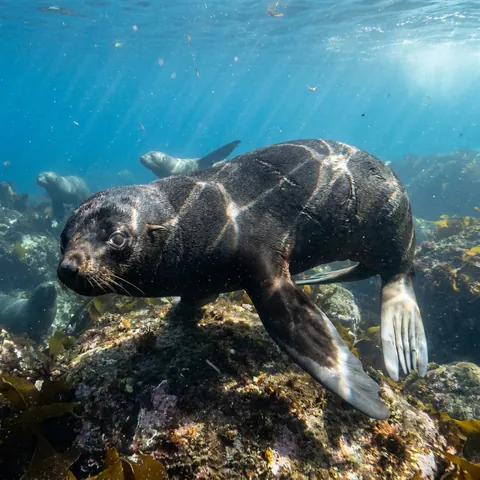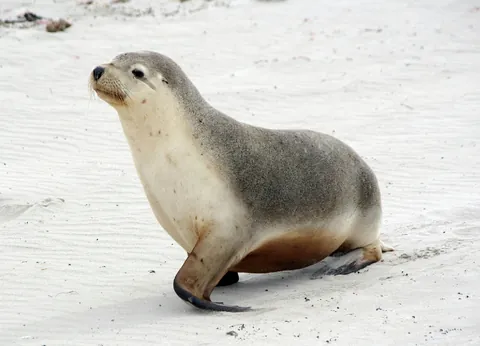
Australian Sea Lion
Neophoca cinerea
Eumetopias jubatus
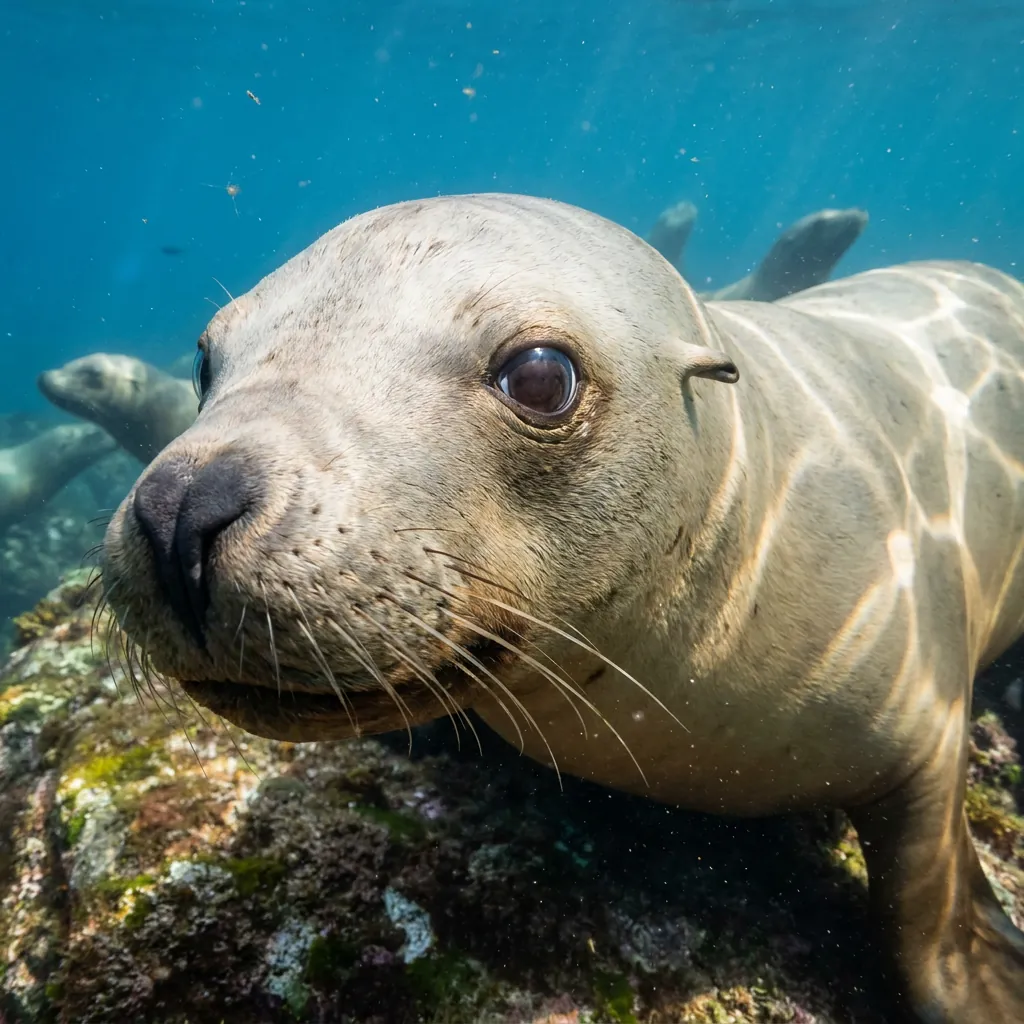
The Steller sea lion is the largest of all the eared seals, a powerful predator of the cold North Pacific. Males can grow to 330 cm and weigh up to 1,100 kg, dwarfing most other sea lion species.
It is often confused with the smaller California sea lion. Look for its much greater bulk and pale, tawny coat, next to the California sea lion's darker brown colour.
Adults are pale, ranging from a light yellow to tawny brown, sometimes with a reddish tint, much lighter than most other sea lions. Pups are born almost black and keep that dark coat for several months. Males develop a much wider chest and neck than females, along with a broader, higher forehead, a flatter snout, and a thick mane of coarse hair around the neck.
This species lives along the cool coastal waters of the North Pacific, from northern Japan through the Gulf of Alaska and south to central California. It hauls out and breeds on isolated islands and beaches, moving between the open water and the shore.
It is a fast, agile swimmer, able to turn tightly despite its size, though it is less nimble in the water than many fish. Killer whales are its main predator, and sharks occasionally target juveniles. It slows its heart rate and constricts blood flow to its limbs to extend its dives.
It is an opportunistic hunter, feeding on a wide range of fish and squid, including pollock, mackerel, herring, cod, and salmon, along with octopus and shellfish. It usually hunts in groups of up to twelve where prey is abundant, foraging between shallow coastal waters and the edge of the continental shelf.
Males gather on traditional breeding beaches each spring and defend territories, which females move freely between rather than being herded into harems. Females give birth soon after arriving, then mate again one to two weeks later, though the fertilised egg does not implant until autumn.
Describe what you saw and we name it, then keep every species you find in your Oceandex.