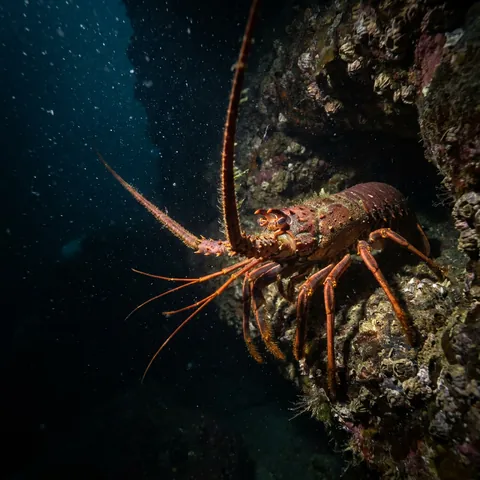
California Spiny Lobster
Panulirus interruptus
lobster_spiny
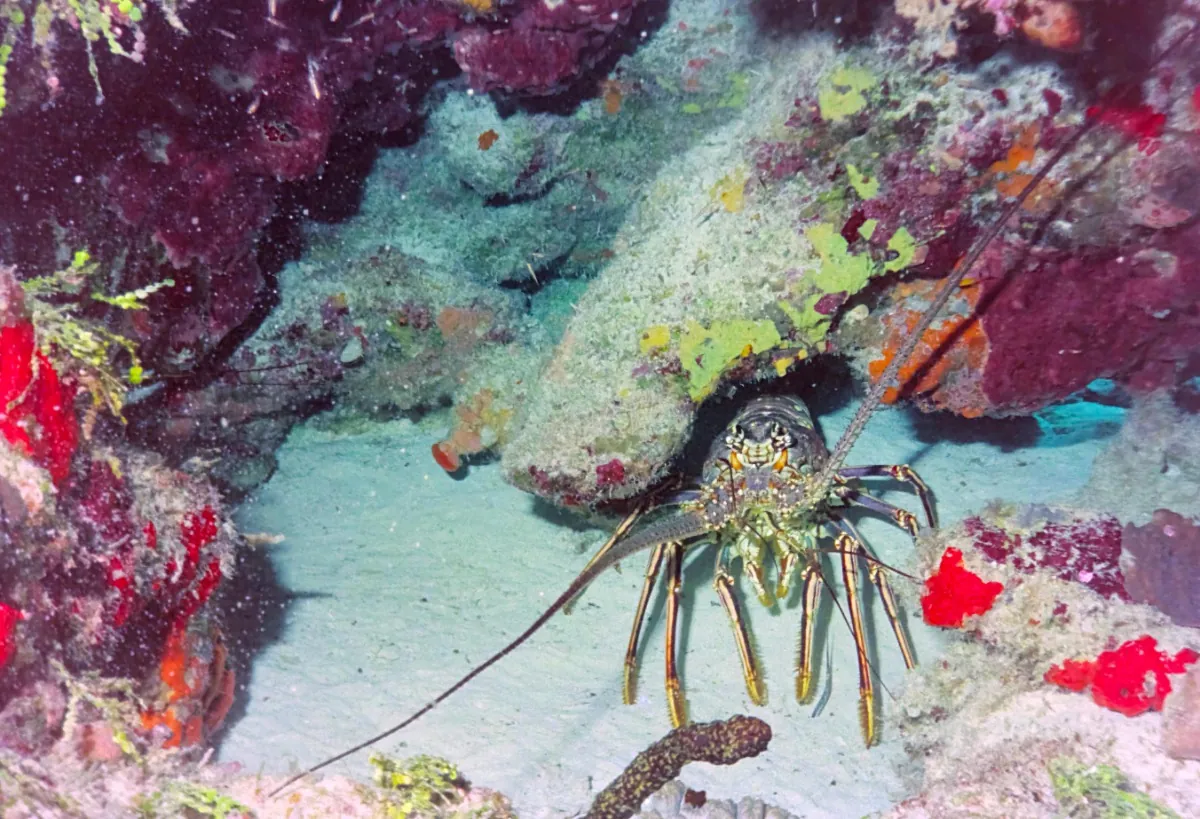
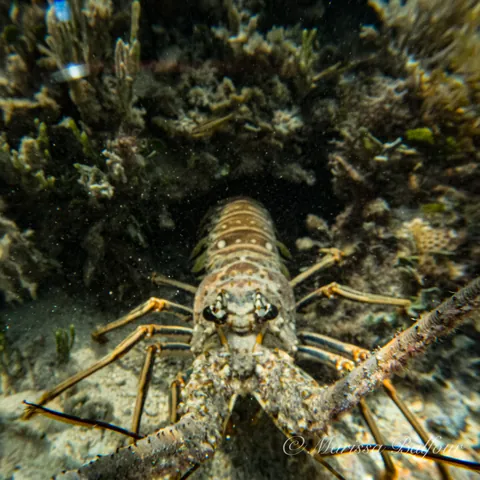
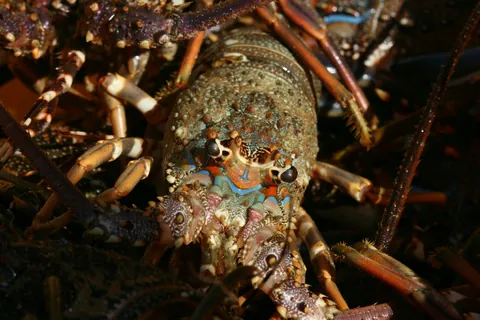
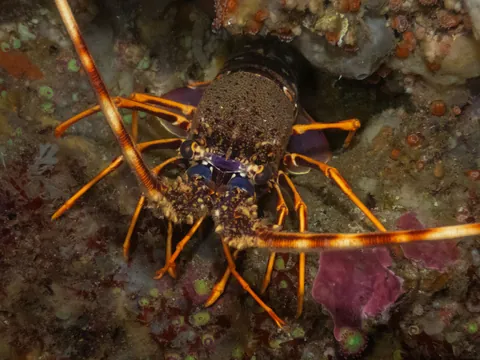
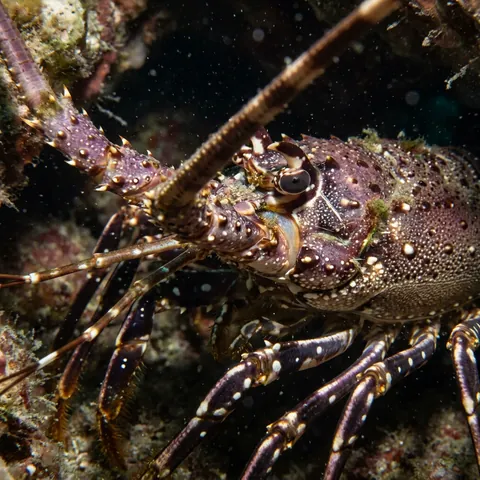
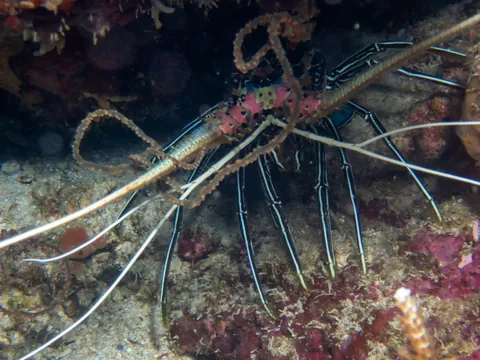
Spiny lobsters are large reef crustaceans with long, spiny antennae instead of claws. In this app the group includes the Caribbean spiny lobster, the Painted Spiny Lobster, and the California Spiny Lobster.
Long, thick, spiny antennae and no large front claws mark this group and separate it from true lobsters, which have small antennae and big claws.
A spiny lobster has a hard shell and very long, thick antennae covered in spines. It has no big claws on its front legs, unlike a true lobster. Most adults are a few centimetres to 30-40 cm long, though a few can reach 60 cm.
Spiny lobsters live in almost all warm seas, including the Caribbean, the Mediterranean, and the waters off Australasia and South Africa. They hide in crevices of rocks and coral reefs by day and come out at night.
Spiny lobsters mostly hide in reef crevices during the day and forage at night. They sometimes travel together in long lines of over 50 animals across the sea floor, keeping contact with their antennae. If threatened, they make a loud rasping sound by rubbing their antennae against their shell to scare off predators.
At night, spiny lobsters hunt snails, clams, sea hares, crabs, and sea urchins on the reef and seabed.
Spiny lobsters can find their way home over long distances by sensing the Earth's magnetic field.
Describe what you saw and we name it, then keep every species you find in your Oceandex.