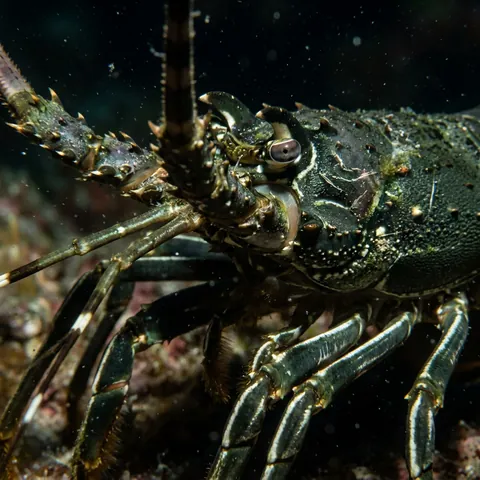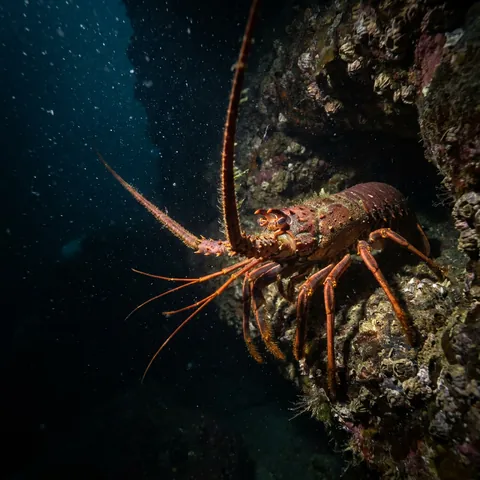
California Spiny Lobster
Panulirus interruptus
Palinurus elephas
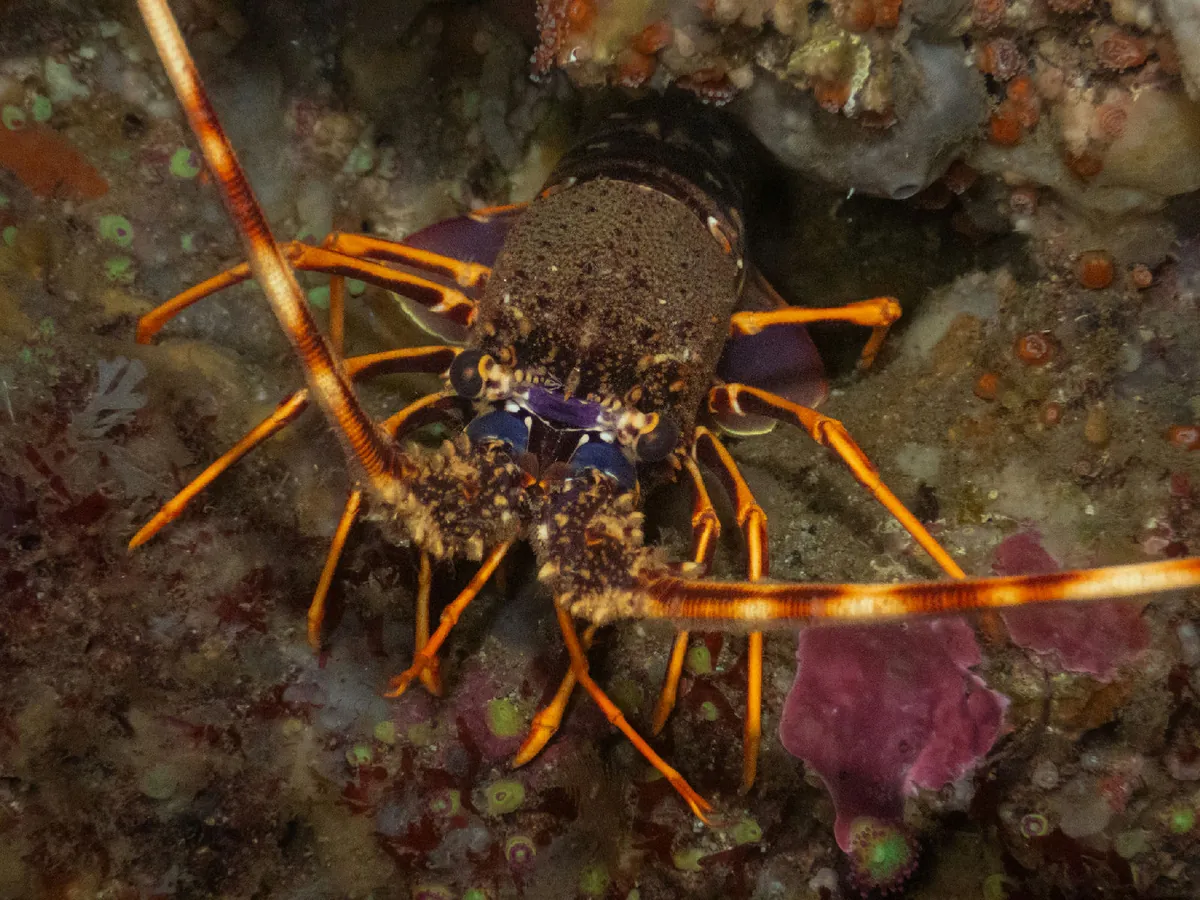
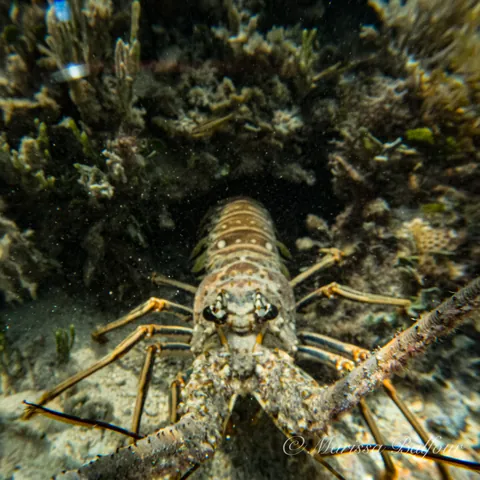
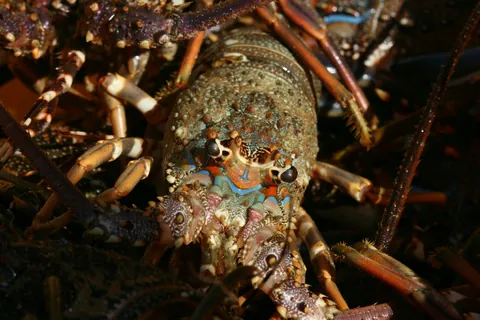
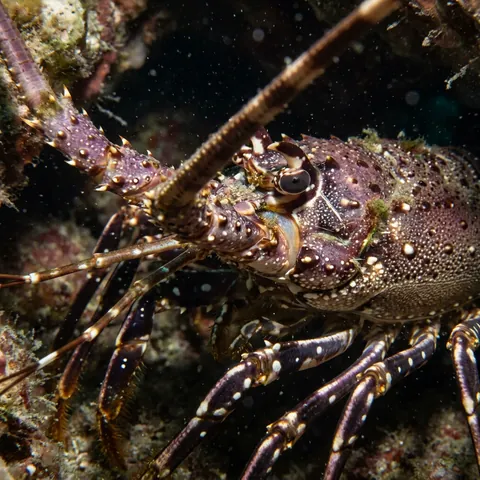
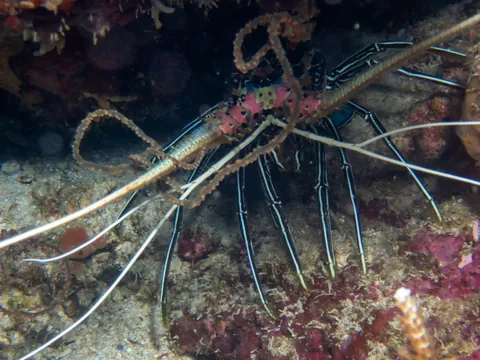
The European spiny lobster is a heavily armoured crustacean that relies on spines and thick, whip-like antennae for defence instead of claws. It can grow to 50 cm long, making it one of the larger lobsters divers find tucked into reef crevices.
Sharing reefs with other spiny lobsters, it stands out through colour rather than shape. Look for the yellow spots scattered across its reddish-brown shell.
Its shell is reddish-brown, scattered with yellow spots, and covered in forward-pointing spines, with a pair of larger spines standing out above the eyes. It has no claws. Its antennae are thick, spiny, and longer than its whole body.
It lives on rocky, exposed coasts below the intertidal zone, usually between 10 and 70 metres deep, tucked into holes and small caves in rocky or coralligenous ground. It ranges through the eastern Atlantic from southern Norway to Morocco and the Azores, and through most of the Mediterranean Sea.
It is named after Palinuro, an ancient Roman port on the Italian coast where the species was once found in great numbers off the headland.
Describe what you saw and we name it, then keep every species you find in your Oceandex.