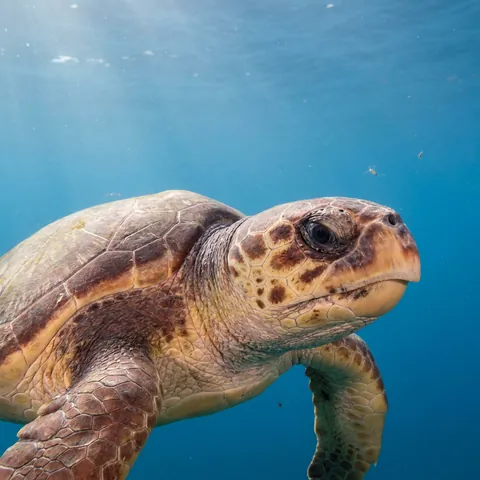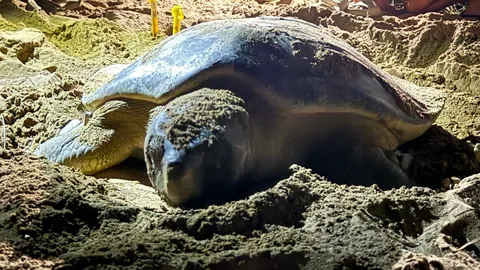
Flatback Sea Turtle
Natator depressus
turtles
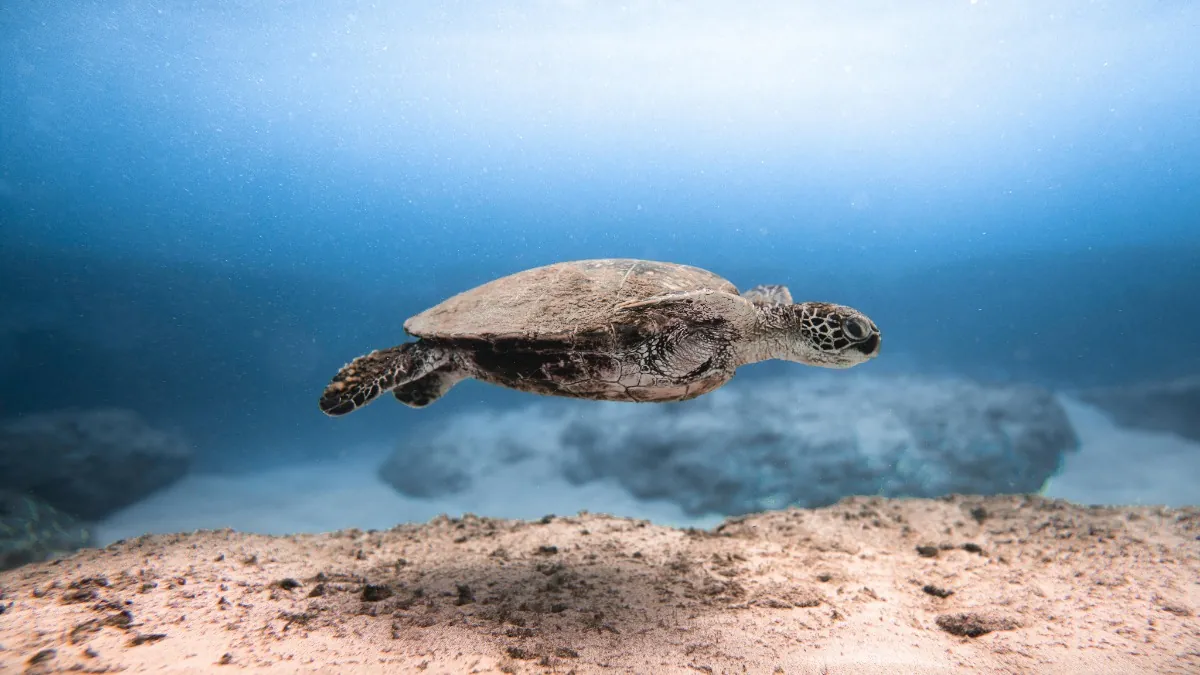
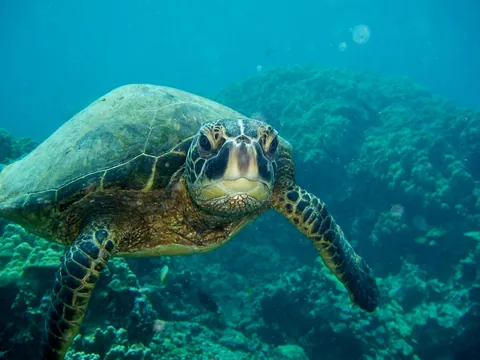
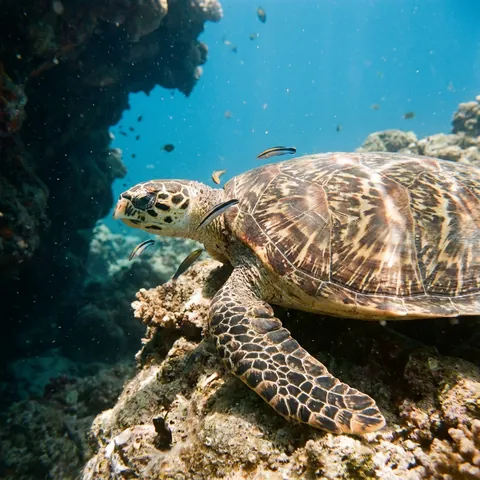
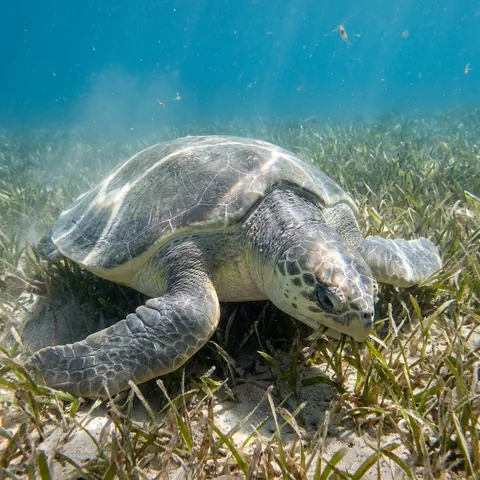
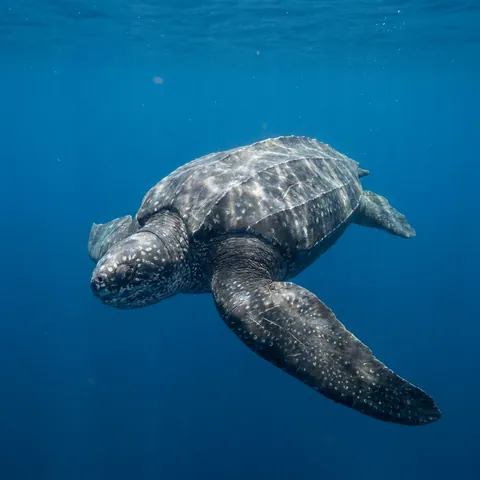
Sea turtles are large, streamlined reptiles with a shell and flippers, seen gliding over reefs and open water. In this app the group includes the Green Turtle, the Hawksbill Turtle, and the Loggerhead Turtle.
The tapered shell and long flippers mark a sea turtle apart from any fish or land turtle. Members are told apart mainly by shell shape and colour, and the shape of the head and beak.
A sea turtle has a smooth, tapered shell and long flippers instead of legs, built for swimming rather than walking. Unlike land turtles, it cannot pull its head or flippers into its shell. The leatherback is the largest, reaching 1.4 to over 1.8 metres long.
Sea turtles live in every ocean except the polar seas. Young turtles drift far offshore in open water, often around floating seaweed, while adults move closer to reefs and shallow coastal water. Females come ashore only to nest on sandy beaches.
Sea turtles spend almost all their life in the water and only come ashore to nest. Adults often migrate long distances between feeding grounds and nesting beaches, sometimes crossing whole oceans.
Most sea turtles eat a mix of plants and animals, such as seagrass, sponges, molluscs, and crustaceans. Some are more specialised: green turtles mainly eat seagrass and algae as adults, hawksbills mainly eat sponges, and leatherbacks feed almost only on jellyfish.
Females return to land, usually at night, to dig a nest in the sand and lay a clutch of 50 to 350 soft-shelled eggs. Many females return to nest on the same beach where they hatched, once every two to four years.
Sea turtles can sense the Earth's magnetic field and use it like a map and compass to navigate across whole oceans back to their home beach.
Describe what you saw and we name it, then keep every species you find in your Oceandex.