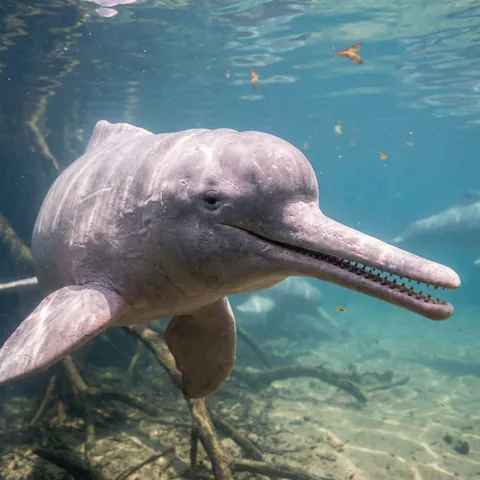
Bottlenose Dolphin
Tursiops truncatus
Grampus griseus
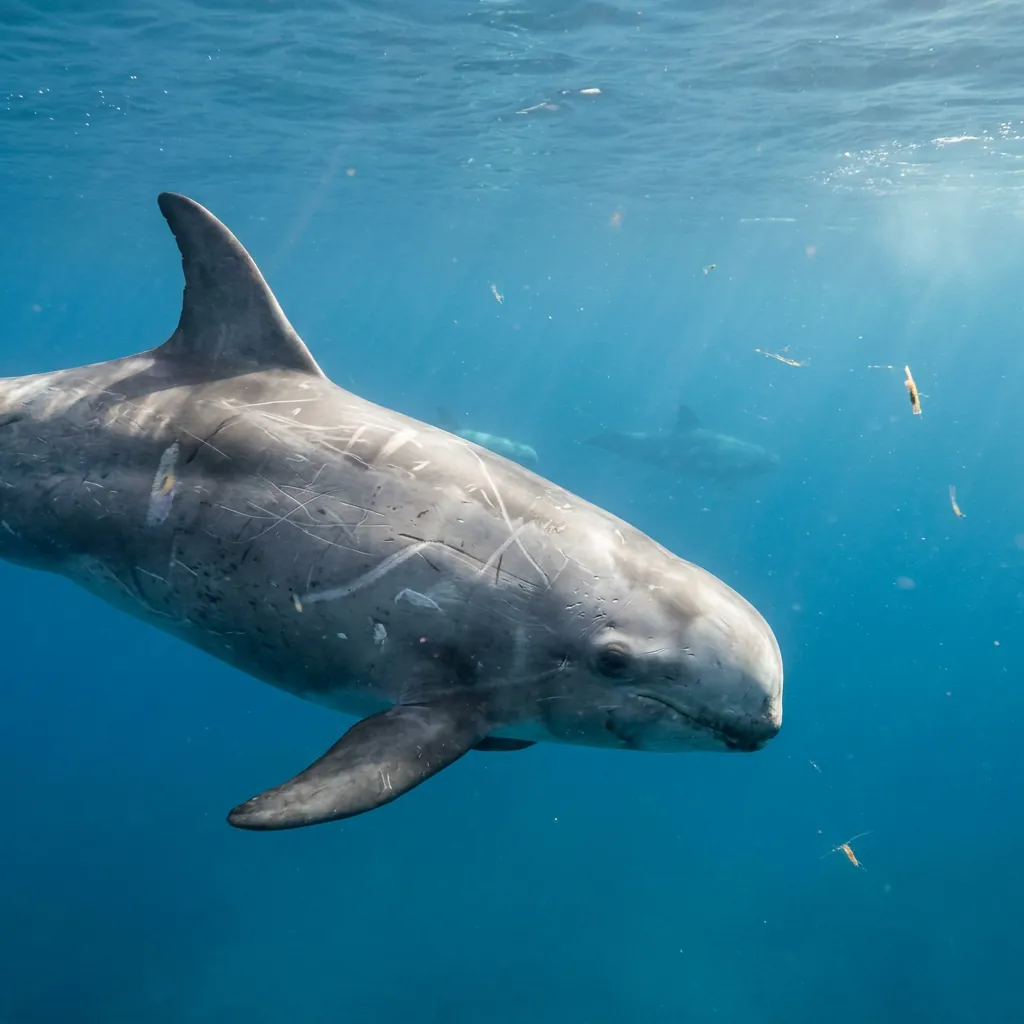
Risso's dolphin looks like it has lived a hard life. In a way, it has: adults are covered in pale scars from squid beaks and from each other's teeth. It can grow to 380 cm. Under that battered-looking skin is a deep-diving hunter built for the dark.
Also known as: grey dolphin, grampus
This species is closely related to pilot whales and false killer whales. Those relatives also have a stocky, dark body. The heavy pale scarring covering most of an adult Risso's dolphin is the clearest way to tell it apart.
This dolphin has a strong, rounded body, often covered in heavy scars. The scars show up as pale or white streaks and patches against its darker skin.
Risso's dolphins live in cold and temperate waters, and in the tropics, almost worldwide. They are most often found near continental shelves, where the seabed drops away and squid, their main prey, gather.
This species hunts mainly squid, plus some crustaceans and fish. It finds them with echolocation, sound signals that bounce back off prey. To reach prey hiding deep in the water during the day, it can empty its lungs and spin its body to sink almost straight down. This lets it reach much greater depths than many other dolphins manage.
Males and females become able to breed at different ages; males mature a bit later than females. Calves are born after a long pregnancy. The season for calving depends on the region.
Risso's dolphins are protected in some countries, including the United States, but are still hunted in others. They also face danger from noise and plastic pollution, and from getting caught in fishing nets.
This dolphin swallows squid whole, so it does not need teeth for cutting food. Its teeth have changed instead into display weapons, used to spar with rivals when fighting over mates.
Describe what you saw and we name it, then keep every species you find in your Oceandex.