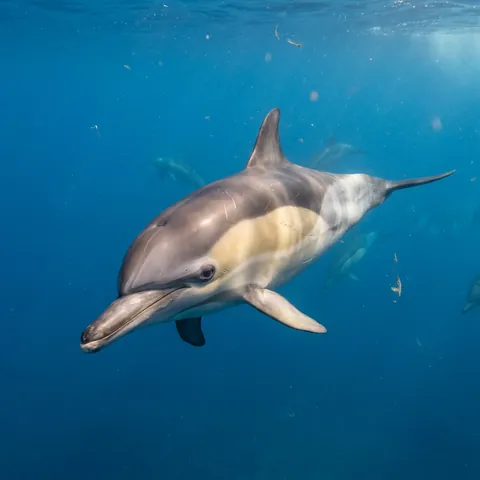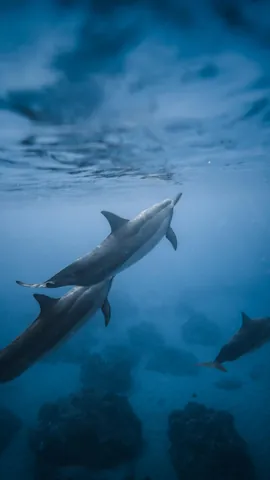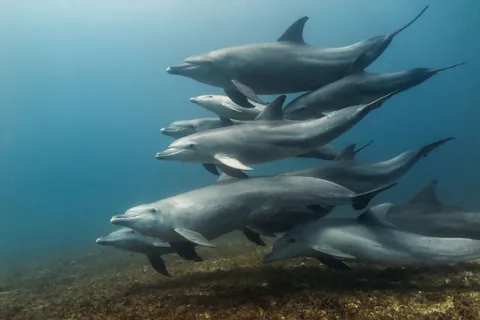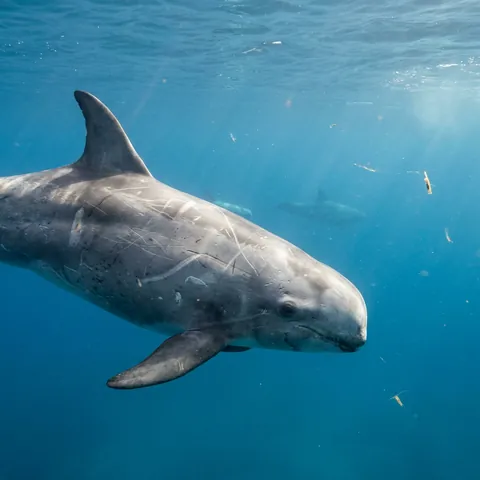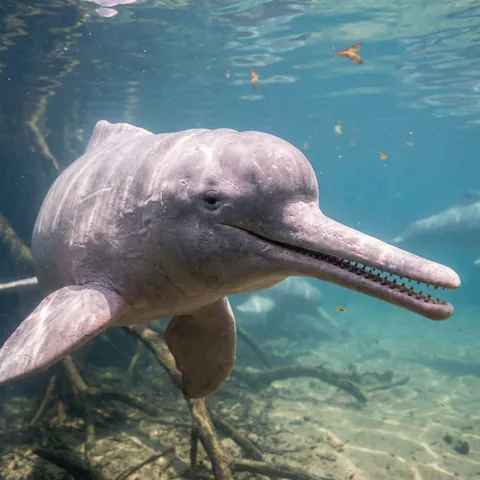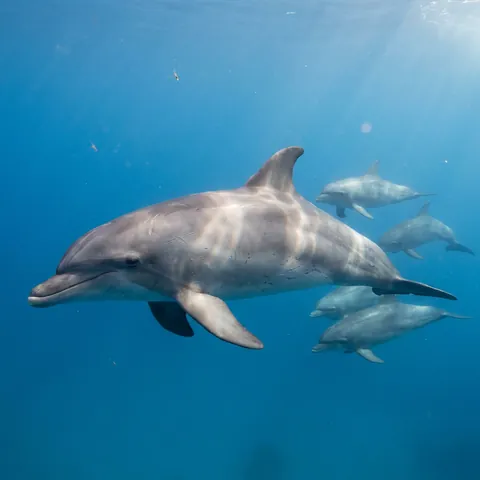
Bottlenose Dolphin
Tursiops truncatus
Sotalia guianensis
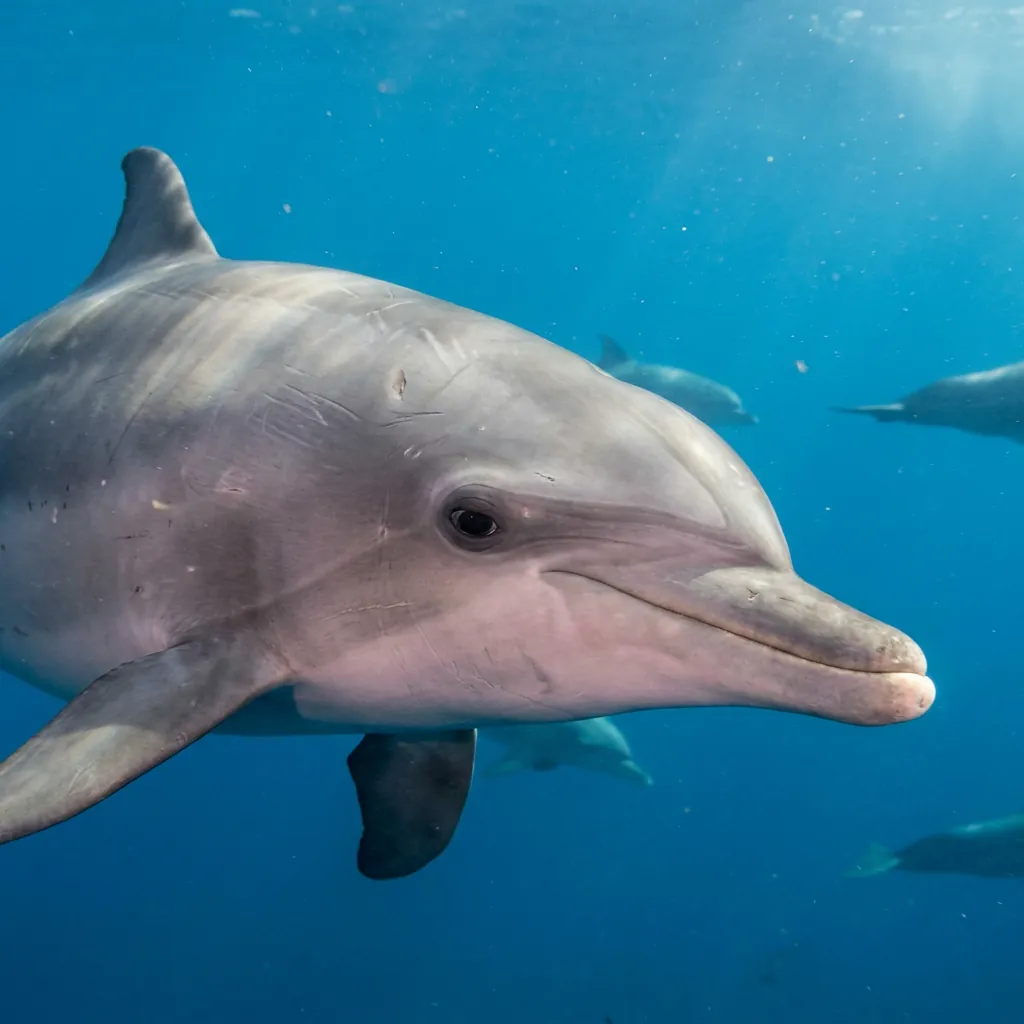
The Guiana dolphin lives along the coasts and river mouths of South and Central America. It often stays in the same stretch of water for years. It looks much like the well-known bottlenose dolphin, only smaller.
Also known as: estuarine dolphin, guiana dolphin, costero
It looks much like the bottlenose dolphin it shares coastal waters with, but it is clearly smaller. That size gap is a useful clue where the two overlap.
Its back and sides are light to bluish grey, fading to pale grey underneath. It has a clear, medium-length beak and a slightly hooked, triangle-shaped dorsal fin, the fin on its back.
It likes shallow, sheltered water near river mouths, inlets, and other calm coastal spots, mostly between about 2 and 35 m deep. Its range runs along the coast from southern Brazil north to Nicaragua, and maybe Honduras. It can handle a wide range of water temperatures and salt levels.
Guiana dolphins usually travel and hunt for food in small groups, though they sometimes gather in much bigger numbers. They are active at the surface, leaping, rolling, and slapping the water with their tails. But they tend to stay away from boats.
It eats whatever it can find, mainly bony fish, plus the odd shrimp, squid-like animal, and crab. Some groups have learned to herd fish onto beaches and beach themselves for a moment to grab their prey. Others hit fish with quick body movements to stun them first.
Guiana dolphins breed all year, not just in one season. Females mate with more than one male, and the males compete for the chance to father calves.
The Guiana dolphin is listed as Near Threatened. It is protected under an international agreement for migratory species because its numbers are falling. Getting tangled in gillnets, seine nets, and shrimp traps kills many animals each year. Because groups along the coast mix very little, a hard-hit area can take a long time to recover. One well-studied group near Rio de Janeiro has dropped sharply over recent decades, likely linked to pollution from factory waste and sewage.
Guiana dolphins were recently found to sense weak electric fields. Sharks have long been known to have this sense, but this is the first time it was confirmed in a dolphin.
Describe what you saw and we name it, then keep every species you find in your Oceandex.