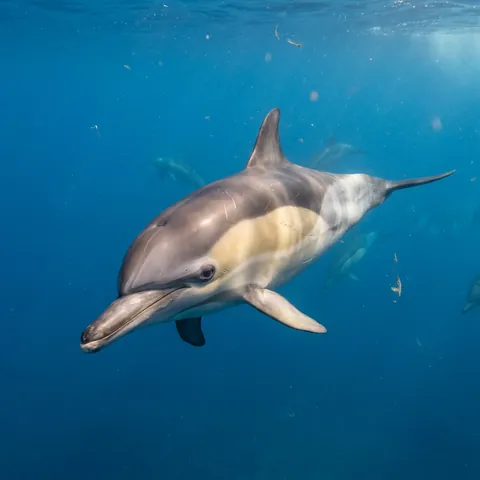
Common dolphin
Delphinus delphis
Tursiops truncatus
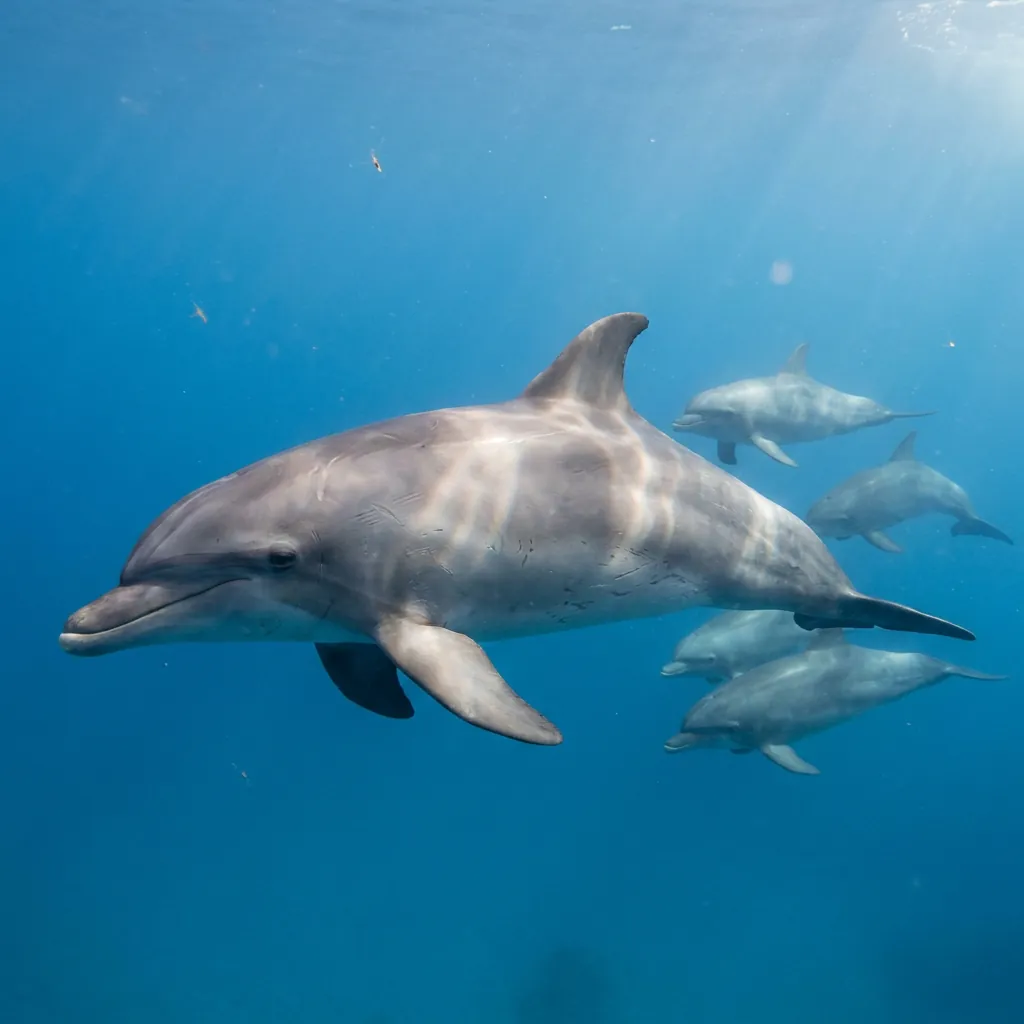
The common bottlenose dolphin is one of the most familiar dolphins, thanks to its wide exposure in marine parks, movies, and television. It lives in temperate and tropical oceans worldwide, avoiding only polar waters.
Also known as: black porpoise, black sea bottlenose dolphin, bottle-nosed dolphin, bottle-nosed dophin, common bottle-nosed dolphin, bottlenose dolphin, tuyiin, bottlenose dolphin; black sea bottlenose dolphin (ponticus), tursiops truncatus
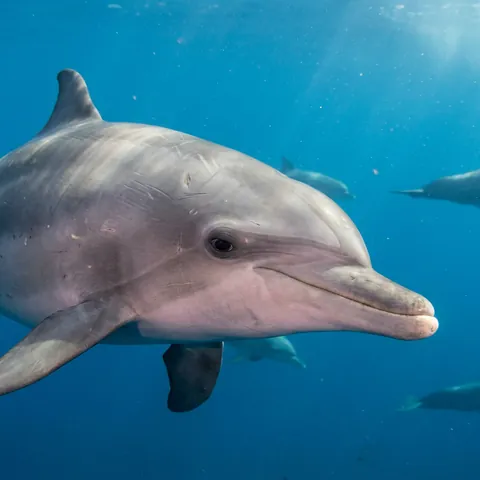
Look for a short, well-defined beak, a curved (hooked) dorsal fin, and grey skin. This body shape stays constant and is visible at a distance, unlike colour patterns that can vary.
This dolphin has grey skin, a single blowhole, a hooked dorsal fin, and a short, well-defined beak, which is where its common name comes from. It can grow up to 380 cm long and weigh as much as 650 kg.
Bottlenose dolphins live in temperate and tropical oceans around the world, from shallow coastal water to the open sea, and have been recorded diving to depths of up to 1,316 m.
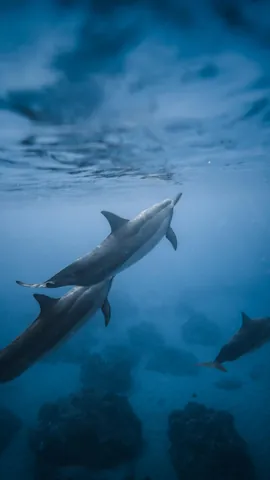
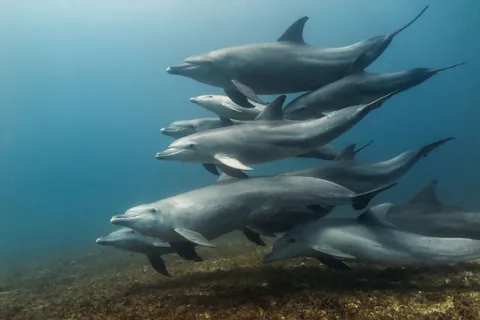
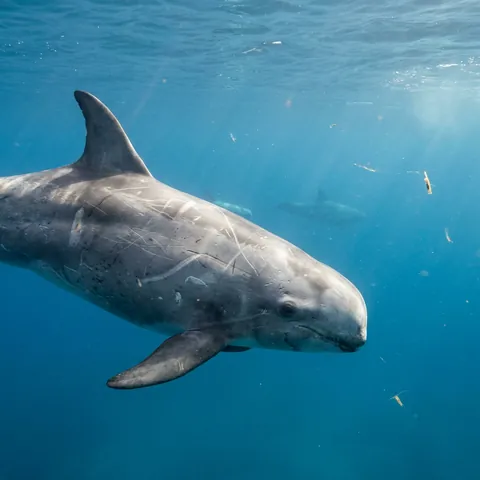
This is a highly social species, living in groups called pods that typically number around 15 animals, though group size can range from pairs to over 100. Dolphins communicate through whistles, squeaks, clicks, and body language, and use echolocation, a kind of sound-based sonar, to sense their surroundings. Conflicts over mates or resources can leave nicks and notches on the body and dorsal fin, which researchers use to tell individuals apart.
Bottlenose dolphins eat mainly eels, squid, shrimp, and a wide variety of fish, swallowing prey whole rather than chewing it. They often hunt in coordinated groups, circling schools of fish and taking them one by one, though they also hunt alone.
Mating is not tied to one partner: both males and females mate with multiple partners. Breeding can happen throughout the year but peaks in spring. After a gestation of about a year, females give birth to a single calf, usually every three to six years, and calves nurse for one and a half to two years.
harmless to humans
The IUCN lists the common bottlenose dolphin as Least Concern. Even so, several regional populations are protected under international agreements, and the species is listed under CITES Appendix II, which regulates trade in the animal and its parts.
Each bottlenose dolphin develops its own signature whistle, used almost like a name, and mothers have been recorded shifting theirs to a higher pitch when calling to their own calf.
Describe what you saw and we name it, then keep every species you find in your Oceandex.