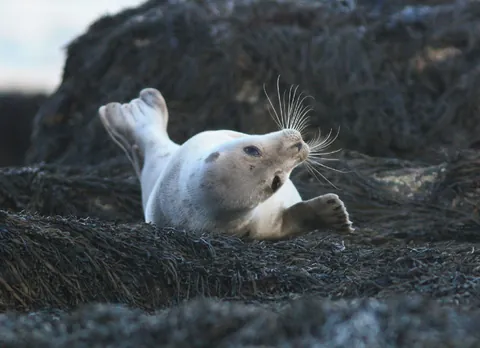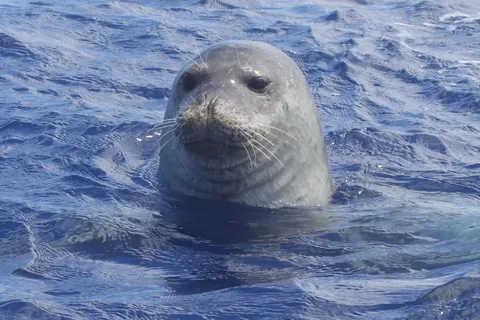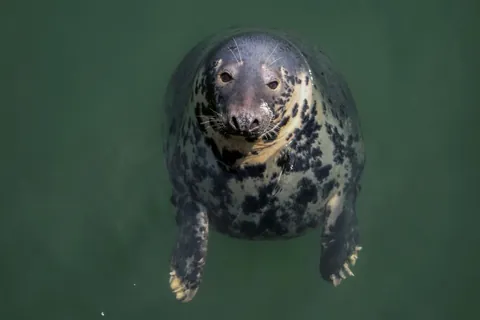
Grey Seal
Halichoerus grypus
Pusa hispida
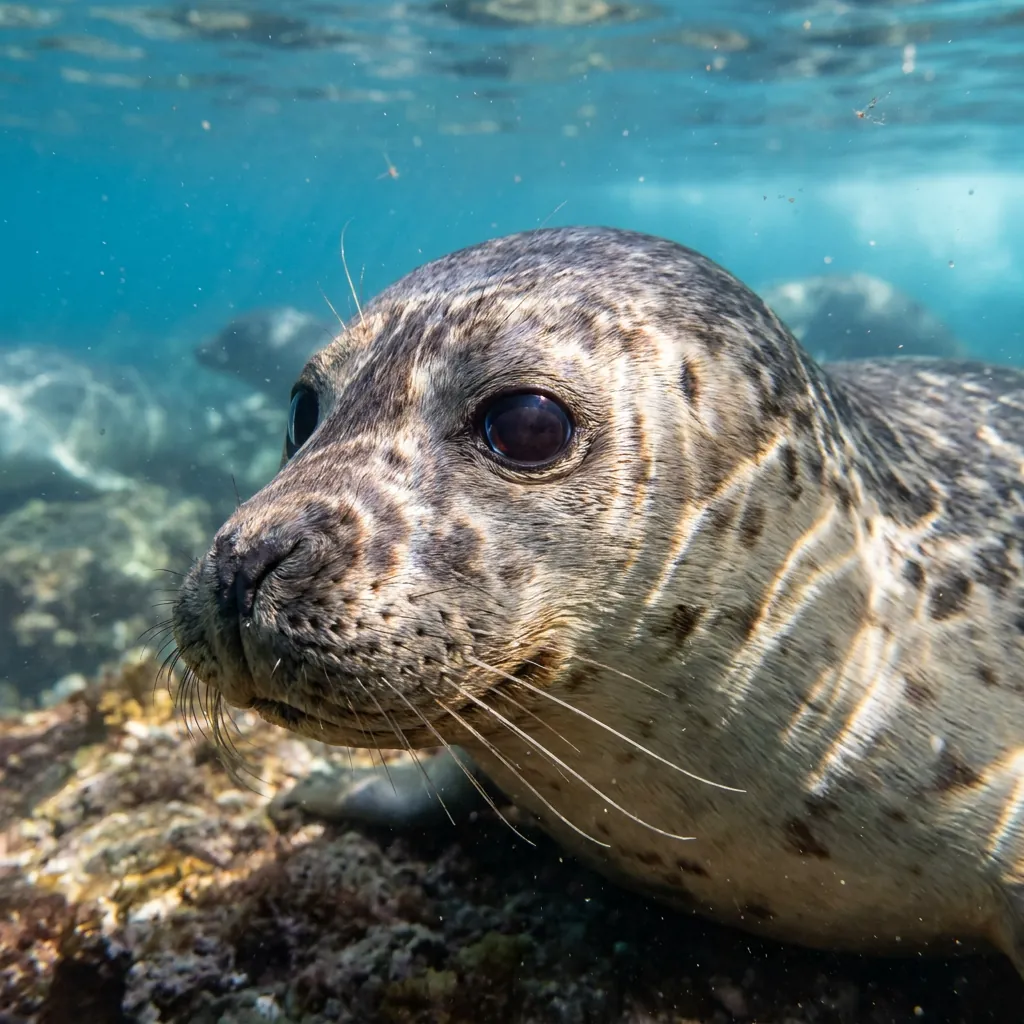
The ringed seal is the smallest and most common seal of the Arctic, a stocky little diver named for the pale rings scattered across its dark coat. It grows to about 165 cm and weighs up to 110 kg.
Several small Arctic seals can look similar at a glance, but the pattern of pale rings scattered over a dark coat is distinctive to this species and gives it its name.
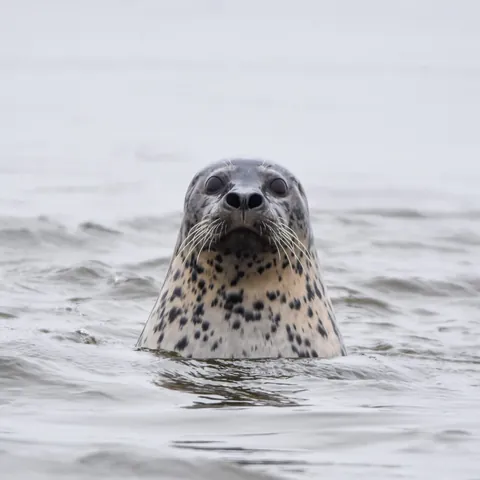
This seal has a small head, a short cat-like snout, and a plump, rounded body. Its coat is dark on top with pale silvery rings across the back and sides, and a lighter silver belly. Its small front flippers carry thick claws used for scratching breathing holes through ice.
It lives in Arctic and sub-Arctic seas, staying close to sea ice for most of the year and resting on ice floes, favouring larger, thicker floes where ice cover is dense.
It is mostly solitary, spreading out from other seals by a wide distance when hauled out on ice. Females dig lairs inside thick ice and give birth to a single pup in late winter or early spring, weaning it after about two months. It is an important prey species for polar bears, and pups are also taken by Arctic foxes and gulls, while killer whales and Greenland sharks hunt seals in the water.
It feeds mainly on small fish and crustaceans, including arctic cod, herring, shrimp, and amphipods, diving to find prey along and beneath the sea ice.
Listed as Least Concern. It depends on sea ice to live and breed, so the ongoing loss of Arctic ice from a warming climate is considered its main long-term threat, even though current population numbers are not thought to be a cause for concern.
It digs and maintains its own breathing holes through thick sea ice using the strong claws on its front flippers.
Describe what you saw and we name it, then keep every species you find in your Oceandex.