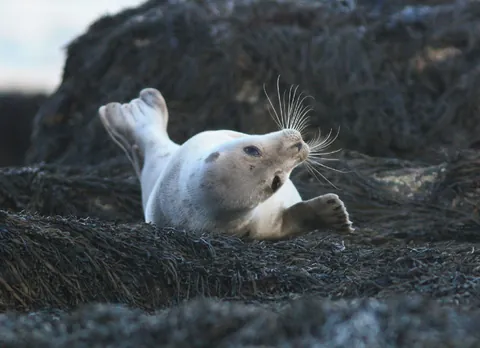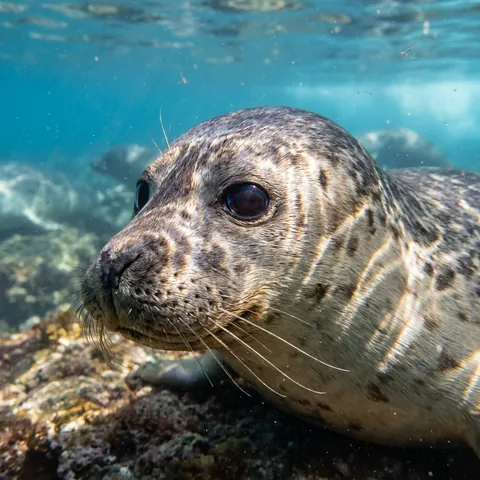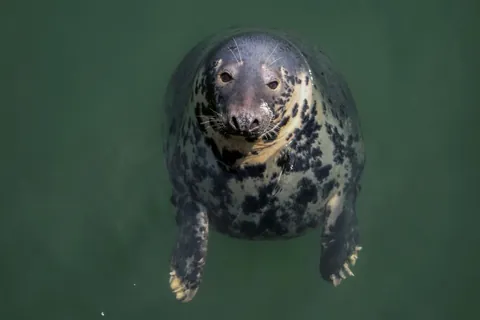
Grey Seal
Halichoerus grypus
Phoca vitulina
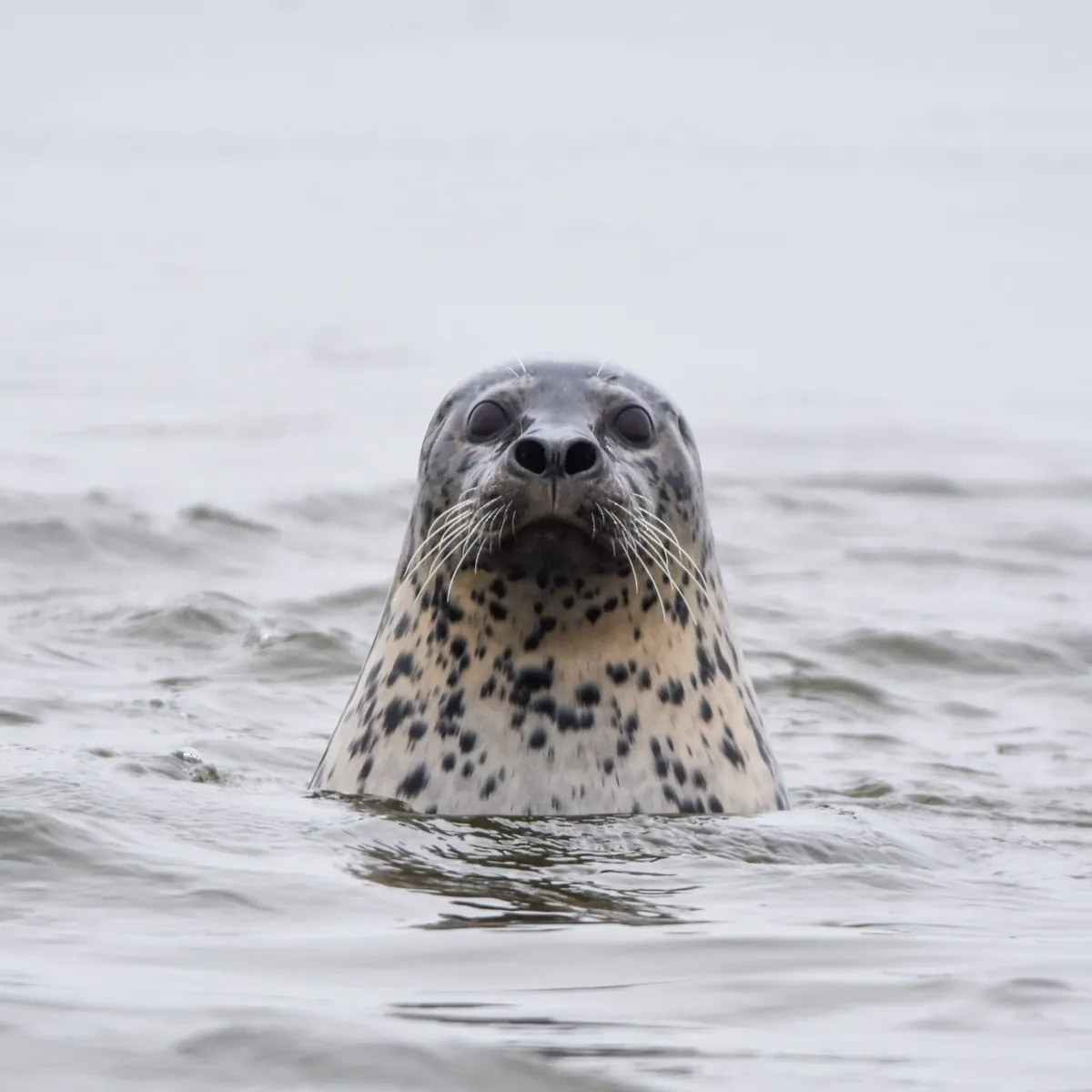
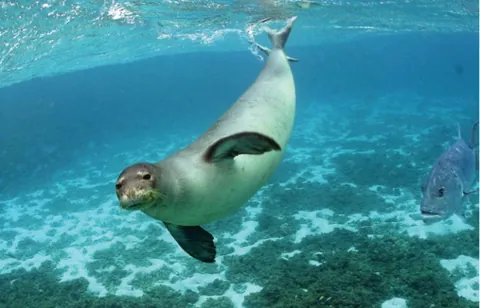
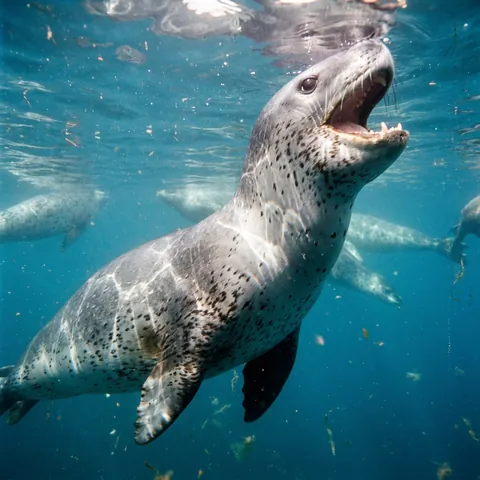
The harbor seal is the seal most divers are likely to meet along temperate and Arctic coasts of the Northern Hemisphere. Curious and often approachable in the water, it spends much of its time hauled out on familiar rocks or beaches close to its feeding grounds.
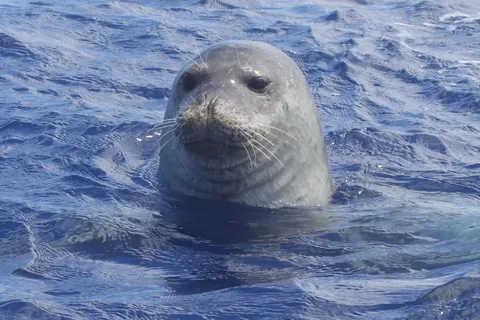
Other seals can look similar at a glance. Its V-shaped nostrils, visible in a good close view, are a reliable mark that sets it apart from seals with more rounded nostrils.
It has a short, rounded body, short flippers, and a rounded head with no visible ear flap, unlike sea lions. Its nostrils form a distinctive V shape. Colour varies from brownish-black to tan or grey, usually paler underneath, and every seal carries its own unique pattern of spots, either dark spots on a light coat or light spots on a dark one. It can grow to about 190 cm long and weigh up to 150 kg.
Harbor seals stick to coastal waters, favouring rocky shores, sandy beaches, mud flats, and estuaries close to good feeding grounds. They return again and again to the same haul-out sites to rest, sheltered from bad weather and predators. Some individuals travel well offshore on feeding trips, and a few will swim far up large rivers in search of migratory fish.
These seals are mostly solitary at sea but gather at haul-out sites and during the breeding season, though not in the huge groups some other seals form. Courtship and mating happen underwater; males gather below the surface, roll onto their backs, and call to attract females. After breeding, harbor seals spend time hauled out on shore while they moult.
The harbor seal is listed as Least Concern, and the species as a whole is not considered threatened. Some local populations have suffered serious declines from disease outbreaks and conflict with people, and seals are still killed legally in some countries where they are seen as a threat to fisheries, while others, such as the UK and the US, protect them by law.
During courtship, male harbor seals gather underwater, roll onto their backs, and call out to attract females, an underwater display unlike the shore-based competing seen in many other seals.
Describe what you saw and we name it, then keep every species you find in your Oceandex.