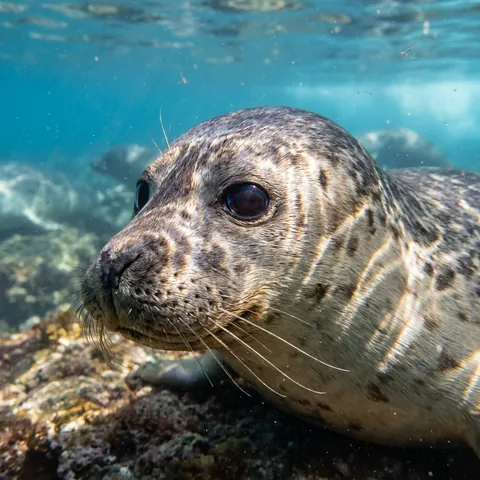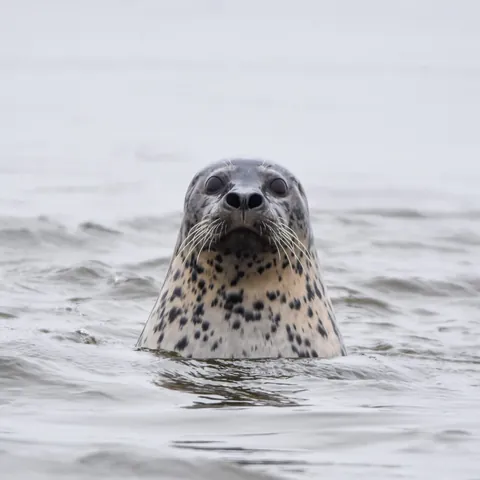
Harbor Seal
Phoca vitulina
Halichoerus grypus
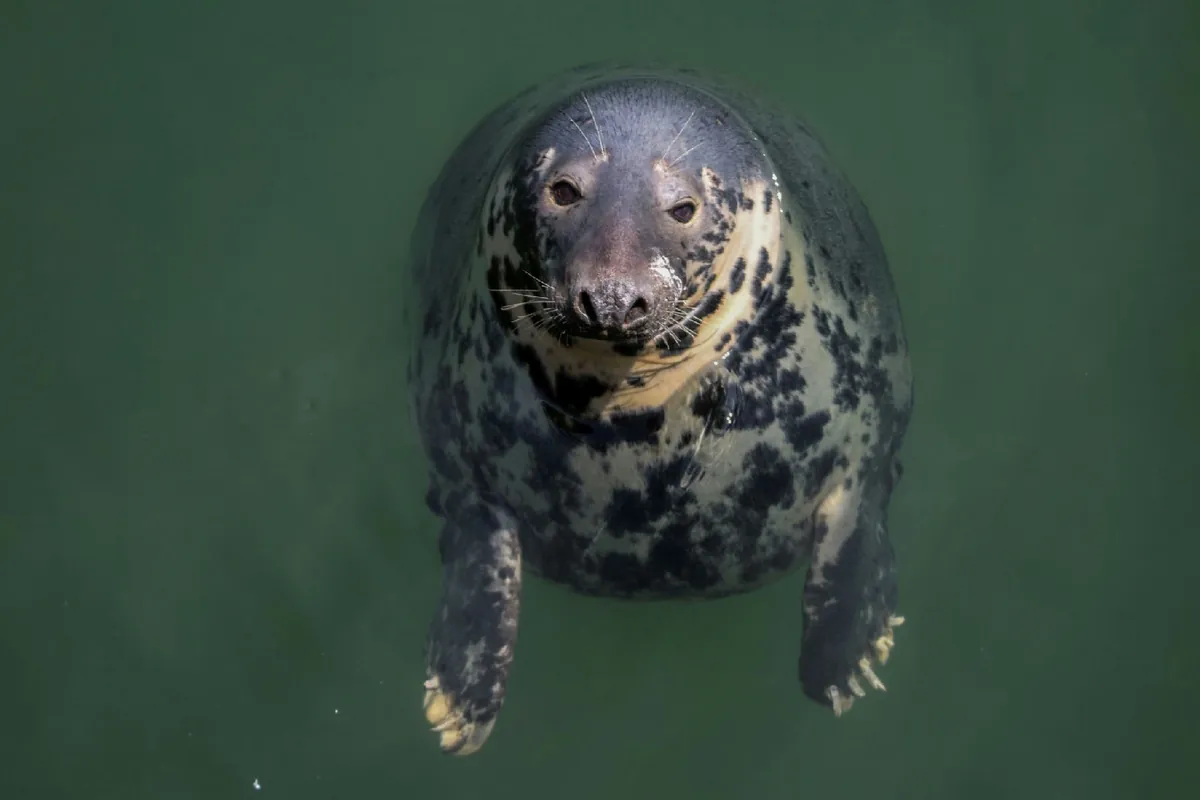
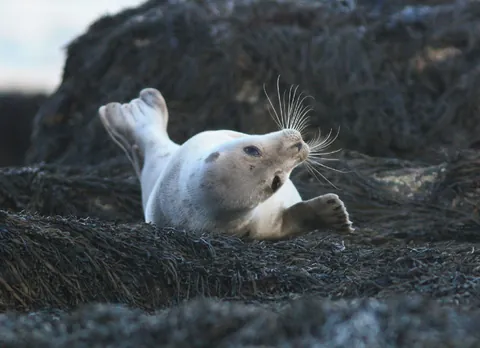
The grey seal is a large, heavy-bodied seal that hauls out on rocky shores and islands across the North Atlantic. It can grow to about 230 cm long and weigh up to 310 kg, spending most of its life at sea and coming ashore mainly to rest and breed.
Colour and pattern vary a lot between individuals. Males usually show a light pattern on a dark background, while females tend to show the reverse, a darker pattern on a lighter body with a pale belly. Males also have a noticeably wider muzzle and a neck and chest that are often wrinkled and scarred from fighting, while females look smoother.
The grey seal lives along cool coastlines on both sides of the North Atlantic, from eastern Canada and the United States to the British Isles, the North Sea and the Baltic. It hauls out on rocks, islands and shoals close to shore, spending the rest of its time hunting in open water.
Grey seals spend most of their time at sea and only come ashore to rest or breed. Some populations, such as those in the Baltic, tend to haul out mainly at night. Orcas and, in North American waters, large sharks are among their main predators.
It feeds mainly on fish living near the seabed, especially sand eels, along with cod, flatfish, herring, wrasse and skates. It also takes octopus and lobster when they are available, and does not feed every day, fasting for stretches during the breeding season.
Breeding takes place in colonies on beaches and remote islands, occasionally on sea ice. Males hold a stretch of beach as a territory and mate with several females in a season, while pregnant females return to give birth to a single pup covered in soft white fur.
The grey seal is listed as a species of least concern, and many populations have recovered strongly after past declines caused by hunting. It remains sensitive to disturbance from boats and people, especially near beaches used for breeding.
Grey seals have been filmed clapping their flippers together underwater, a form of communication that may warn off predators or attract a mate.
Describe what you saw and we name it, then keep every species you find in your Oceandex.