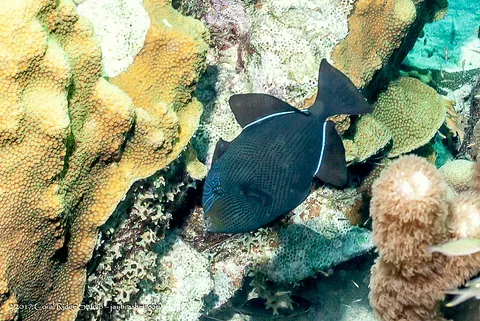
Black Triggerfish
Melichthys niger
Melichthys vidua
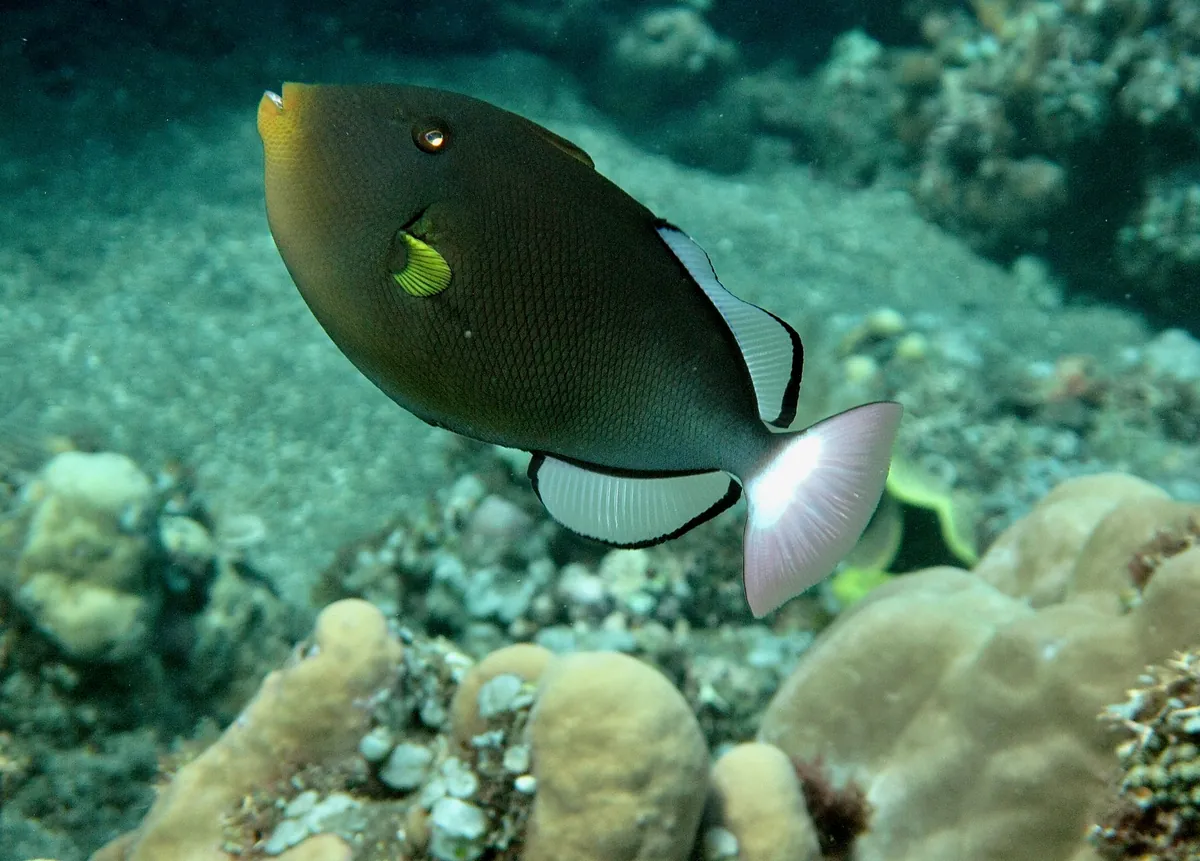
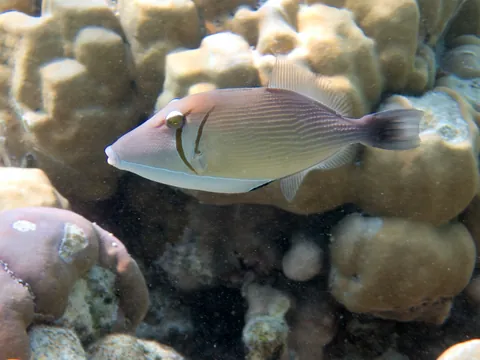
This triggerfish never strays far from the reef it calls home, patrolling shallow coral slopes for a lifetime and flashing a bright pink tail whenever it turns. It grows to about 40 cm.
Also known as: pinktail durgon, pinktail triggerfish, white-tailed triggerfish, pinktail triggerfish, pintailed triggerfish, paddle-fin triggerfish, white tailed triggerfish, leatherjacket, triggerfish, pinktail durgon, pink-tail trigger, pinktail triggerfish, paddle-fin trigger-fish, white-tailed trigger-fish, pink-tailed triggerfish
Most dark, oval-bodied triggerfish on Indo-Pacific reefs lack colour on the tail; the pink caudal fin against an almost-black body is the quick giveaway for this species.
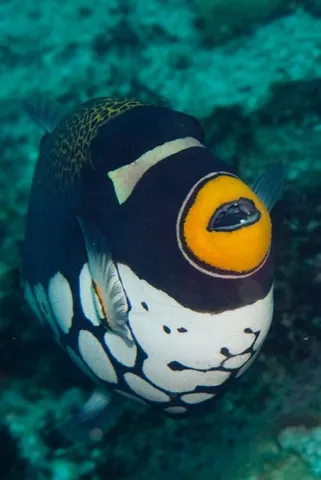
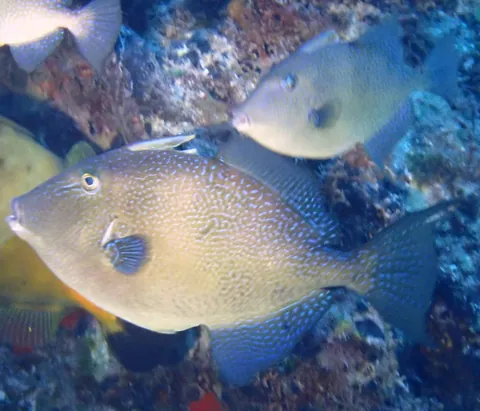
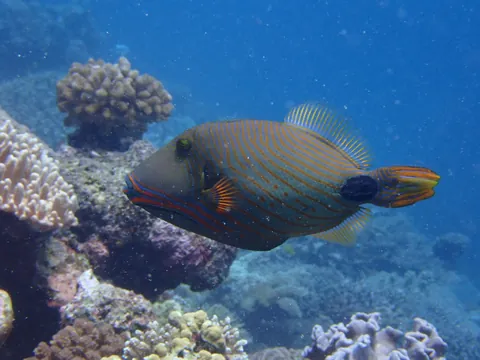
The body is oval and very dark green, often looking almost black in the water. The anal fin and second dorsal fin are translucent white, and the tail fin is pink - the feature that gives this fish its common name. The pectoral fins are bright green, while the pelvic fins are tiny and tucked out of sight underneath. Like other triggerfish, the first dorsal fin has three spines that can be locked upright to wedge the fish into a crevice. Young fish show dark lines radiating from the eye and dark lines on the anal and second dorsal fins.
Found across the Indo-Pacific, this fish lives its whole life on shallow coral reefs, favouring the edges of reef slopes near the surface where currents bring a steady supply of plankton. Adults keep to areas with large corals, while younger fish shelter in rockier ground for extra cover.
It feeds mainly by picking plankton and microalgae from the water, an unusual diet for a triggerfish, and it also follows spawning fish to eat their eggs. When threatened, it locks its dorsal spines to wedge itself into a crevice, using its tough scales and body shape to resist being pulled out or swallowed. Adults build nests dug into sand or tucked into rocky reef, and males guard the territory fiercely while females fan the eggs to keep them supplied with oxygen.
It follows pairs of spawning fish from several unrelated families just to eat their eggs as soon as they are released.
Describe what you saw and we name it, then keep every species you find in your Oceandex.