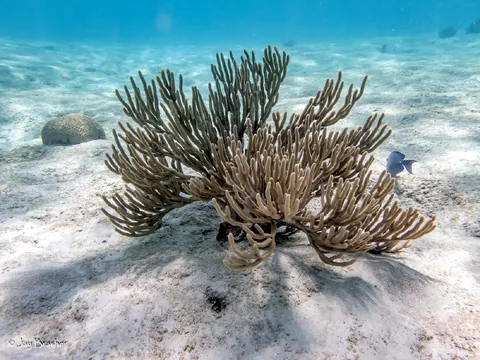
Black Sea Rod
Plexaura homomalla
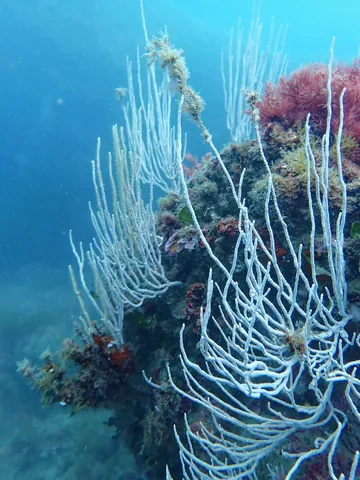
Eunicella verrucosa
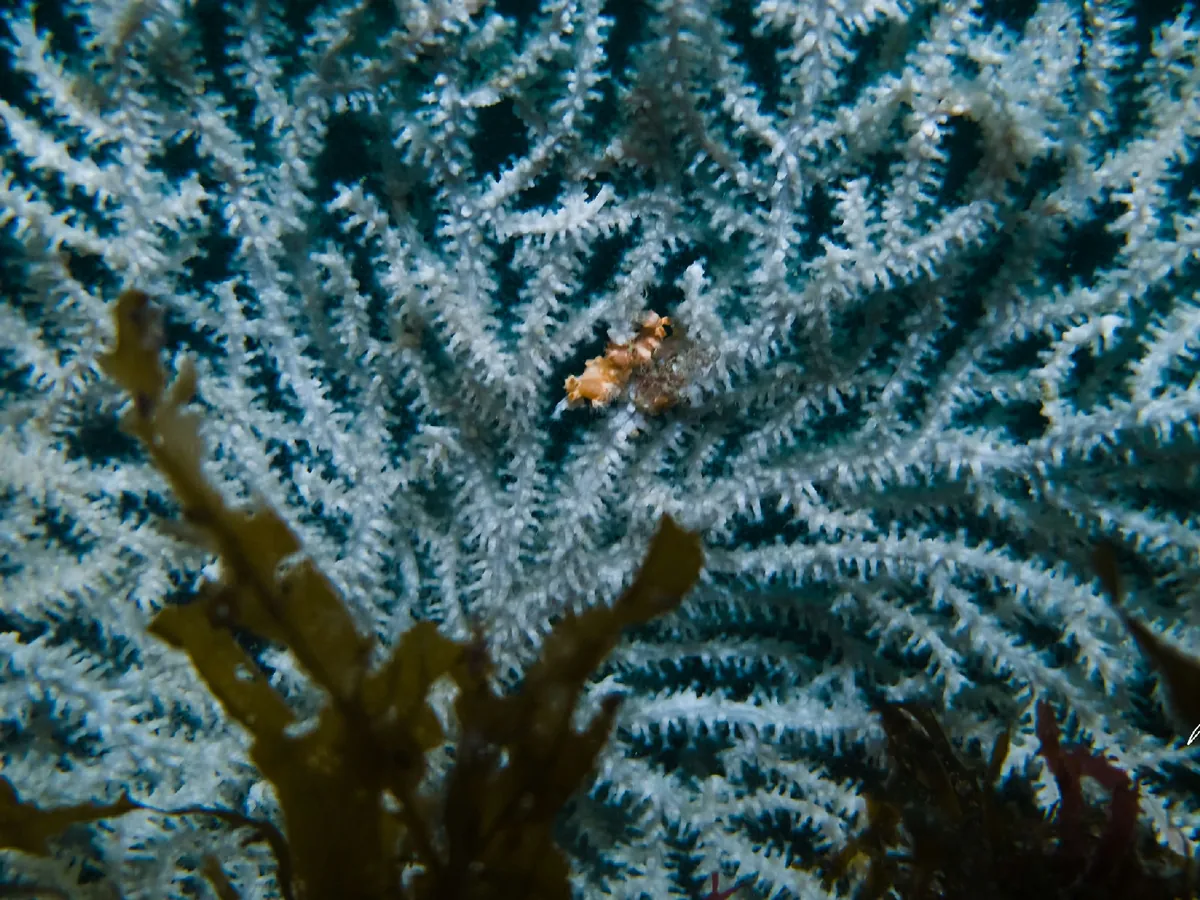
The one large, unmistakable sea fan of British and Irish waters, and a protected species there. Finding a pink one on a cold Atlantic reef feels out of place until you remember these are temperate animals.
Also known as: pink sea fan, broad sea fan, warty gorgonian, gorgonian, sea fan
On a British or Irish reef, a pink or white branching fan is this species and nothing else. The small warty bumps along the branches confirm it.
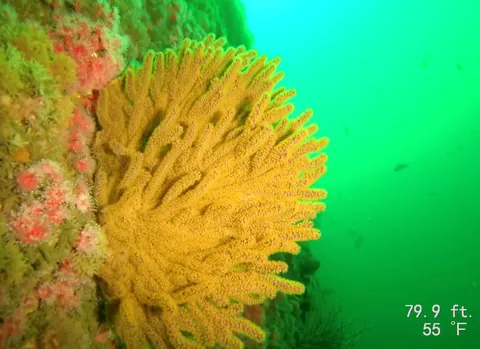
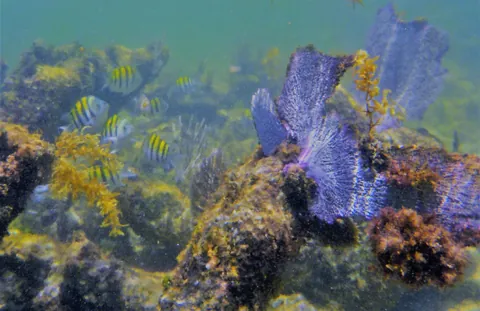
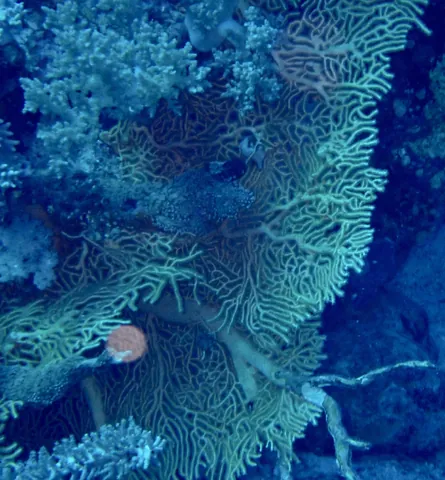
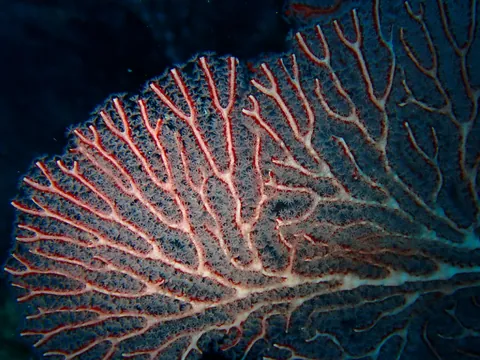
A fan usually around 25 cm tall, occasionally reaching 50 cm, branching mostly in one plane. Colour runs from red through pink to white, and the branches carry small raised warts where the polyps sit, which is where the alternative name warty gorgonian comes from.
The northeastern Atlantic and western Mediterranean, from southwest Britain and Ireland to France, Spain, Italy, Algeria, Morocco and Mauritania. It settles on rock, and readily on timber, metal and concrete, so wrecks often carry good colonies, between about 4 and 50 m.
Stands across the tidal stream on exposed reefs and wreck structure. It has no symbiotic algae and feeds entirely on what the current delivers, so the best colonies are on the most current-swept ground.
Zooplankton and suspended organic particles filtered from the tidal current.
Spawns in late summer. The larva is thought to be lecithotrophic, drifting only briefly before settling, so colonies recruit close to their parents.
Vulnerable on the IUCN Red List and protected in UK waters. Scallop dredging and lost angling line are the main threats; it has become scarcer in British waters, though warming seas may suit it.
Two animals live almost nowhere else: the sea fan anemone, which wraps itself around the branches, and the sea fan nudibranch, which grazes the colony and matches its colour so precisely that most divers swim straight past it.
Describe what you saw and we name it, then keep every species you find in your Oceandex.