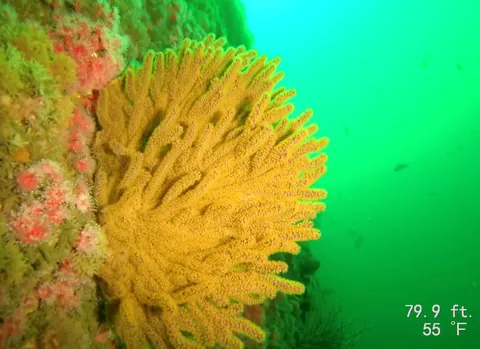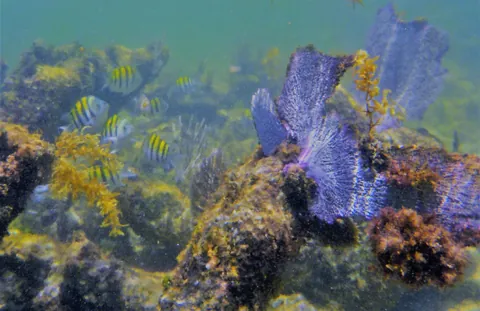
Black Sea Rod
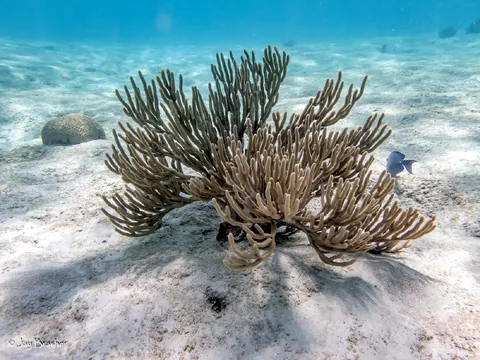
Plexaura homomalla
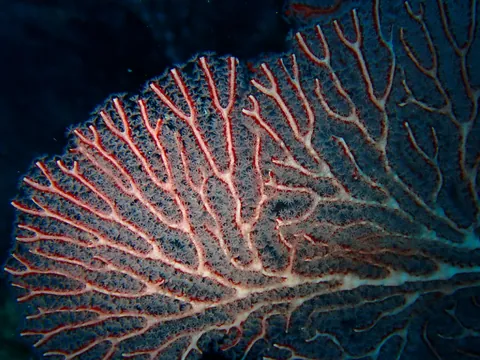
Annella mollis
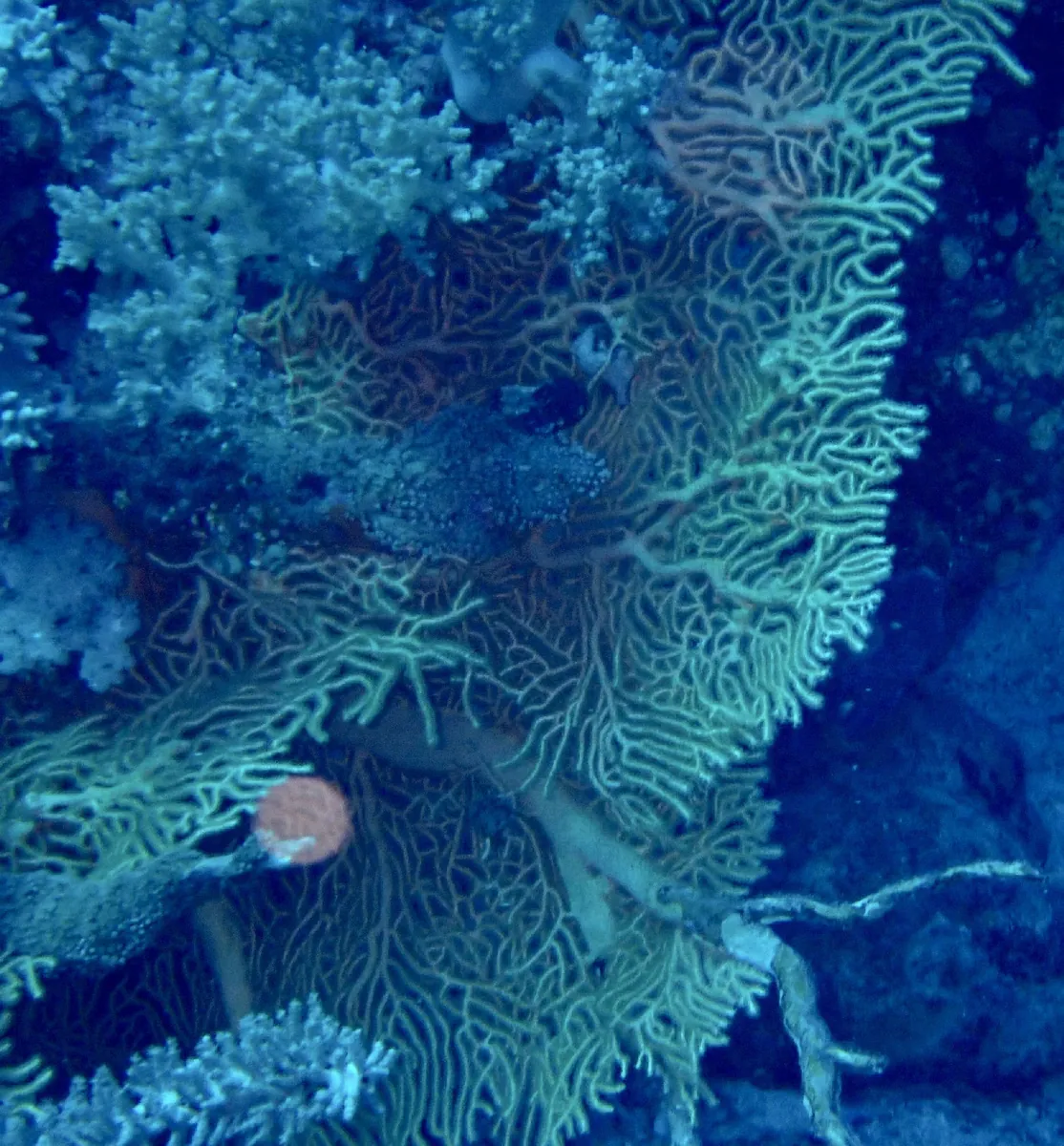
The huge mesh fans that make Red Sea and Indo-Pacific walls photogenic, often big enough for a diver to pose beside. They are also the reef's most reliable place to find a longnose hawkfish.
Also known as: Subergorgia mollis, giant sea fan, giant gorgonian, net fan coral, gorgonian, sea fan
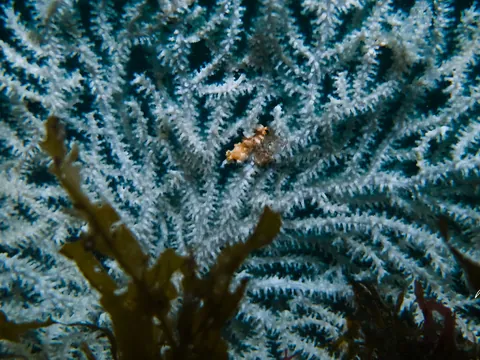
A very large flat fan with a fine, even, regularly fused mesh and muted colour, standing across the current on a wall or drop-off. The sheer size and the tight net pattern separate it from the smaller, brightly coloured fans nearby.
An enormous flat fan of fine, densely fused branches forming a regular net, reaching around three metres across in the best current. Colour is typically grey, brown, cream or dull orange, with the mesh itself the striking feature rather than bright pigment.
The Red Sea and across the Indo-West Pacific, on lower reef slopes, drop-offs, channel walls and wreck structure, mostly between about 5 and 50 m. The biggest colonies are always on exposed corners where current runs hardest.
The fan grows squarely across the prevailing current, and in a channel you can use rows of them to read the tide before you drop in. It has no symbiotic algae, so it feeds entirely on plankton delivered by the flow, with polyps most active in strong current.
Zooplankton and suspended organic particles taken from the current.
A broadcast spawner. Eggs and sperm are released into the water, and larvae settle on hard substrate on the reef slope.
Not formally assessed. Its favoured sites are exactly where boats anchor and divers crowd, so anchor scars and fin damage are the visible threats on popular walls.
Search a large fan carefully and it is a whole habitat: longnose hawkfish perch on the mesh, crinoids grip the upper branches, and gobies and shrimp live out their lives on a single colony without ever leaving it.
Describe what you saw and we name it, then keep every species you find in your Oceandex.