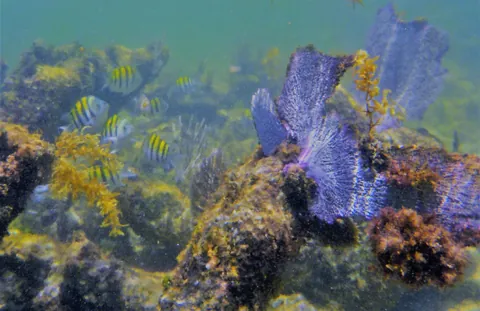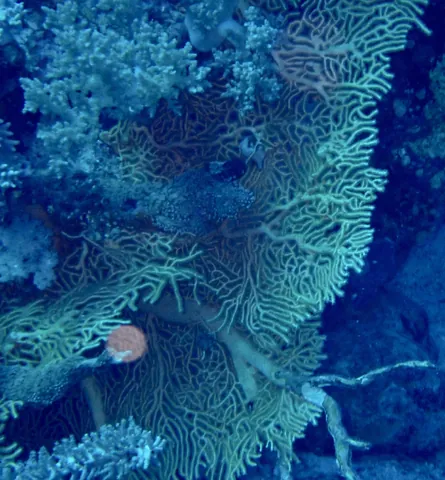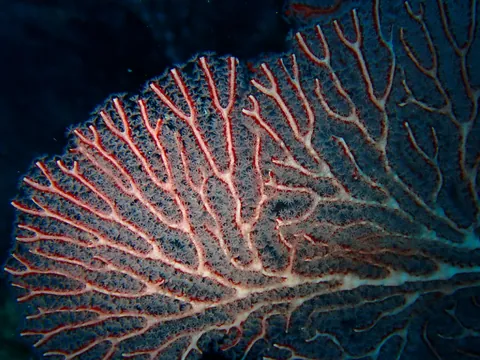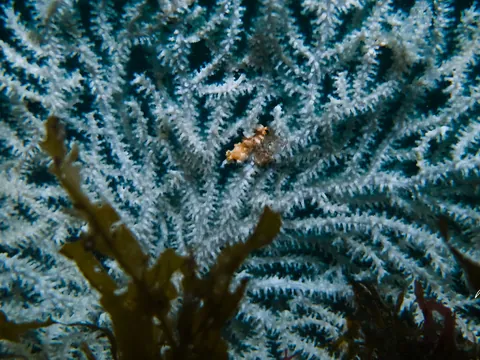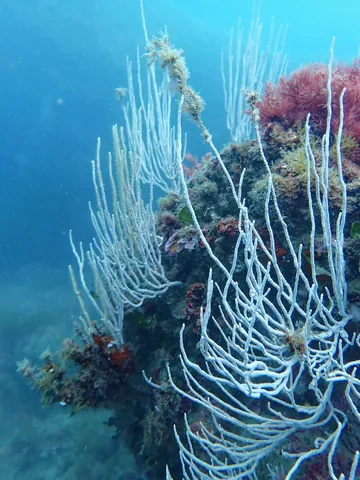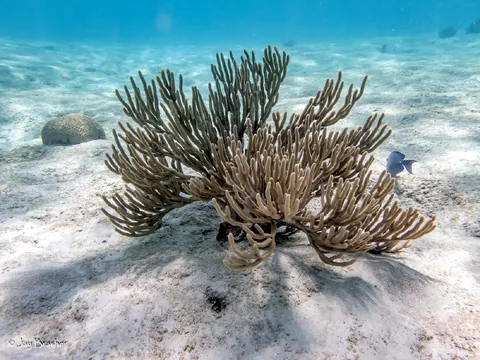
Black Sea Rod
Plexaura homomalla
Muricea californica
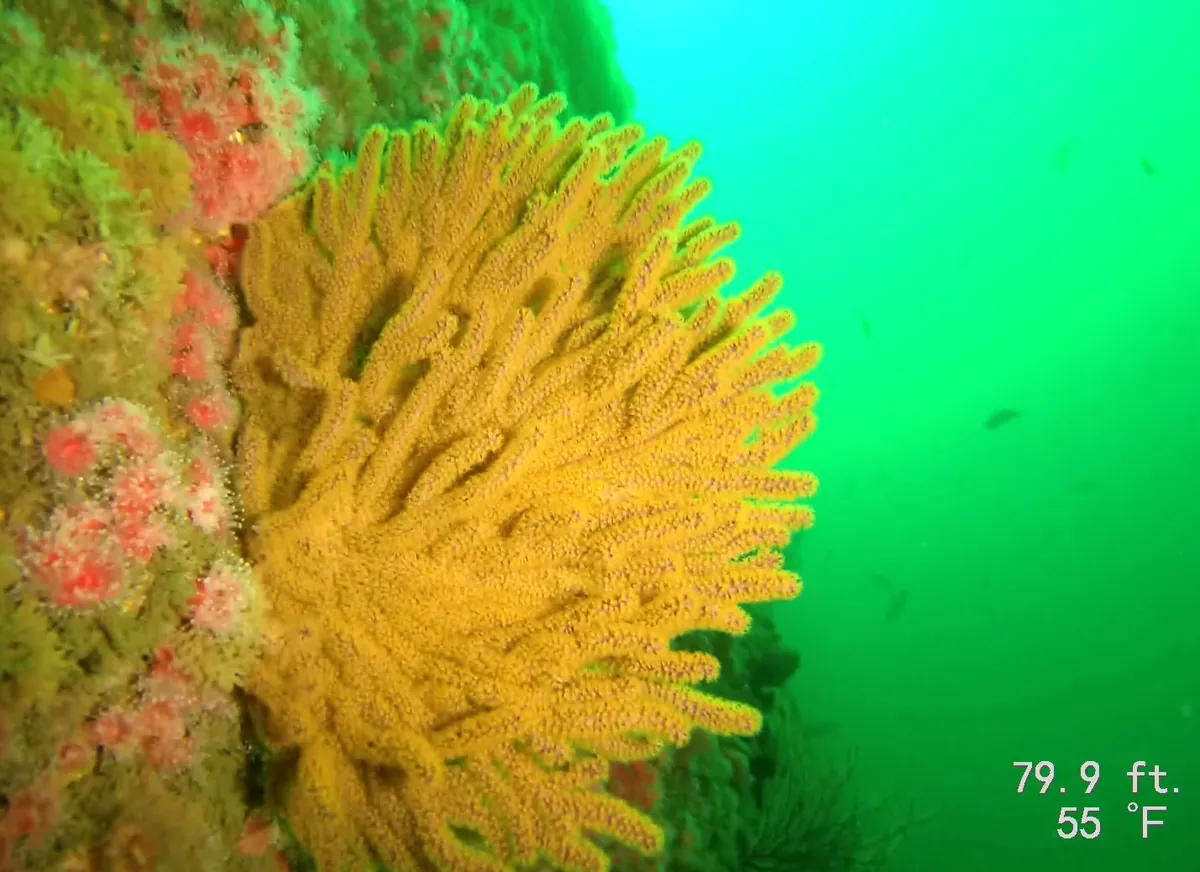
The golden bushes standing under the kelp canopy off southern California and the Channel Islands. On a good reef they grow thickly enough to look like an underwater orchard.
Also known as: golden gorgonian, California gorgonian, gorgonian, sea fan
A stiff brown bush covered in golden-yellow polyps in a southern California kelp reef. The red gorgonian growing alongside is bright red-orange in the skeleton itself, not just the polyps.
A stiff branching colony up to about a metre tall, branching in a rough plane. The skeleton is dull brown, but the polyps are golden yellow and stand out in dense rows, so a feeding colony glows gold under a torch and looks drab brown when the polyps are closed.
Rocky reefs from southern California to Baja California, typically between about 12 and 40 m and down to 65 m. It grows under and beyond the kelp forest, on rock with moderate to strong water movement.
The colony orients across the prevailing current so the filter-feeding polyps meet as much passing water as possible. It carries no symbiotic algae and feeds around the clock whenever there is flow.
Plankton and drifting detritus captured by the golden polyps.
Separate sexes, spawning into the water column in summer. Larvae settle on bare rock, and recruitment is slow and patchy.
Not formally assessed. The main damage is mechanical, from lost fishing gear, anchors and divers, and the slow growth rate means a broken colony takes decades to replace.
It grows roughly a centimetre a year, so the metre-tall colonies on the Channel Islands reefs were already standing when scuba diving arrived in California.
Describe what you saw and we name it, then keep every species you find in your Oceandex.