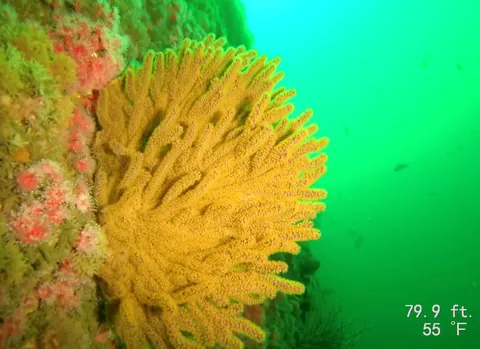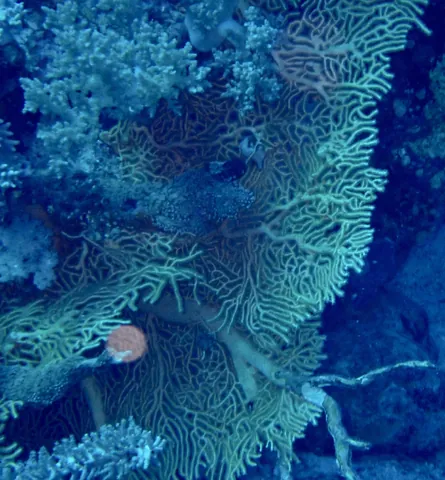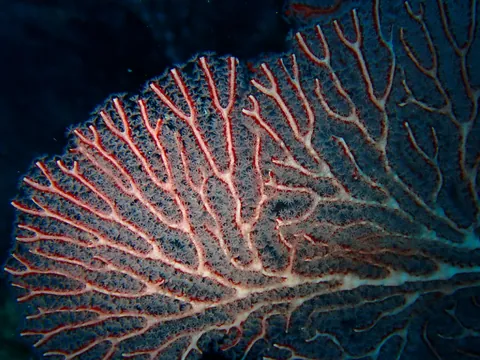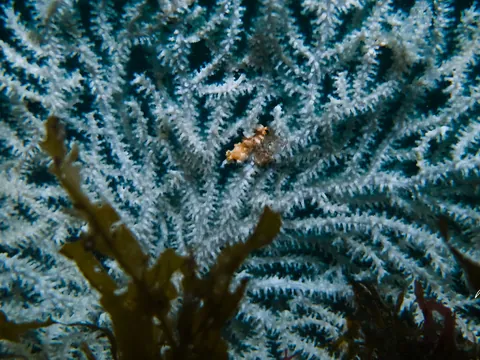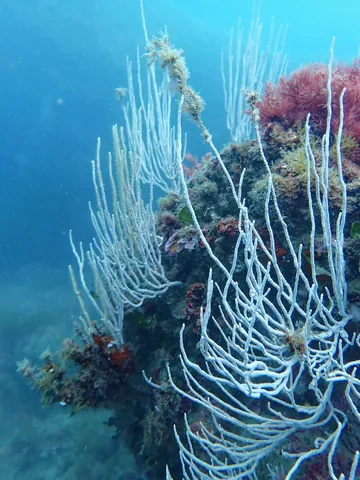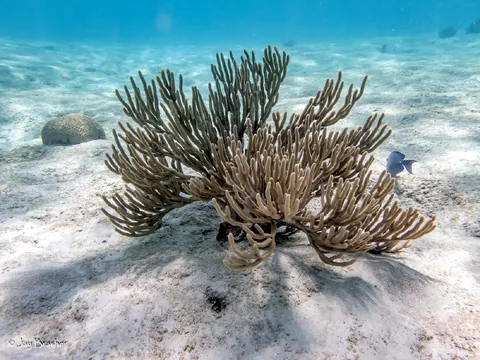
Black Sea Rod
Plexaura homomalla
Gorgonia ventalina
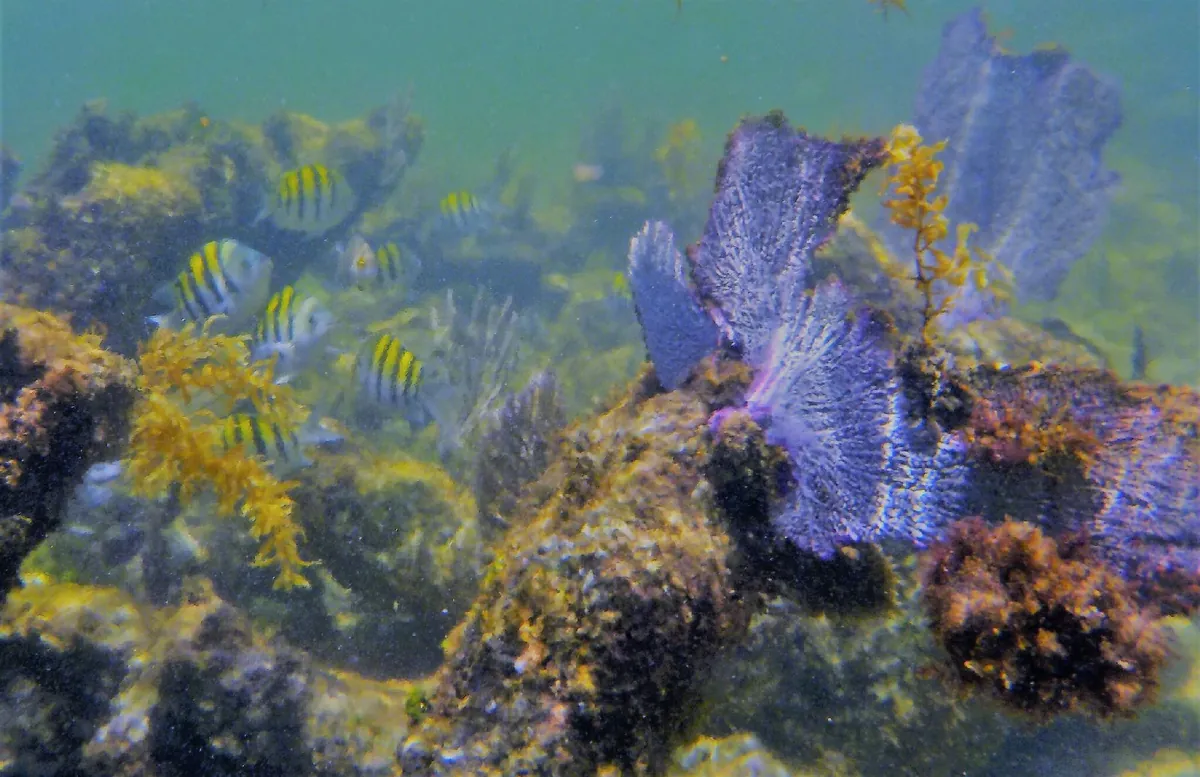
The purple lattice fan of the Caribbean, and the one most divers picture when they hear the word gorgonian. A big colony stands a metre and a half tall and sways through the surge without breaking.
Also known as: common sea fan, purple sea fan, purple gorgonian, gorgonian, sea fan
A flat purple mesh fan. To separate it from the Venus sea fan alongside it, look at the small branches: in this species they are round or flattened in the plane of the fan, giving a tidy, even net.
A single flat fan of fine branches that fuse into an open mesh, so the whole colony looks like a net stretched on a frame. Colour is usually pale purple, sometimes yellowish or white. The branches are round in section, or flattened in the same plane as the fan, and the tiny polyps stand out as a pale fuzz when they are open.
Shallow Caribbean and western Atlantic reefs from Bermuda and Florida to Curacao, including the Gulf of Mexico. It grows both in the wave-battered shallows near shore and on outer reefs with strong current, down to around 30 m.
The fan grows side-on to the prevailing current or swell, which is why whole fields of them line up facing the same way. Polyps sit open most of the day, catching plankton, and this species carries symbiotic algae in its tissue that make sugars from sunlight.
Plankton and suspended organic particles caught by the polyps, topped up by sugars from the symbiotic algae in its tissue.
Colonies are male or female and spawn eggs and sperm into the water. The larva drifts for a few days before settling on hard bottom to found a new colony.
Not formally assessed, but hit hard by the fungal disease aspergillosis, which eats purple-rimmed holes through the fan, especially where water quality is poor.
The little flamingo tongue snails grazing across the fan are eating it, and so is the nudibranch Tritonia hamnerorum, which steals the fan's own chemical defences and uses them against its own predators.
Describe what you saw and we name it, then keep every species you find in your Oceandex.