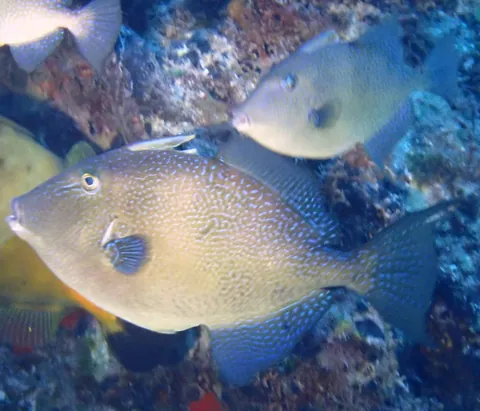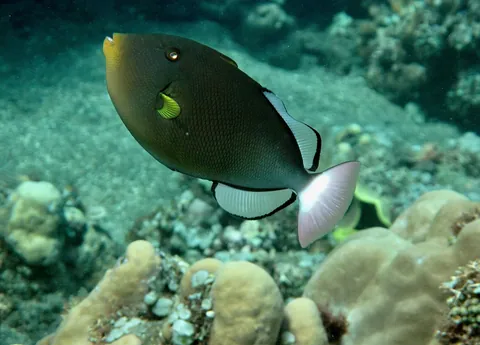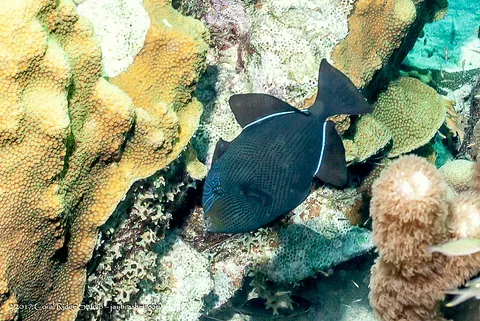
Black Triggerfish
Melichthys niger
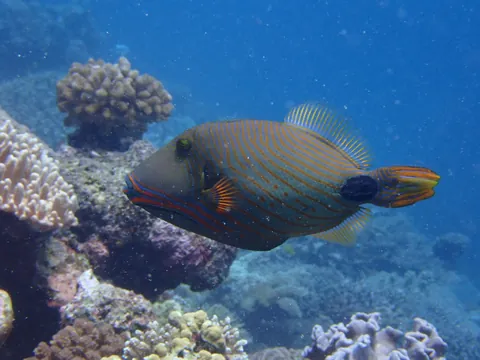
Rhinecanthus aculeatus
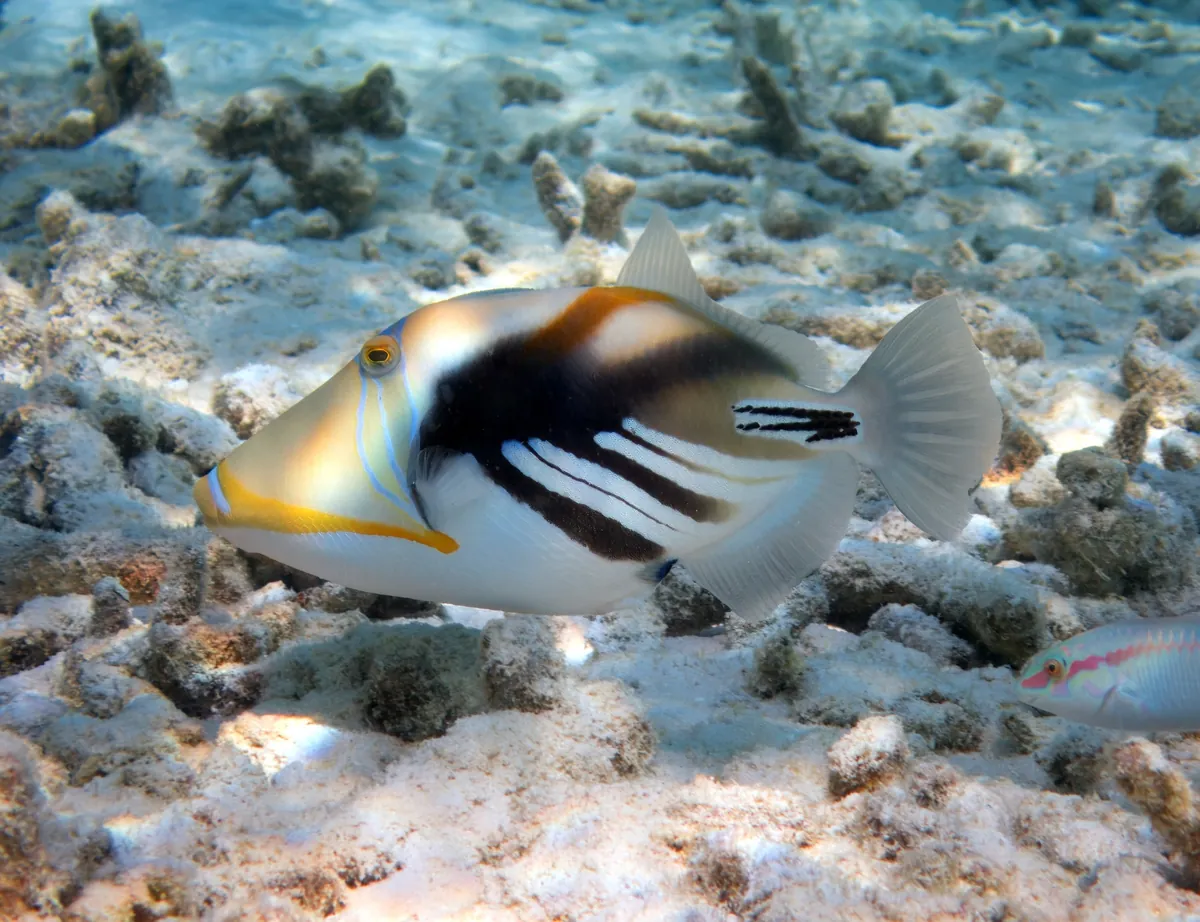
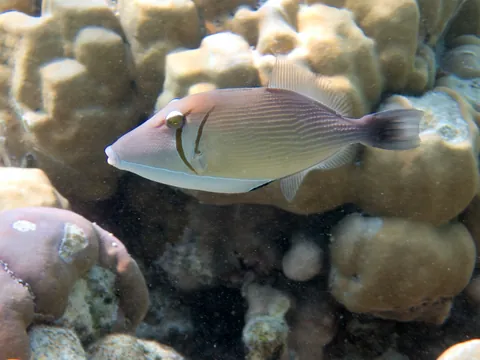
The Picasso triggerfish is a small, boldly patterned reef fish of shallow lagoons and reef flats. It is never still, patrolling its patch of bottom all day and picking at almost anything edible. It reaches 30 cm but is often around 15 cm, and lives from the shallows down to about 50 m.
Also known as: rhinecanthus aculeatus, black-barred trigger-fish, blackbar triggerfish, lagoon humu, lagoon triggerfish, painted trigger, picasso, picassofish, prickly triggerfish, white-banded triggerfish, white-barred triggerfish, whitebanded triggerfish, whitebarred triggerfish
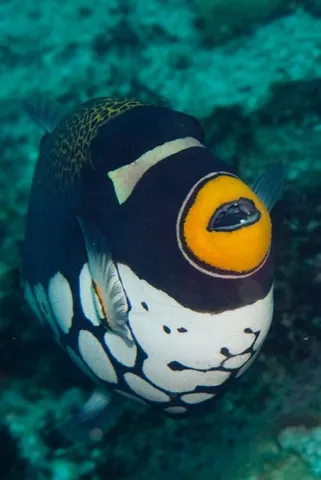
This species is much smaller than its close relative, the titan triggerfish, which can grow far larger. If in doubt about which triggerfish you are looking at, size is the simplest test: this one rarely passes 30 cm.
The body is mostly whitish. A yellow band runs back from the snout and meets a dark bar crossing the eye. A dark brown patch sits in the middle of the body and connects to a set of slanting dark bands above the fin under the tail. Rows of black dots mark the base of the rounded tail, and three rows of small forward-pointing spines run along the narrow part of the body just before it. There is a deep groove in the skin in front of the eye, and the head is nearly straight along both the top and bottom edges.
It swims by rippling the fins on its back and underside while keeping its body steady, letting it move forwards, hover, or reverse - useful for backing straight out of a hole. It defends its territory against other fish and against divers, especially while guarding eggs. It is far smaller than the titan triggerfish, its close relative, so its charges are much less of a concern. Juveniles are secretive and stay near rubble; adults swim in the open but are usually shy.
Males and females both hold territories, and one male's ground can overlap that of several females. A pair spawns around sunrise and sticks the egg mass to sand, coral rubble, or algae; the eggs hatch the same day, around sunset. Unusually, it is the mother, not the father, who guards the eggs - fanning them with her fins and chasing off other fish and starfish until they hatch.
harmless
This fish sleeps lying on its side, and makes a whirring sound when something alarms it.
Describe what you saw and we name it, then keep every species you find in your Oceandex.