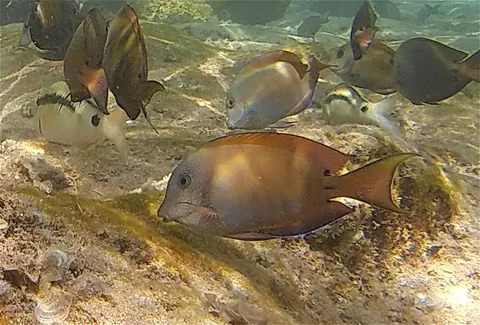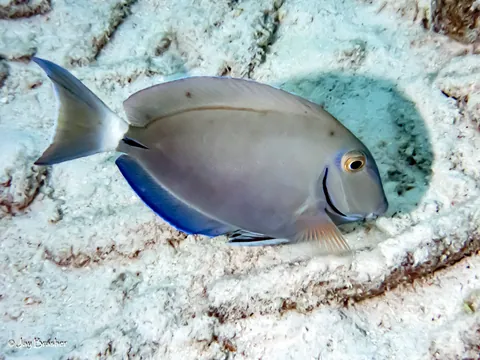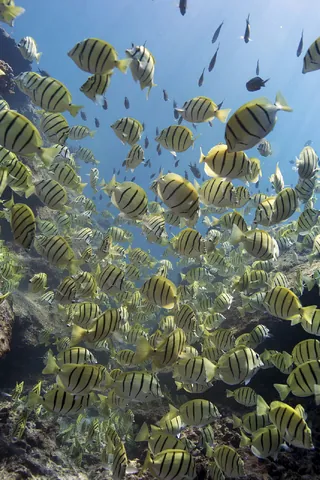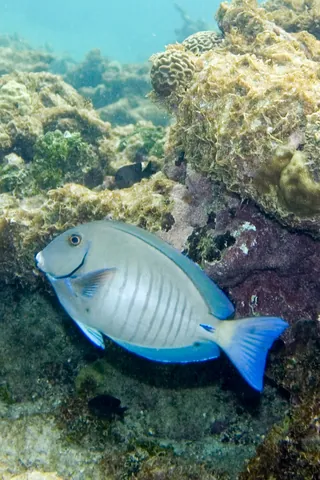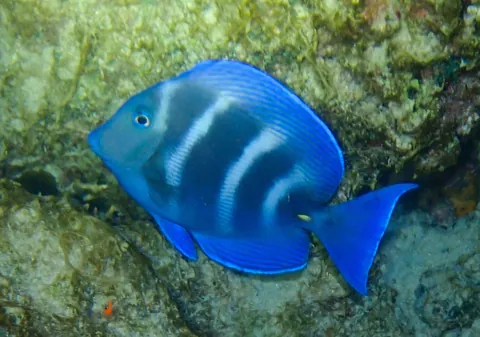
Atlantic Blue Tang
Acanthurus coeruleus
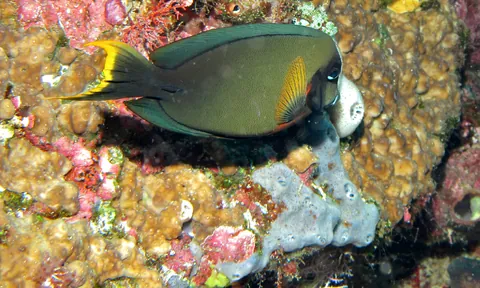
Acanthurus olivaceus
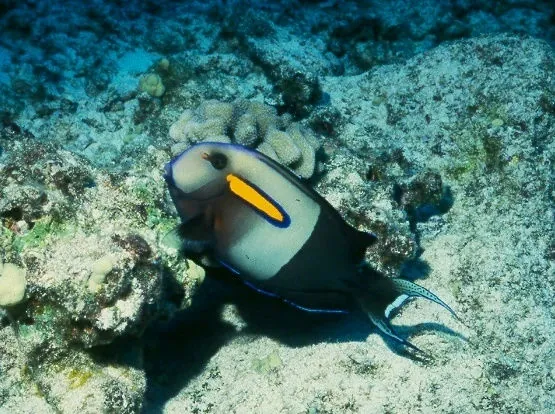
The orangespot surgeonfish is a common Indo-Pacific reef fish that reaches about 35 cm. Young fish start out bright yellow before fading into the greyish-brown of the adults.
Also known as: olive surgeonfish, orange epoulette surgeon, orange band surgeonfish, orange-blotch surgeon, orange-ear surgeonfish, orange-epaulette surgeonfish, orangeband surgeonfish, orangespot surgeonfish, orangebar surgeonfish, orangespot surgeonfish, surgeonfish, orangebar surgeonfish, orange band surgeonfish, orangeband surgeonfish, orange-ear surgeonfish, olive surgeonfish, orange-epaulette surgeonfish, orangebanded surgeonfish, orange-band surgeonfish, gendarmefish, orange epoulette surgeon, orangespot surgeonfish, orange-blotch surgeon, orange spot tang, orangeband surgeonfish, orangeblotch surgeonfish, orangespot surgeon-fish, orange-spot surgeonfish, orange-blotch surgeonfish, orange-spot surgeon-fish, orangeshoulder tang
Adults could be mistaken for other grey-brown surgeonfish, but the orange bar edged in purplish-black just behind the gill cover is unique to this species and easy to spot at a distance.
The body is deep, oval and flattened from side to side, over twice as long as it is deep. The dorsal and anal fins are long and low, reaching almost to the tail. Adults are greyish-brown, with the front half of the body noticeably paler than the darker hind half. There is an orange bar edged in purplish-black just behind the top of the gill cover, and blue and orange lines at some fin bases. Like other surgeonfish, it carries a scalpel-like spine on the tail base. Older males develop a rounded, convex snout. The tail fin is strongly curved outward.
It lives on reefs across the tropical eastern Indian Ocean and western Pacific, from Christmas Island to southern Japan, Australia, Indonesia, the Philippines and Hawaii. Adults favour outer reef slopes with bare rock or mixed rubble and sand, in water from about 24 to 28 degrees C and from about 9 to 46 m deep. Young fish stay in shallower, sheltered bays and lagoons in small groups.
This species is listed as Least Concern. It is moderately common across its wide range and turns up in fish markets and the aquarium trade, but it faces no particular identified threat.
As this fish grows older, the tips of its curved tail fin keep growing longer, giving mature adults a noticeably more pointed tail than younger fish.
Describe what you saw and we name it, then keep every species you find in your Oceandex.