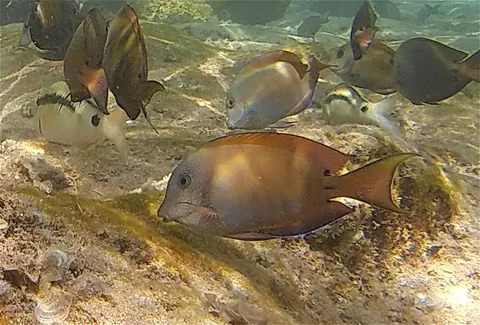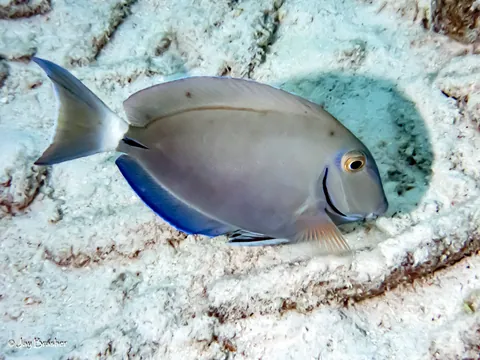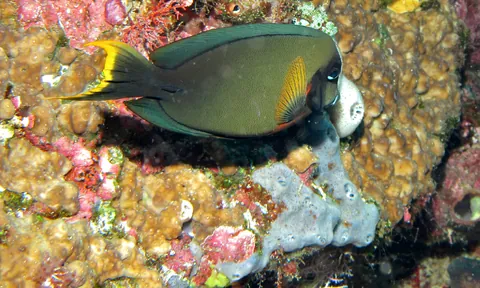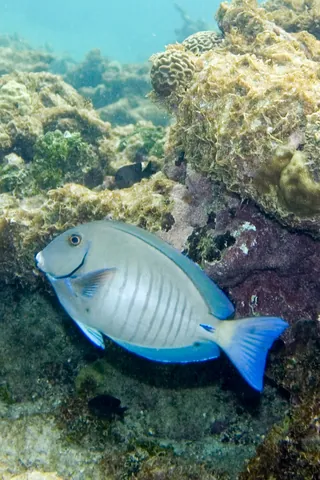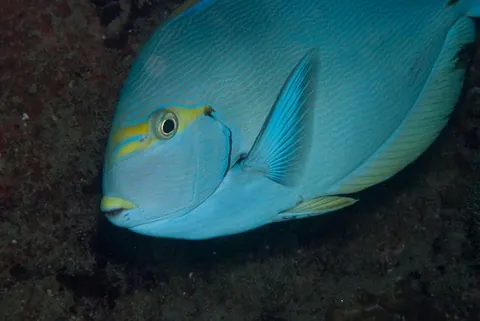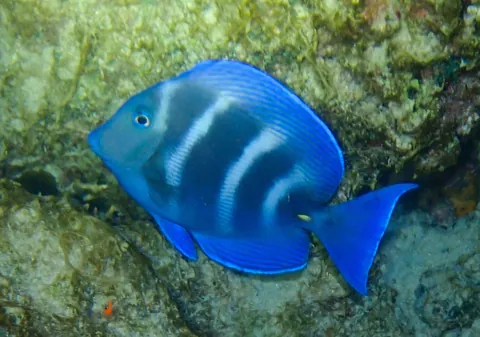
Atlantic Blue Tang
Acanthurus coeruleus
Acanthurus triostegus
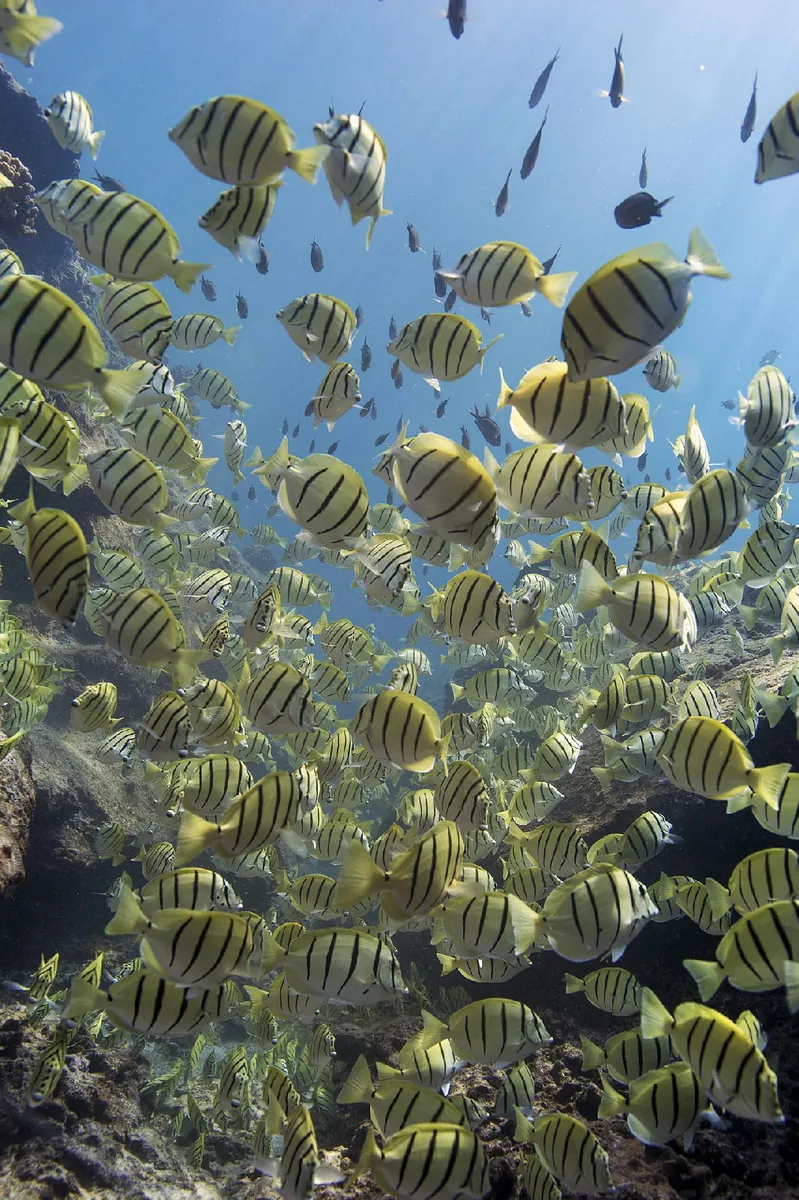
The convict surgeonfish, also called the convict tang, is a common reef fish across the tropical Indo-Pacific. It gets its name from the bold dark stripes across its body, like a prison uniform.
Also known as: fiveband surgeonfish, fiveband surgeonfish, convict surgeon, convict tang, surgeonfish, convict tang, five-banded surgeon-fish, convict surgeon-fish, convict surgeon, banded surgeon
Look for six black vertical stripes on a yellowish, flattened oval body, with the first stripe running through the eye. This striped pattern is fixed and easy to count at a glance, unlike similar species with more or fewer stripes.
This fish has an oval, flattened body with six black stripes on a yellowish background, the first running through the eye. There are two black spots at the base of the tail. On each side of the tail base is a sharp spine that folds into a groove and flicks out for defence. It grows to a maximum length of 27 cm, though most individuals are closer to 17 cm.
This species lives over hard bottoms in lagoons, on reef slopes, and in bays and estuaries across the tropical Indo-Pacific. Young fish are common in shallow tide pools, while larger adults can be found down to 90 m, often near freshwater runoff where certain algae grow on the rocks.
Convict surgeonfish graze filamentous algae off coral and rock, often close to where fresh water flows into the sea. Adults gather in large feeding schools, which can be big enough to overwhelm damselfish trying to defend their algae patches as territory. They also form spawning aggregations, where eggs and sperm are released into open water.
When convict surgeonfish gather into large feeding schools, their numbers can overwhelm territorial damselfish, letting the group graze algae patches that a single fish could never take on its own.
Describe what you saw and we name it, then keep every species you find in your Oceandex.