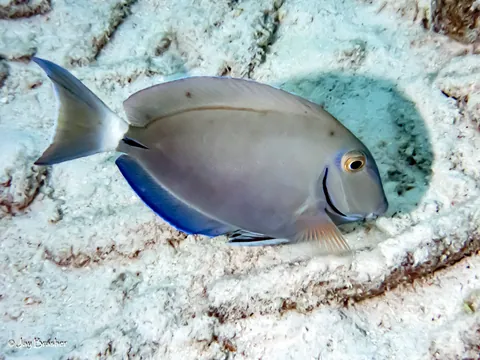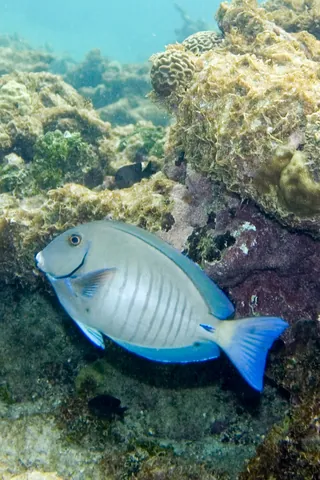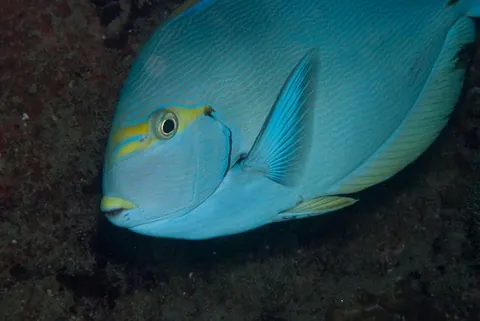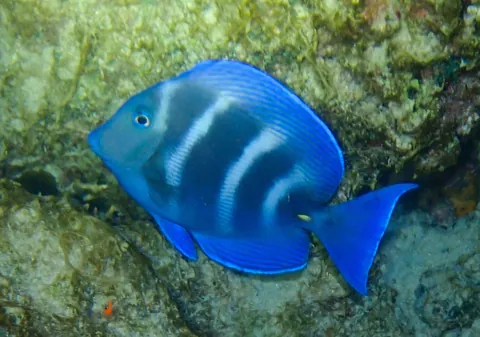
Atlantic Blue Tang
Acanthurus coeruleus
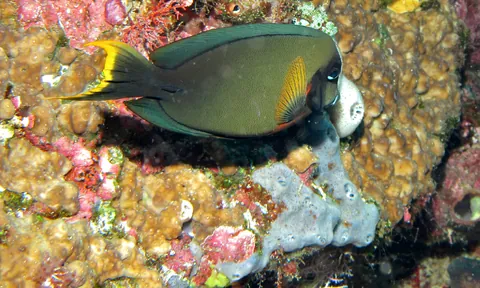
Acanthurus nigrofuscus
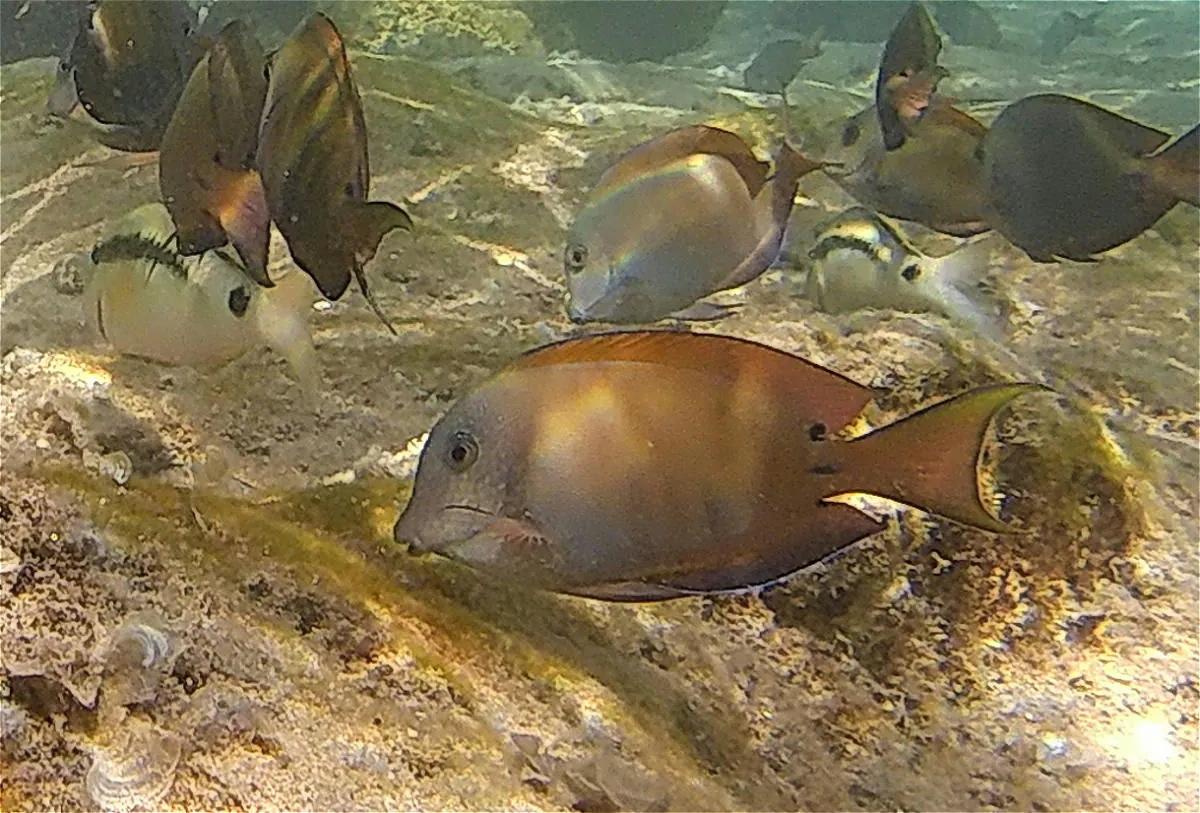
The brown surgeonfish, also called the blackspot surgeonfish, is a small, abundant reef fish found right across the Indo-Pacific. It rarely grows past 21 cm, but what it lacks in size it makes up for in numbers.
Also known as: brown surgeonfish, dusky surgeonfish, lavender tang, spot-cheeked surgeonfish, brown surgeonfish, lavender tang, spot-cheeked surgeonfish, surgeonfish, brown surgeon, dusky surgeonfish, elongate surgeonfish, lavender surgeonfish, dusky surgeon
Many small brown reef fish look alike. The fixed mark on this species is the tail-base spine sitting inside a black patch, paired with a small black spot at the base of the dorsal fin.
The body ranges from brown to purplish or bluish-brown, with a slightly humped forehead profile. Small orange spots mark the head and breast. The base of the tail carries a spine sitting inside a patch of black pigment. There are also small black spots at the base of the dorsal and anal fins, and these fins have a pale blue edge. Some individuals show faint, wavy lines of small blue dots along the body.
It is found from East Africa and the Red Sea across the Indian Ocean to Hawaii and the Pitcairn Islands, and from southern Japan south to New South Wales. It gathers in small schools on sheltered coral and rocky reefs, often around isolated rocky patches, in water between about 24 and 28 degrees C and down to about 25 m.
It grazes on algae growing on the reef. Usually seen in small groups, it can form large schools in open, oceanic areas, and gathers in large numbers to spawn. Though it ranks low in the reef pecking order, a big enough school can push larger, more dominant grazers out of the way.
Its gut hosts an unusually large symbiotic bacterium, about the size of a printed hyphen, which helps control the pH inside the fish's intestine.
Describe what you saw and we name it, then keep every species you find in your Oceandex.