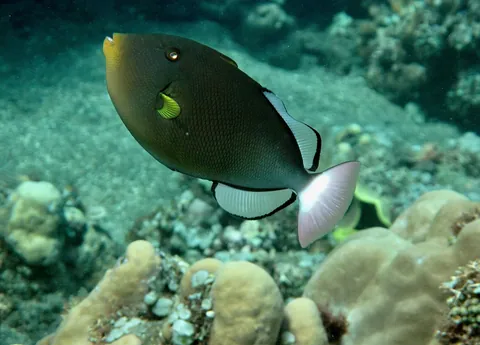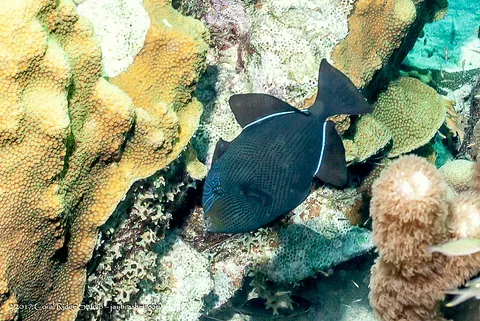
Black Triggerfish
Melichthys niger
Balistapus undulatus
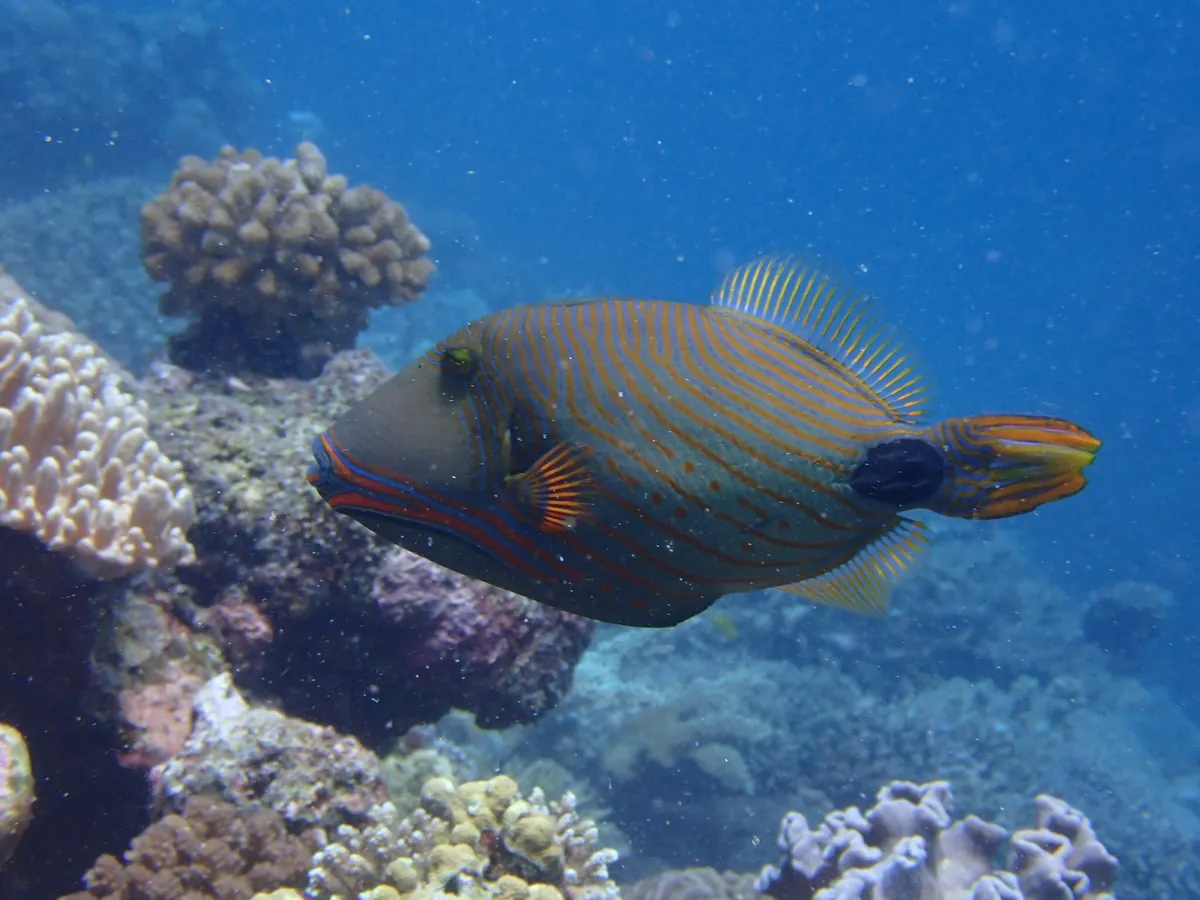
The orange-lined triggerfish is a common, feisty character on Indo-Pacific reefs, growing to about 30 cm, with most adults nearer 26 cm. It holds its own patch of reef, slips sideways into cracks to dodge trouble, and is one of the main hunters of sea urchins, a job that helps keep reefs healthy.
Also known as: peixe-balista listrado, red-lined triggerfish, striped triggerfish, striped triggerfish, orange-lined triggerfish, vermiculated triggerfish, orange-lined triggerfish, orangestriped, redlined triggerfish, vermiculated triggerfish, orange-lined triggerfish, orangestripe triggerfish, orange striped triggerfish, striped triggerfish, undulate triggerfish, leatherjacket, undulated triggerfish, red-lined triggerfish, orange-lined triggerfish, orange-striped triggerfish, red-lined trigger-fish, orangestripe triggerfish, striped trigger-fish, leubiem kunèng
Many reef triggerfish share a dark, oval body, so look for the one combination unique to this species: a black patch at the base of the tail paired with a plain orange tail fin. Do not rely on snout markings, since adult males lose them.
Its body is dark brown to dark green, stocky, oval, and flattened from side to side, with a large head making up about a third of its length. Wavy orange lines start behind the head and run back across the flanks. The tail fin is plain orange, and there is a large black patch at the base of the tail, just ahead of the small bony spines there. Males grow larger than females and lose the orange lines on the snout as they mature, while females and young fish keep them and have a slightly hollowed snout profile.
It lives across the tropical Indo-Pacific, on coral reefs, in coral lagoons and on outer reef slopes, from the shallows down to at least 50 m. Adults favour hard rock and branching coral, while young fish sit over softer ground. Each adult keeps to a home patch near its own burrow or den.
Adults are territorial and usually seen alone. They pick spots on the reef with plenty of places to hide, and can slide sideways into a narrow crack to escape a predator. A male's territory may overlap several female territories, which the females defend against other females. After spawning, the female guards the eggs.
It is an omnivore with strong, heavy teeth that let it tackle hard-shelled prey. Its diet includes algae, sponges, molluscs, crustaceans, sea urchins, worms, sea squirts and fish eggs.
In East African marine parks this fish is the main predator of the burrowing sea urchin, and it eats more of them than any other predator there. When it was overfished, urchin numbers rose sharply, and this species' recovery helps keep reef-damaging urchins in check.
Describe what you saw and we name it, then keep every species you find in your Oceandex.