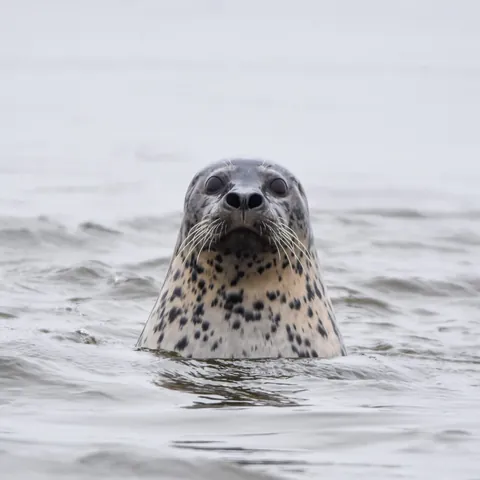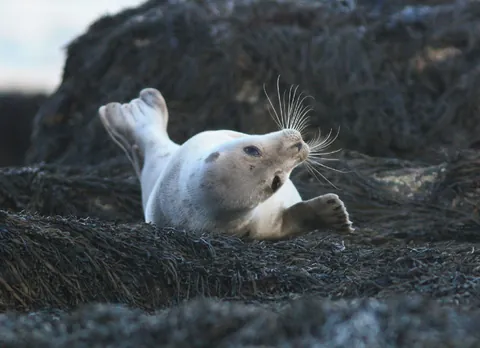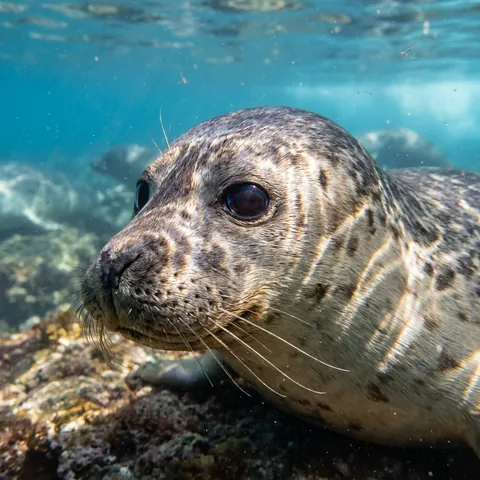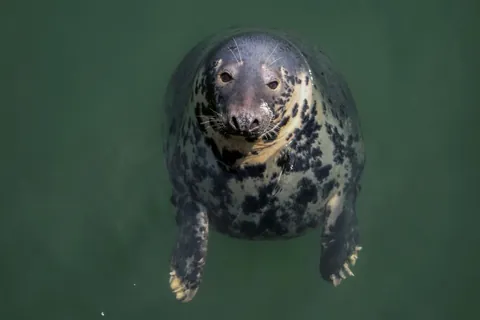
Grey Seal
Halichoerus grypus
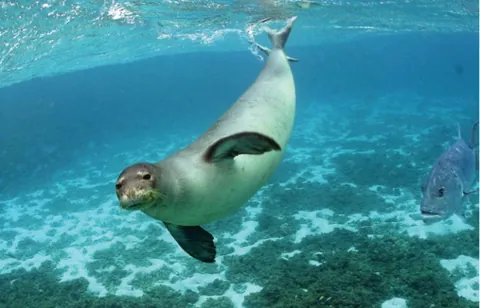
Monachus monachus
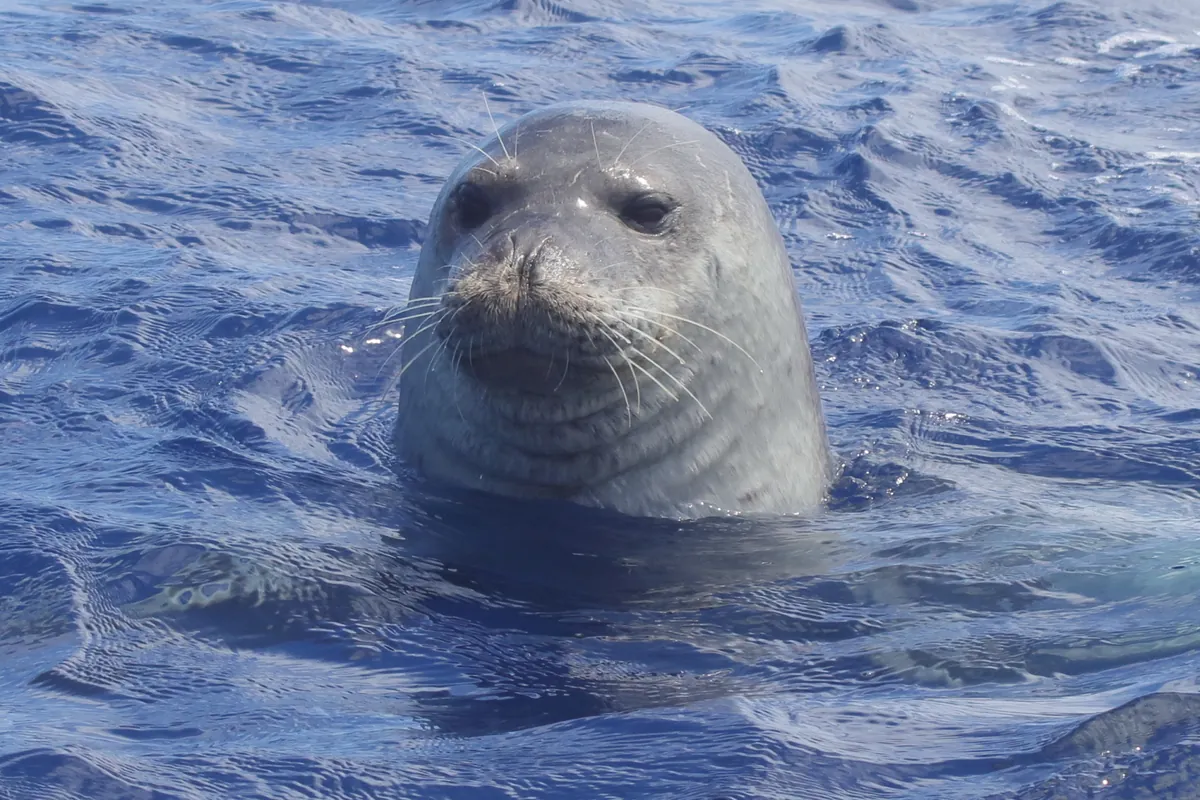
The Mediterranean monk seal is one of the rarest marine mammals on Earth, now surviving mainly by hiding in hard-to-reach sea caves rather than the open beaches its ancestors used. It can grow to about 280 cm and weigh up to 400 kg.
Its size and coastal habits can suggest other seals, but very few seal species share its Mediterranean and eastern Atlantic range, so location alone usually confirms it. The dark fur with a pale, near-white belly in males is a further useful check.
Adults have short fur, black in males and brown to dark grey in females, with a much paler belly that is nearly white in males. Pups look very different: they are covered in dark brown to black hair with a white belly stripe, rectangular in females and butterfly-shaped in males, which is replaced by adult-style short hair after a few weeks. The snout is short, broad, and flat.
It now lives mainly around remote, rugged coastlines, sheltering and giving birth in sea caves with underwater entrances rather than on open beaches, as it did before the 20th century. It is found in parts of the Mediterranean Sea and the eastern North Atlantic.
It feeds on a range of fish, octopus, squid, and lobsters, hunting mostly in shallow coastal water though it can dive much deeper. It favours open, wide spaces where it can use its speed, and will even lift rocks on the seabed to find prey.
Births happen year-round with a peak in autumn, and mating takes place in the water. Females give birth and nurse pups on beaches or in sea caves, using their own fat reserves to feed them, but many pups born in the peak season do not survive, often due to storms flooding the caves.
Listed as Vulnerable. Conflict with fishermen, whose nets and fish farms it can damage, has driven some hunting out of revenge, while conservation groups in Greece and elsewhere now work to protect remaining populations and their habitat.
In 2008, a female was recorded nursing her pup on an open beach for the first time since 1945, hinting the species may slowly be regaining confidence to use beaches again in places like Cabo Blanco.
Describe what you saw and we name it, then keep every species you find in your Oceandex.