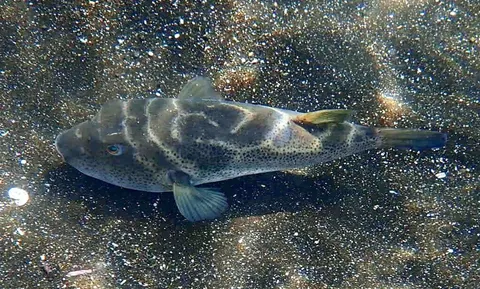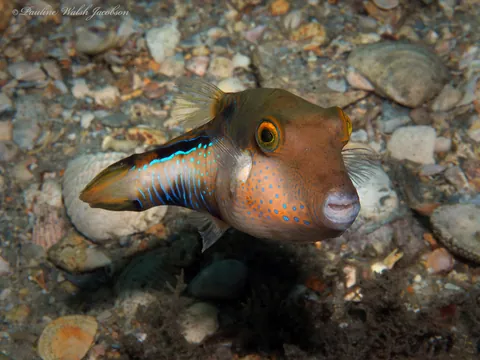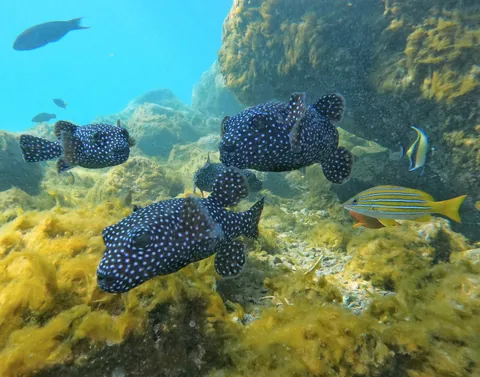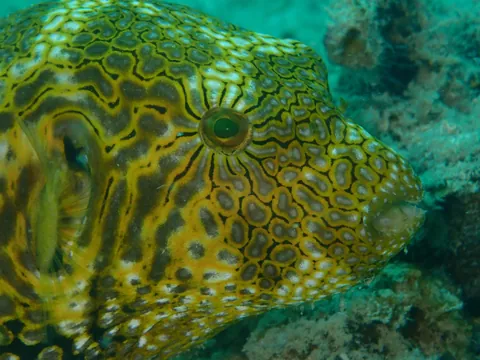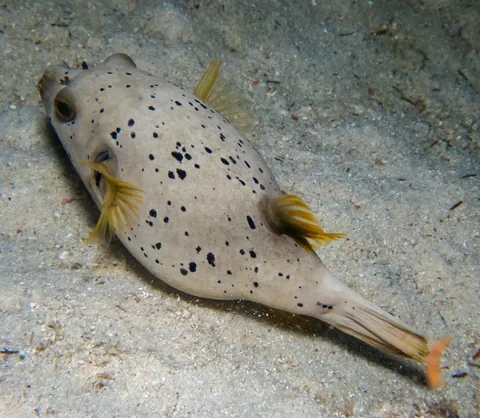
Blackspotted puffer
Arothron nigropunctatus
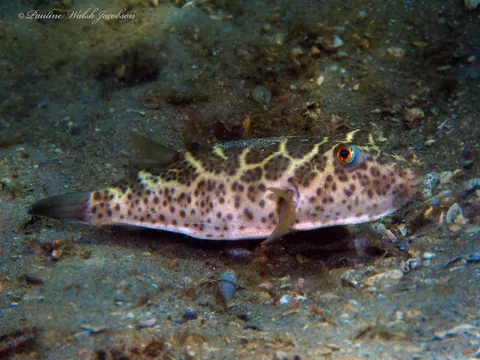
Canthigaster capistrata
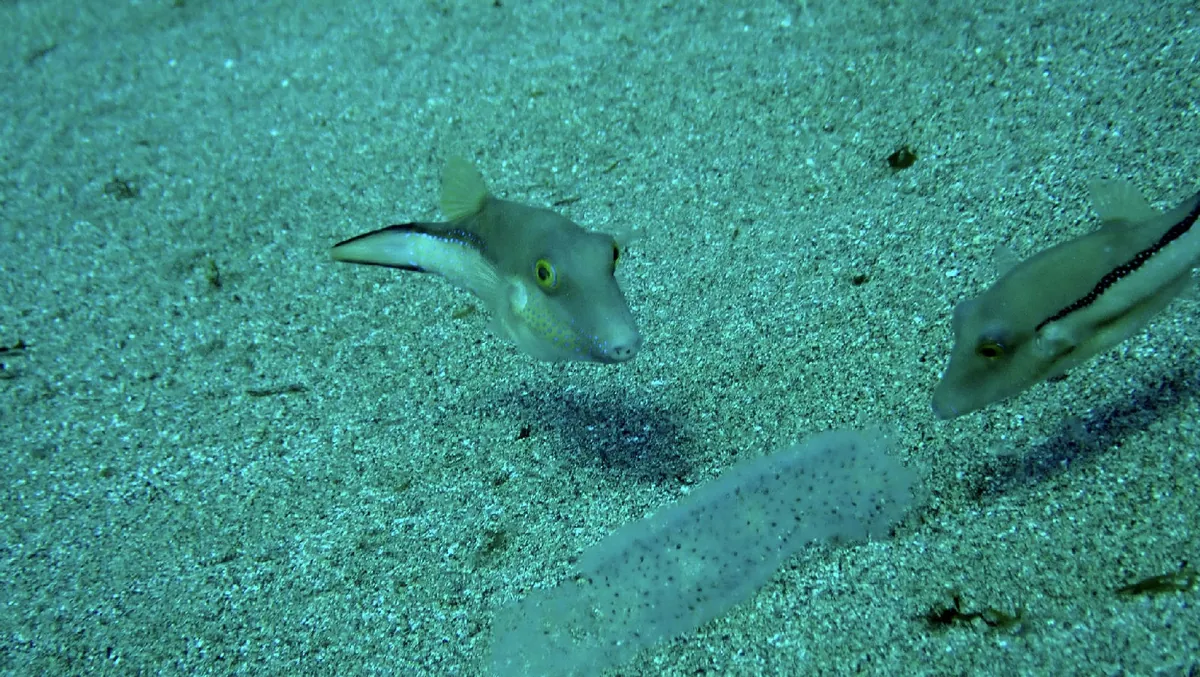
The Macaronesian sharpnose puffer is a small, tan reef puffer that grows to about 10 cm, most often seen around 7 cm. It lives near oceanic islands in the eastern Atlantic and carries a toxin strong enough to keep most predators away.
Also known as: macaronesian sharpnose puffer, macaronesian sharpnose-puffer, macaronesian toby, blue-spotted toby, gallinita, Canthigaster capistrata
It closely resembles its relative Canthigaster rostrata, but that species has a dark spot bigger than the eye just ahead of the dorsal fin. This species never shows that spot.
This puffer has a heavy, blunt body with a tan background, darker on the back than on the belly, and speckled all over with gray and blue dots except on the belly near the pectoral fins. A dark stripe runs along the side from the tail up to the base of the pectoral fin, and the snout carries fine bars. The jaws form a small beak, the dorsal and anal fins sit far back on the body, and, like other members of its genus, it has no pelvic fins.
This puffer forages over coral and rocky bottoms on the seabed. Like other pufferfish in its family, it carries tetrodotoxin, a powerful toxin, as its main defence against predators.
Harmless to divers - no spines, and it will not bite. Its skin and organs carry tetrodotoxin, which is why almost nothing eats it and nobody should.
The species is listed as Least Concern. Surveys around the Canary Islands found it both common and abundant, though whether numbers are rising, falling, or steady is not yet known. It shows up occasionally in the aquarium trade but is not in high demand, likely because of its toxicity and the care it needs.
Although this puffer is native to Atlantic islands, juveniles have recently turned up in the Mediterranean's Alboran Sea, far from its usual range.
Describe what you saw and we name it, then keep every species you find in your Oceandex.