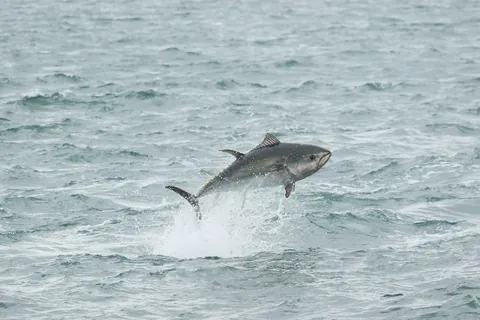
Atlantic Bluefin Tuna
Thunnus thynnus
Euthynnus alletteratus
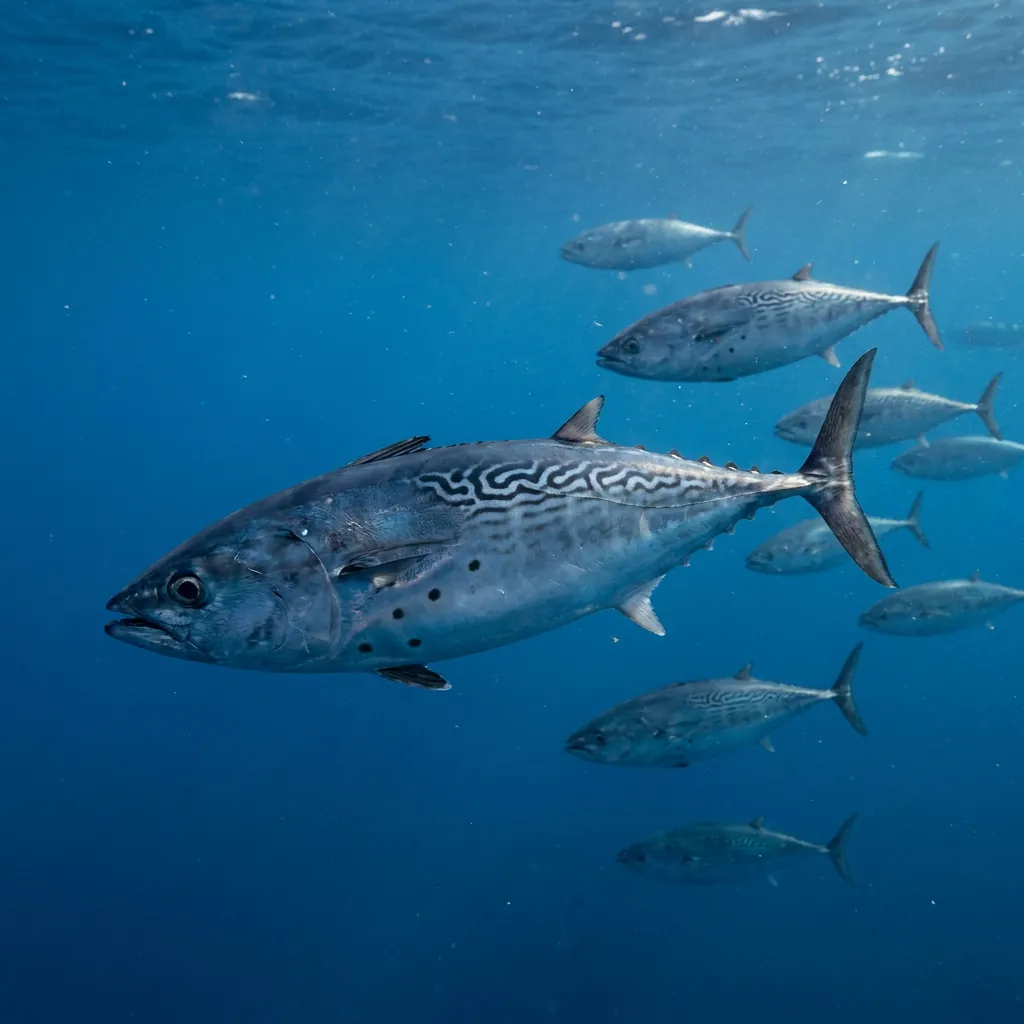
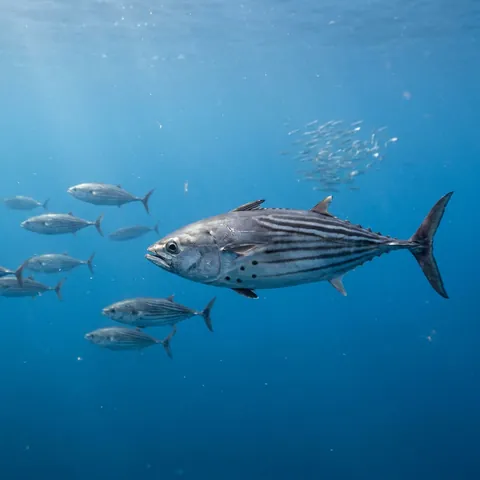
The little tunny is a small, fast tuna built for short bursts of speed rather than long migrations. Divers often meet it much closer to shore than other tuna species ever come.
Also known as: false albacore
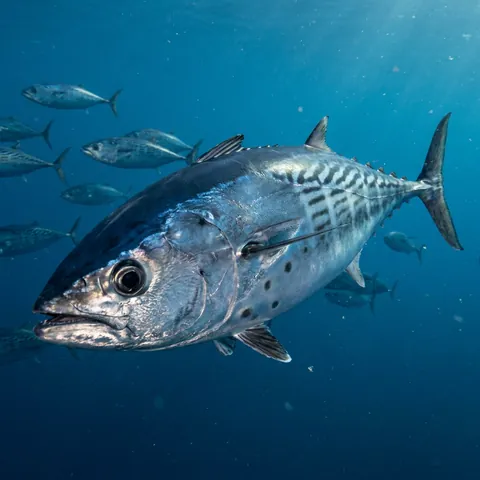
It is easily confused with the Atlantic bonito, skipjack, and other small tuna. Look for the scattered dark spots on the belly near the pectoral and pelvic fins — no other Atlantic tuna or bonito carries this pattern.
The body is torpedo-shaped and streamlined, with a large mouth and a lower jaw that juts out slightly. It has two dorsal fins set close together, the first tall, the second much smaller, each followed by a row of small finlets near the tail. Most of the body has no scales except along the lateral line, the faint sensory stripe down its side, and a thick band circling the front of the body. Colour is metallic blue or blue-green above, with dark, wavy stripes that stop before reaching the middle of the first dorsal fin. The belly is bright white, scattered with dark, fingerprint-like spots near the pectoral and pelvic fins.
This is a coastal, near-shore tuna, found around inlets, points, jetties, and sandbars in warm and temperate parts of the Atlantic, the Mediterranean, and the Black Sea. It follows the coast, moving south in autumn and winter and north again in spring.
The little tunny hunts small schooling fish such as sardines, anchovies, and scad, along with squid and crustaceans. It is an opportunistic feeder that often attacks bait balls near the surface, and its diet shifts with whatever is locally abundant.
Spawning takes place offshore, in the Atlantic between April and November and in the Mediterranean mainly from May to September. Eggs are released into open water, where they float freely until they hatch.
Unlike most tuna, the little tunny stays close to shore for most of its life and makes only short seasonal moves along the coast rather than long ocean migrations.
Describe what you saw and we name it, then keep every species you find in your Oceandex.