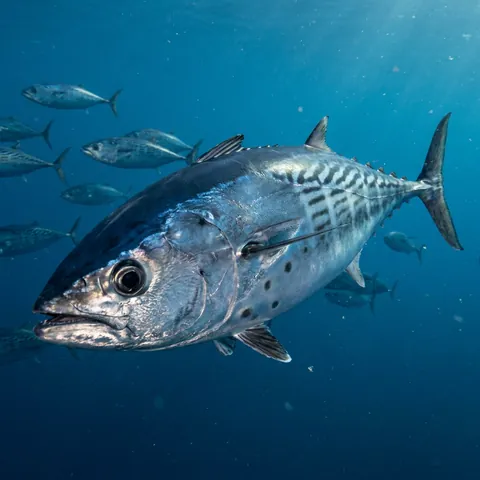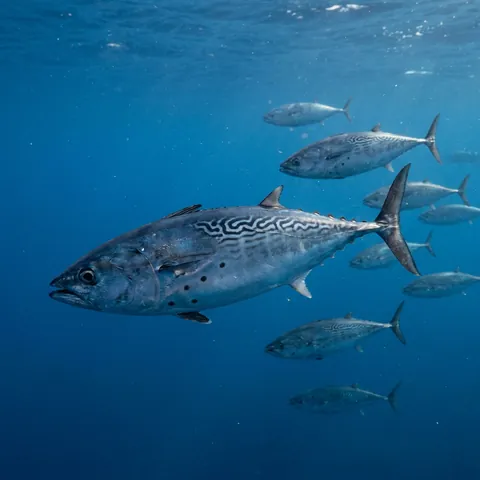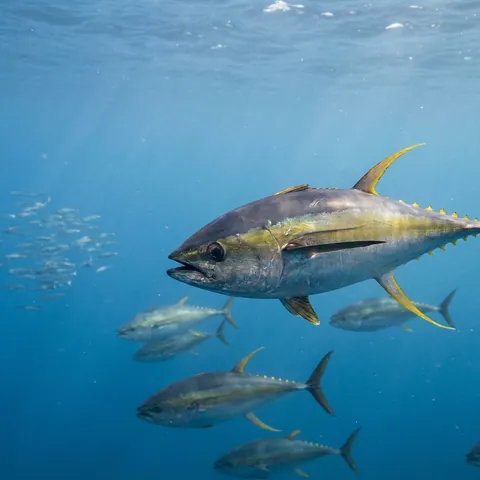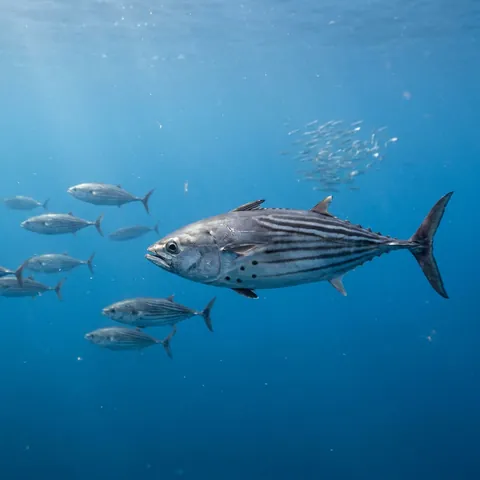
Black Skipjack
Euthynnus lineatus
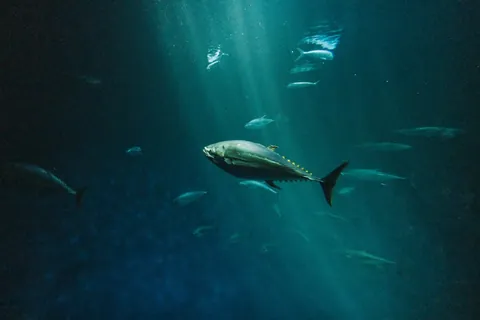
Thunnus thynnus
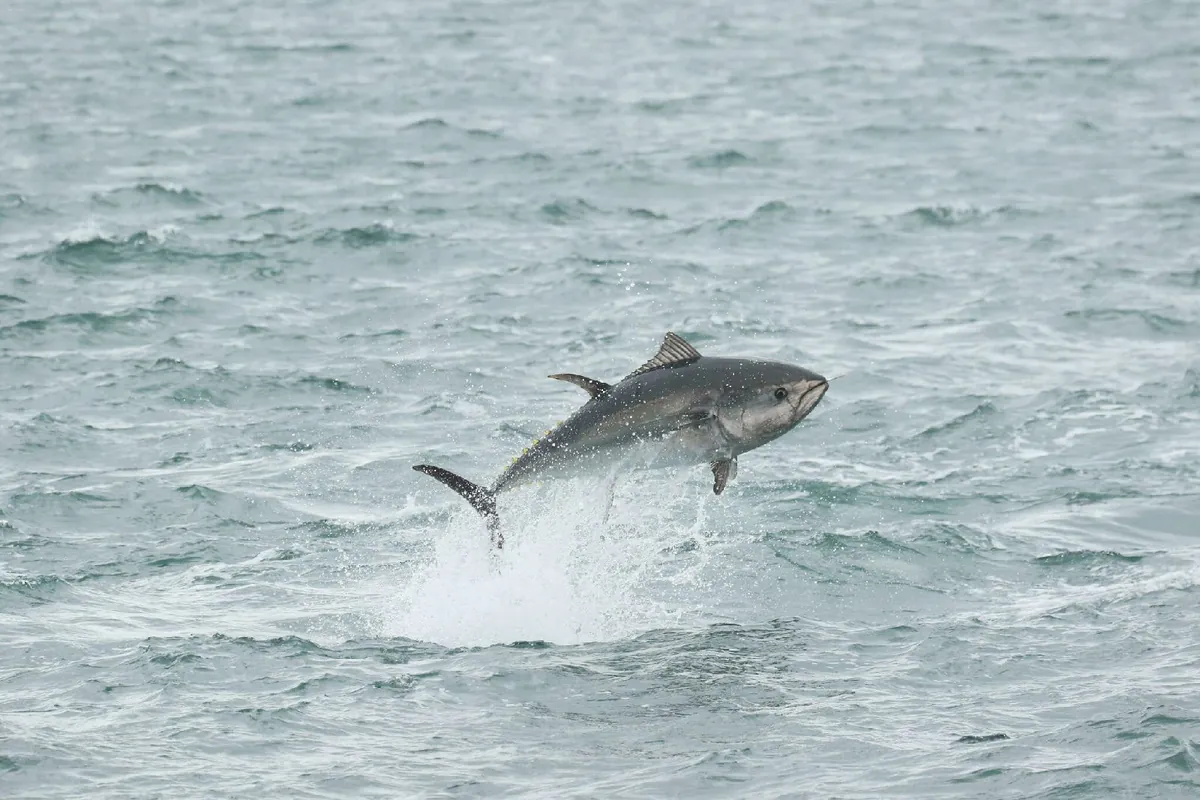
The Atlantic bluefin tuna is a powerful, fast-swimming predator that crosses entire oceans and dives to great depths in search of prey. Its size and strength have long made it one of the most sought-after fish in the sea.
Also known as: tunny, bluefin tunny, blue fin tuna, blue-fin tunny, squid hound
Its pectoral fins are noticeably shorter than those of other tuna, which is the clearest way to separate it from its relatives at a glance.
This is a robust, diamond-shaped fish with a conical head and a large mouth. Its back is dark blue, its underside is grey, and a golden sheen covers the body. The small fins along the rear of the body, near the tail, are bright yellow.
Bluefin tuna dive to great depths and hunt small schooling fish such as sardines, herring, and mackerel, as well as squid and crustaceans. They swim in fast bursts to catch prey and travel in schools organised by size, sometimes mixing with other tuna species. Adults spawn at set places and times tied to the moon cycle, likely to give their young a better chance of avoiding predators.
Global demand for bluefin tuna has driven heavy overfishing, and stocks have fallen sharply despite repeated warnings. Farming has grown to meet demand, but it depends on capturing wild juveniles rather than breeding fish in captivity, so it has not solved the problem. Oil spills and habitat damage in spawning areas add further pressure on the population.
It carries a small translucent patch on top of its head called a pineal window, which is thought to help it sense light and navigate across thousands of miles of open ocean.
Describe what you saw and we name it, then keep every species you find in your Oceandex.