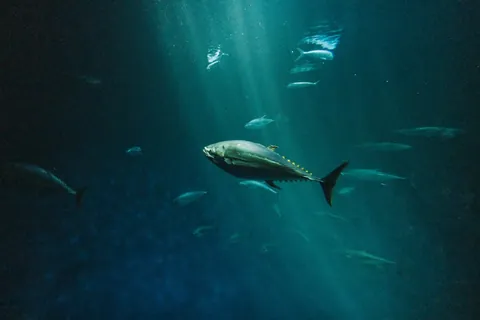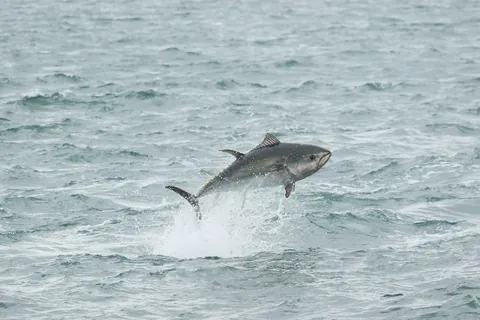
Atlantic Bluefin Tuna
Thunnus thynnus
Euthynnus affinis
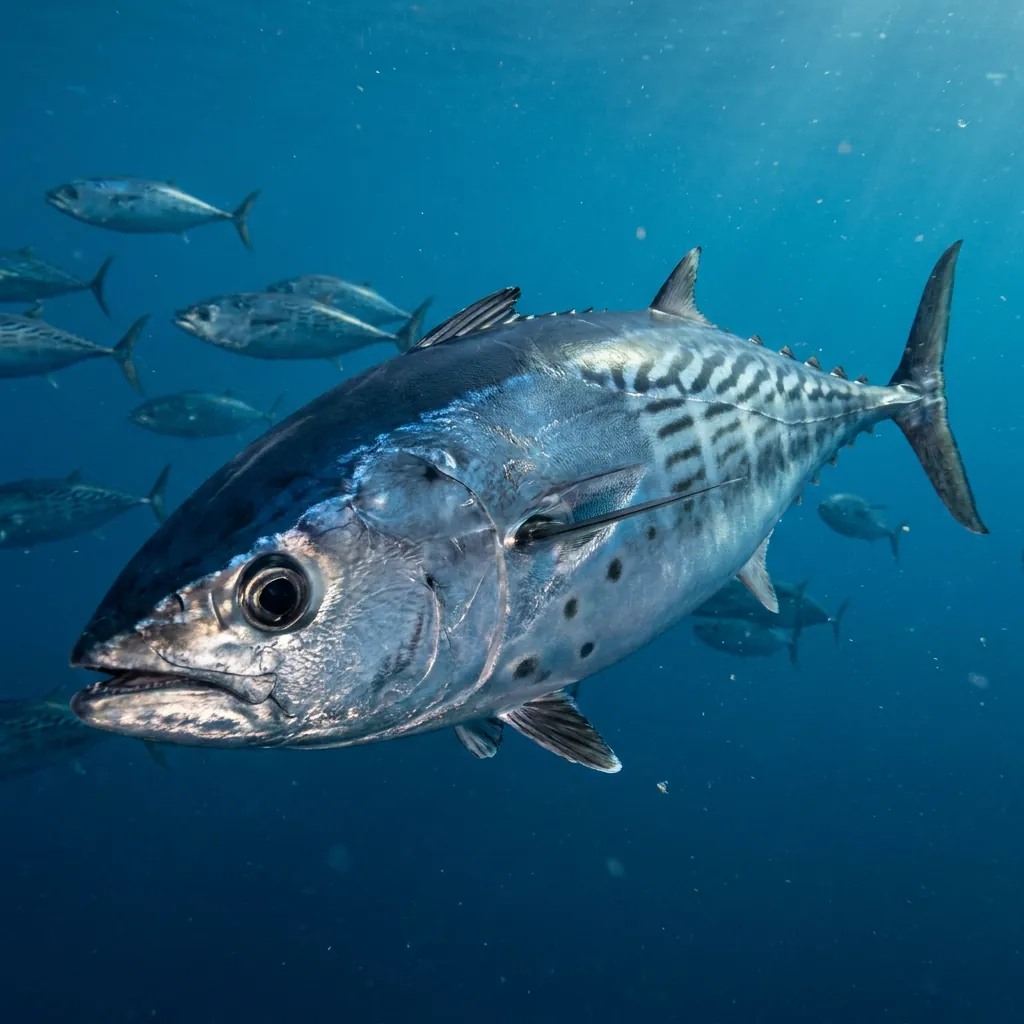
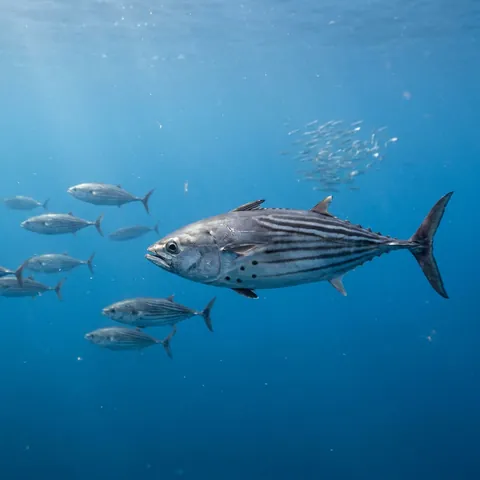
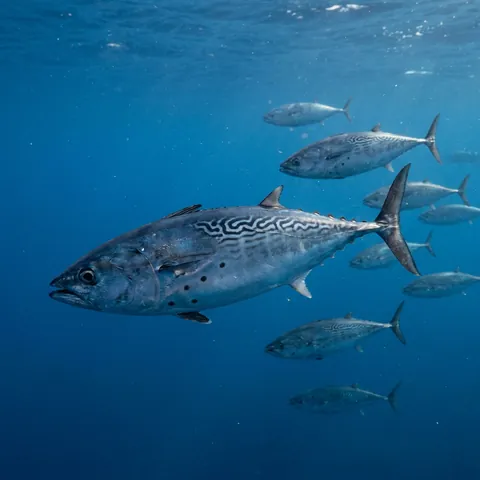
The kawakawa is a fast, streamlined member of the tuna family that patrols coastal waters in fast-moving schools. Its patterned back and torpedo-shaped body mark it as built for speed.
Also known as: eastern little tuna, mackerel tuna, mackerel tuna, kawakawa, oceanic bonito, black skipjack tuna, false albacore, little tunny, dwarf bonito, island bonito, island skipjack, lesser bonito, little tuna, kawakawa, oceanic bonito, tuna, eastern little tuna, kawa kawa, bonito, yaito bonito, wavy-back skipjack, mackerel tuna, little tunny(=atl.black skipj), diverg-bonito, kawa kawa, jack mackerel, little tunny, little tuna
It can be confused with two close relatives: the black skipjack in the Pacific and the little tunny in the Atlantic. The kawakawa's back stripes are broken and irregular, unlike the straighter stripes of the black skipjack or the neater, more orderly stripes of the little tunny.
It has the classic tuna shape: a slender, elongated body with a deeply forked tail and only small scales. Its back is dark blue with a pattern of oblique stripes, helping it blend in from above, while two or more dark spots sit between its pelvic and pectoral fins. The first dorsal fin is fairly tall, at around a third of the body's height. It can grow to about 100 cm and 14 kg, though most are closer to 60 cm.
This is a fast-swimming, highly migratory species found across the Indo-Pacific, from the surface down to deep water. It often stays close to coastlines, reefs, and shallow shelf waters rather than heading far out to sea, and young fish sometimes move into bays, harbours, and estuaries. It favours warm water, roughly between 18 and 29 degrees Celsius.
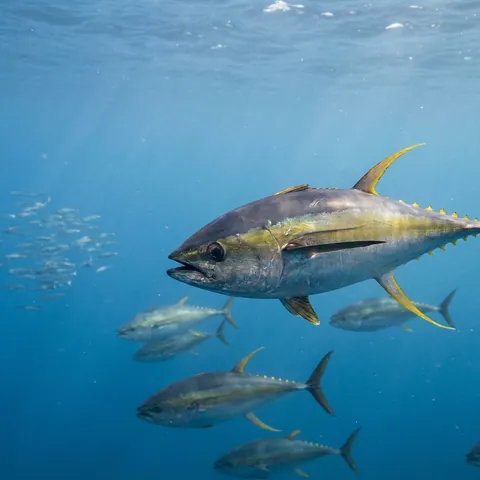
Kawakawa often swim in large mixed schools together with other tuna-family fish, such as yellowfin tuna and frigate mackerel, rather than sticking only with their own kind.
Describe what you saw and we name it, then keep every species you find in your Oceandex.