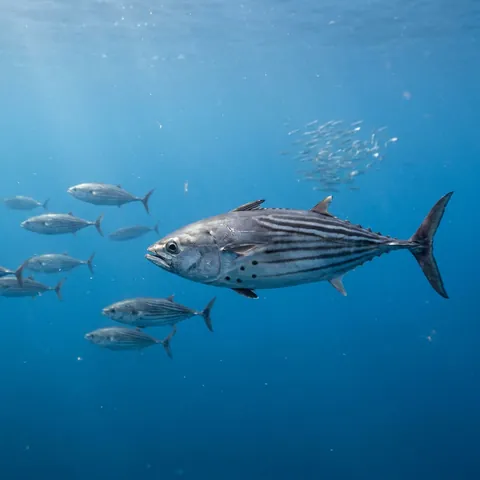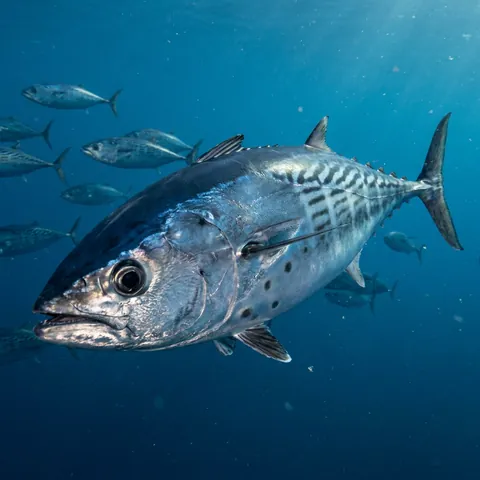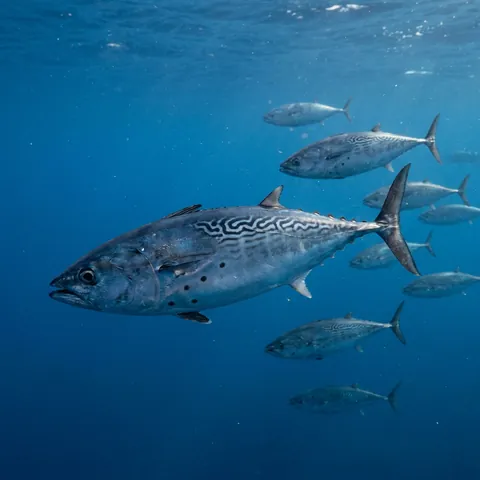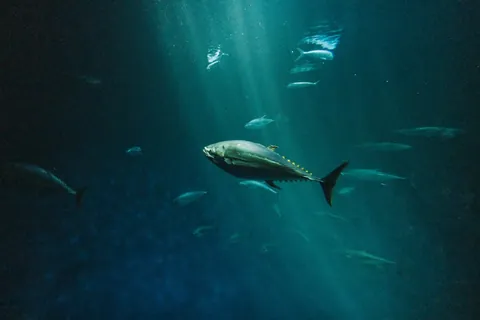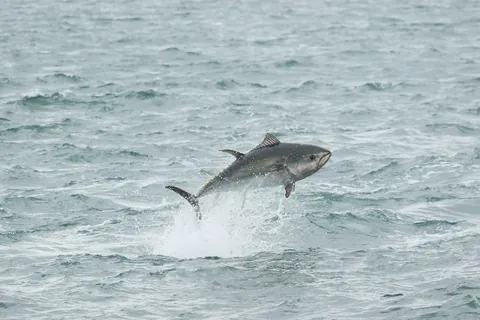
Atlantic Bluefin Tuna
Thunnus thynnus
Thunnus albacares
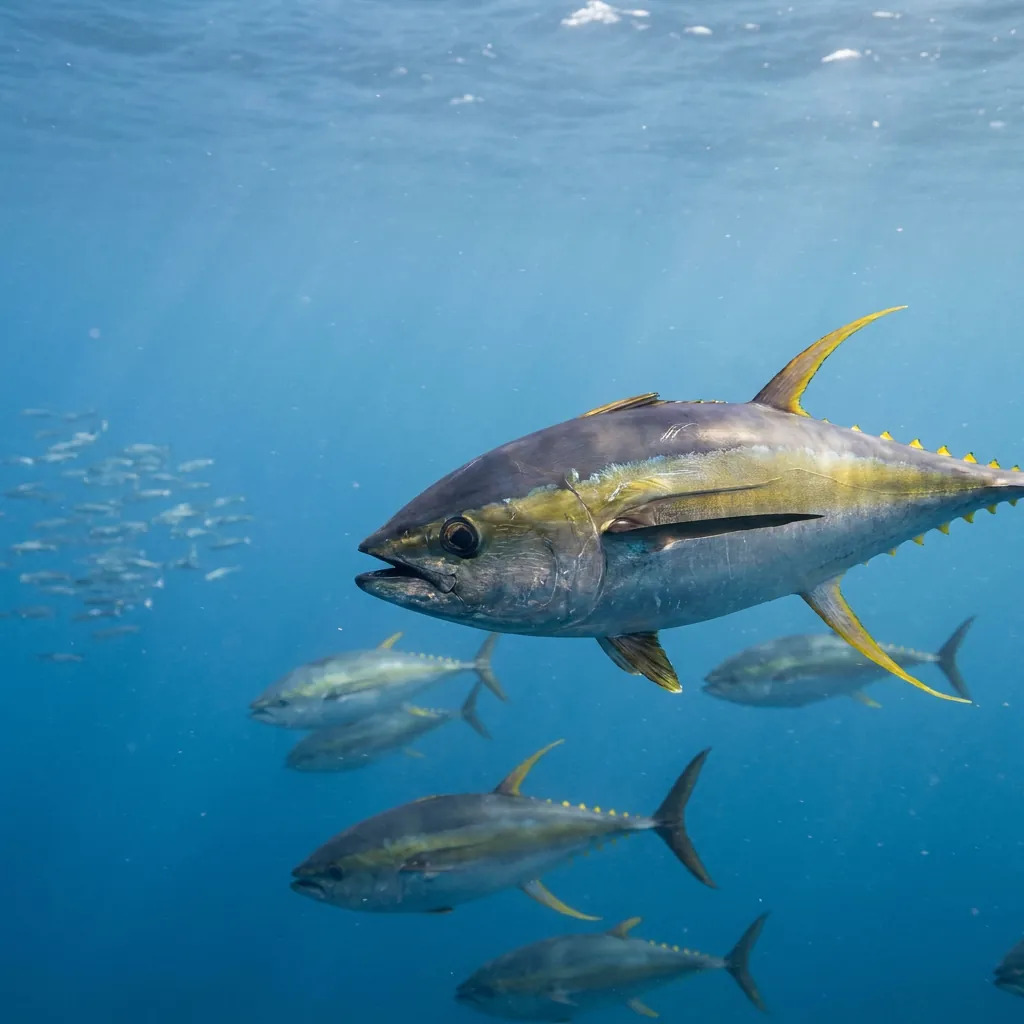
Yellowfin tuna are built for speed. This fast, strong open-ocean hunter can grow to nearly two and a half metres, and it swims through the world's warm tropical and subtropical seas.
Also known as: thunnus albacares, 'fin, albacore, allison tuna, allison's tuna, atlantic yellowfin tuna, autumn albacore, long fin tunny, longfin, pacific long-tailed tuna, tuna, yellow fin tuna, yellow tunny, yellow-fin tuna, yellow-fin tuna fish, yellow-fin tunny, yellowfin, yellowfin tunny, yellowfin-tuna, yellowfinned albacore
People often mix up the name yellowfin with the albacore, a different species also called "albacore" in some fisheries. Check the side fins: the albacore's reach much further back than the yellowfin's.
The second back fin, the belly fin, and the small finlets near the tail are bright yellow, which gives this tuna its name. In grown fish, these fins grow very long, almost reaching the tail, and curve into a sickle shape. The side fins are long too, though shorter than those of the albacore. The body is dark metallic blue on top, fading to silver on the belly.
Yellowfin tuna live in the sunlit top layer of the open ocean, mostly in the top 100 metres, though they can go as deep as 250 metres. They rarely swim near reefs, but they move close to mid-ocean islands and shorelines when baitfish gather there in clear, warm water between 15 and 31°C.
Yellowfin tuna usually swim in schools of fish about the same size. They sometimes mix with other tuna, such as skipjack. They are often seen near dolphins, porpoises, whales, and whale sharks, and they gather around drifting logs and debris, or even follow boats.
Yellowfin tuna hunt other fish, open-water crustaceans, and squid. They chase fast prey like flying fish and mackerel, and they also eat schooling fish such as lanternfish, anchovies, and sardines. Big yellowfin will even eat smaller tuna. Young yellowfin get eaten by larger tuna, seabirds, and hunting fish. Adults are only at risk from the fastest hunters, such as toothed whales, large sharks, and marlin.
harmless
Yellowfin tuna normally stay in the sunlit layer near the surface, but tagged fish have been recorded diving far deeper than expected, well past where sunlight reaches.
Describe what you saw and we name it, then keep every species you find in your Oceandex.