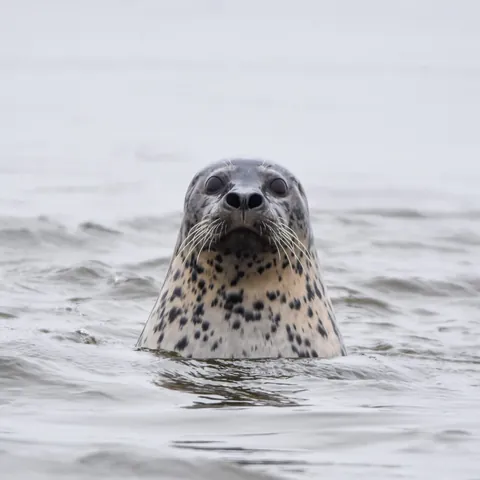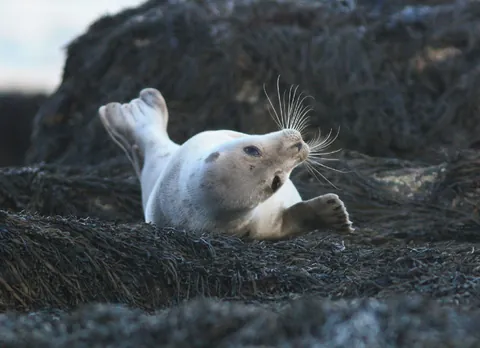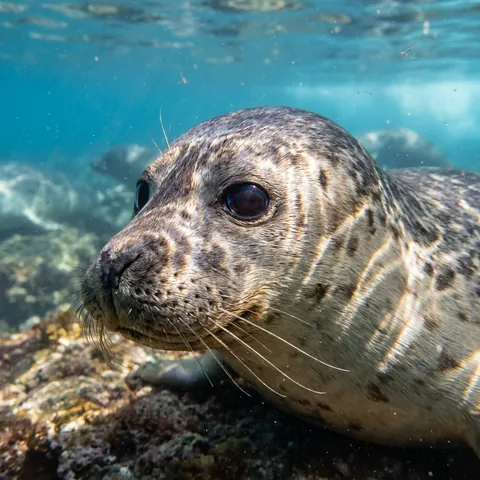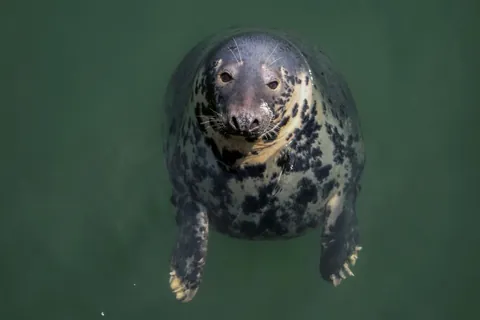
Grey Seal
Halichoerus grypus
Hydrurga leptonyx
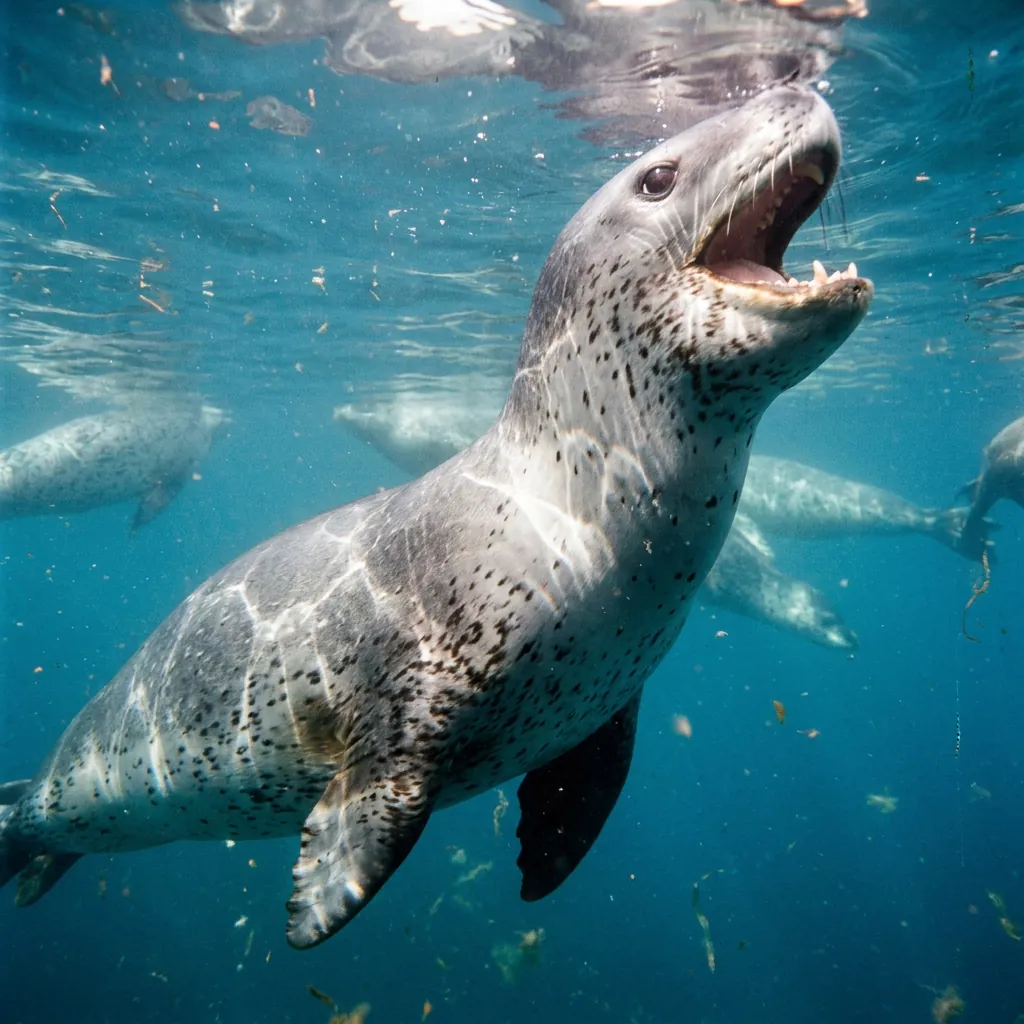
The leopard seal is one of Antarctica's top predators, built long and muscular for hunting fast prey through icy water. It can reach up to 3 metres long and weigh as much as 450 kg.
Also known as: hydrurga leptonyx, sea leopard
It can be mistaken for other large Antarctic seals like the Weddell or crabeater seal at a distance. The oversized head and jaw described above are the giveaway - proportionally bigger than on any other seal sharing the pack ice.
It has an unusually long, streamlined body compared to other seals, covered in a thick layer of blubber that keeps it warm and helps it move efficiently through the water. Its head and jaws are massive for its body, with canine teeth up to 2.5 cm long, and its back molars interlock in a way that lets it sieve krill from the water. Females grow noticeably larger than males.
Leopard seals live mainly in the Antarctic pack ice, though some stay year-round in places like Chilean Patagonia and New Zealand. Mothers with pups may move north to sub-Antarctic islands and southern coastlines for part of the year, but most seals live and hunt within the pack ice itself.
Leopard seals are mostly solitary, shallow divers that can dive quite deep when hunting. They take a wide range of prey, from krill and fish to penguins and even other seal pups, and are powerful enough to be feared by nearly everything else in their habitat.
Mating happens in the water between December and January, after which the male leaves and takes no further part. Females give birth to a single pup on the pack ice after a pregnancy of about 274 days, digging a hole in the ice as a den, and wean the pup after roughly a month.
The leopard seal is listed as Least Concern, with a wide range and no clear sign of decline. Longer term, shrinking polar ice, krill fishing, and increased tourism in Antarctica are potential risks to the population.
The leopard seal was first described in 1820 by the French zoologist Henri de Blainville, working only from a stuffed skin in a private collection in Le Havre. Its exact origin was such a mystery that he had to guess, from its colouring, that it probably came from the Falkland Islands.
Describe what you saw and we name it, then keep every species you find in your Oceandex.