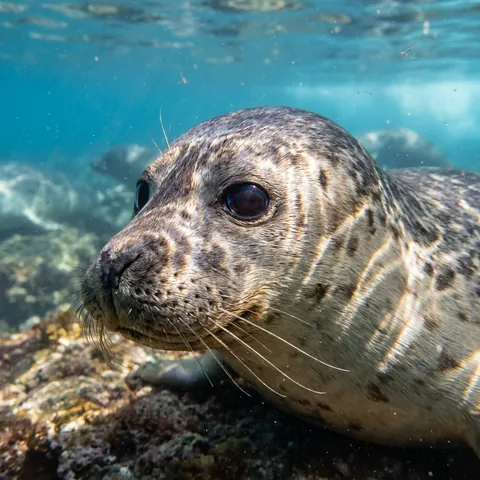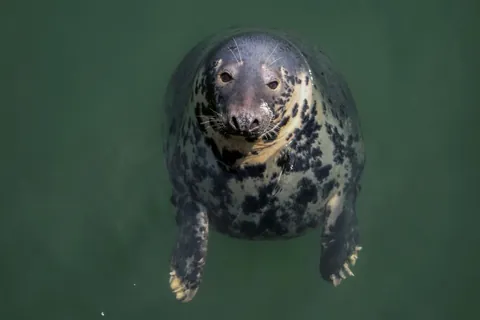
Grey Seal
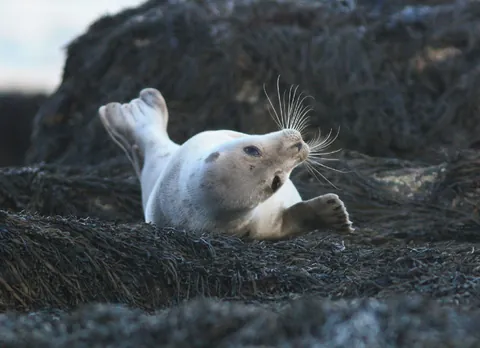
Halichoerus grypus
Neomonachus schauinslandi
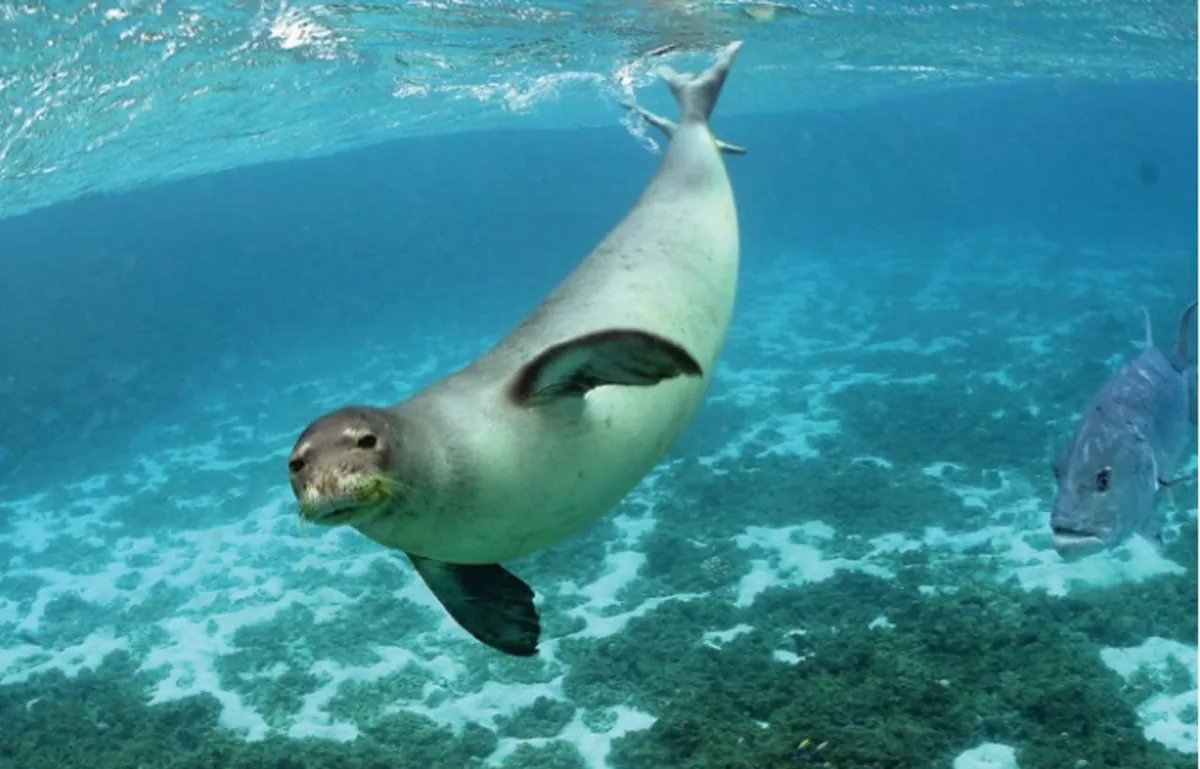
Native Hawaiians call this seal 'Ilio-holo-i-ka-uaua, the dog that runs in rough water. Found nowhere else on Earth, it hunts reef fish and octopus in deep water, then hauls out to rest on the islands' sandy beaches and volcanic rock.
True seals like this one have no external ear flaps, unlike sea lions, which do. That single feature is the quickest way to tell a monk seal apart from a sea lion underwater.
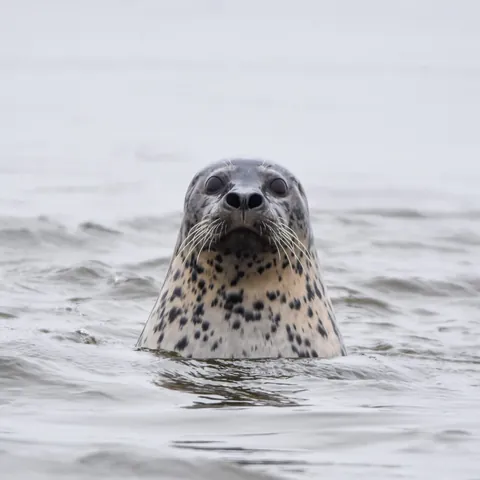
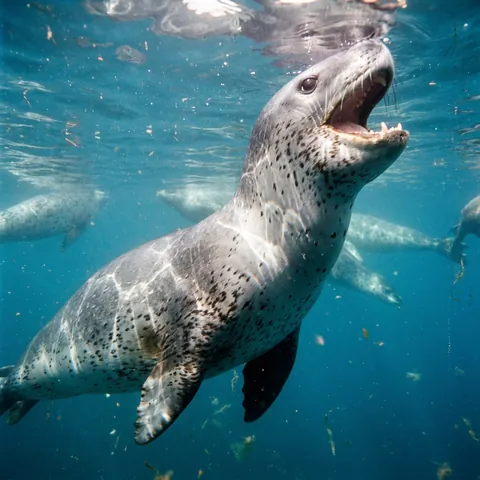
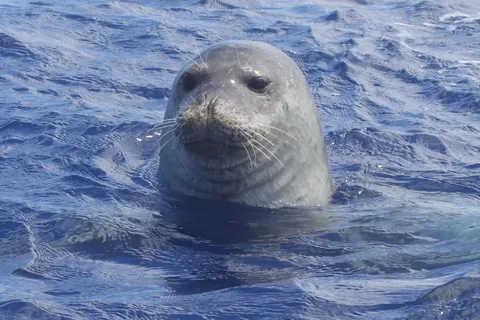
The Hawaiian monk seal has a grey coat, a white belly, and a slender, torpedo-shaped body built for fast, agile swimming. Its head is small and flat, with large black eyes, a short snout, and whiskers on each side. The nostrils sit on top of the snout and close into narrow slits when it dives.
Most of the population lives around the Northwest Hawaiian Islands, with a smaller, growing group around the main islands. It spends most of its time at sea, foraging in deep water beyond the shallow lagoon reefs. It hauls out and breeds on sand, coral rubble, and volcanic rock, and prefers sandy beaches for pupping.
When it is not hunting, this seal rests on beaches and rocky shores, often for long stretches. Tiger sharks, great white sharks, and Galapagos sharks are its main predators. Mothers stay by their pup constantly during nursing, without leaving to feed themselves.
It preys mainly on reef fish, along with octopus, squid, and crustaceans. Younger seals tend to target smaller octopus and eels, while adults favour larger octopus. Its diet is broad and opportunistic, shifting with whatever prey is available on the reef.
Hawaiian monk seals mate in the water during a summer breeding season. Each female gives birth to a single pup, usually in spring or early summer. The mother stays with her pup constantly during nursing, without leaving to feed, then returns to the sea once nursing ends.
The IUCN has not evaluated this species. It is one of the rarest seals in the world: its closest relative, the Caribbean monk seal, is already extinct. Numbers on the main Hawaiian Islands had fallen very low but are now slowly recovering. Shark predation, habitat loss, and encounters with fishing gear remain its main threats.
Its Hawaiian name, 'Ilio-holo-i-ka-uaua, translates to 'the dog that runs in rough water'.
Describe what you saw and we name it, then keep every species you find in your Oceandex.