Boring Giant Clam
Tridacna crocea
Tridacna squamosa
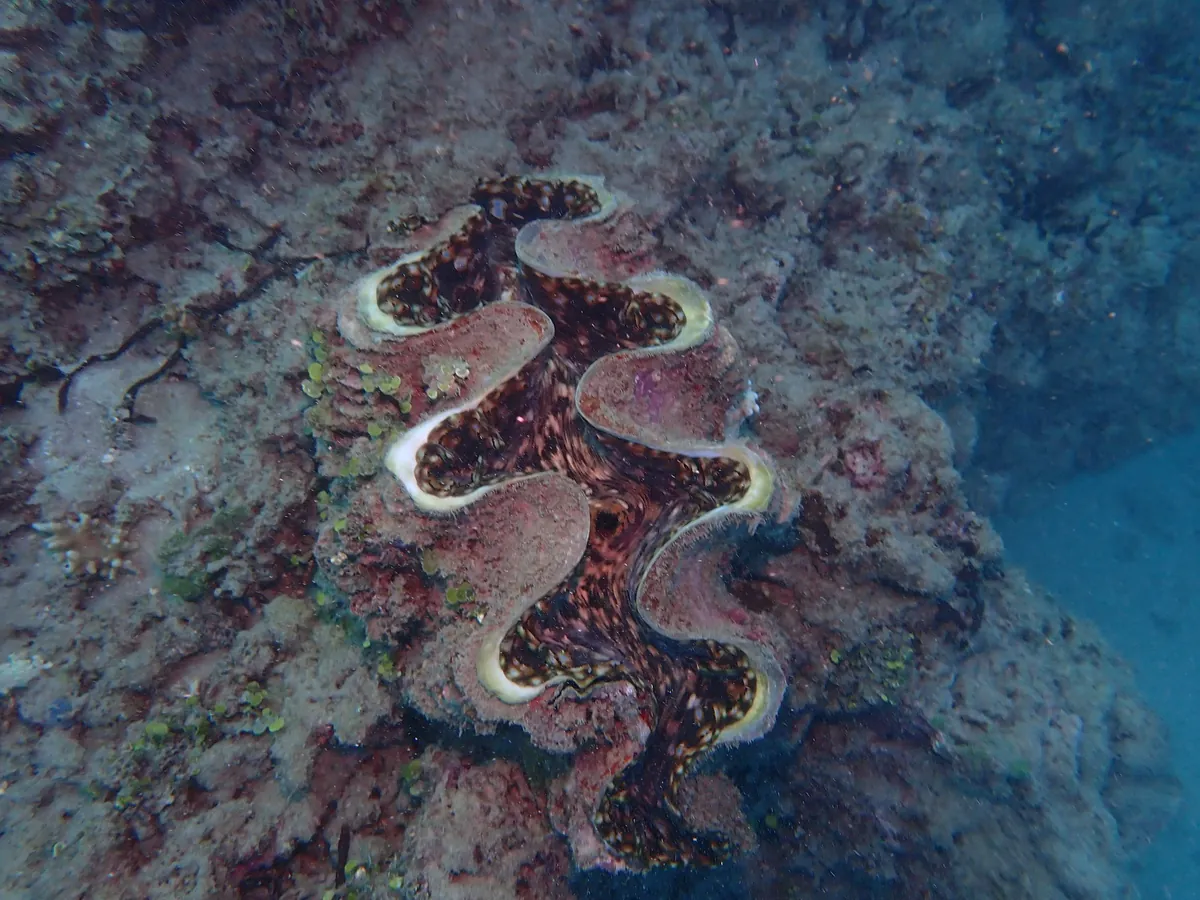
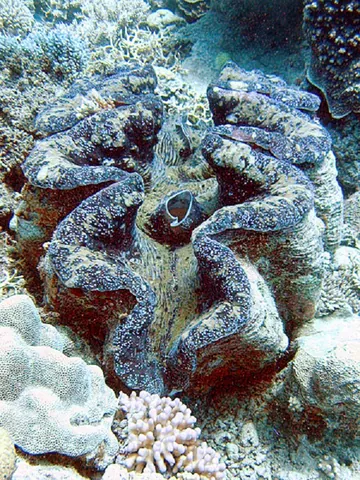
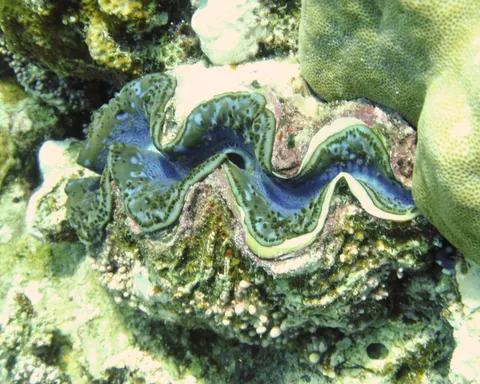
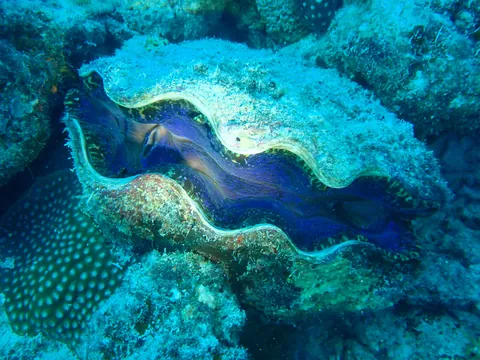
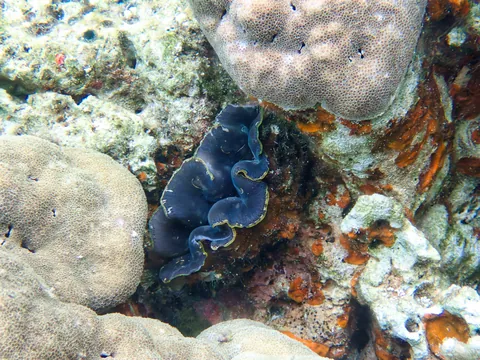
The fluted giant clam is a large reef-dwelling bivalve of the tropical Indo-Pacific. It grows up to 45 cm across and lives wedged into coral or rubble, its colourful mantle spread open in the sun.
Also known as: scaly clam
Other giant clams can look similar, but this one's shell rim has more pronounced, leaf-like frills than most. It also anchors itself through an unusually small gap, the byssal opening, compared with other giant clam species close by.
This clam's shell has large, leaf-like fluted ridges called scutes running across its rim. The soft mantle tissue that shows between the shell edges comes in shades of brown, purple, green or yellow, arranged in long stripes or spots. Inside its mantle it hosts tiny algae called zooxanthellae. These give it a big part of its food and add to its colour.
Most giant clams live almost entirely off sunlight, farming algae in their tissue for food. The fluted giant clam is less fussy: it also filters phytoplankton, tiny floating algae, straight from the water. That lets it live in dimmer spots than close relatives such as Tridacna crocea or T. maxima.
Describe what you saw and we name it, then keep every species you find in your Oceandex.