Boring Giant Clam
Tridacna crocea
Tridacna derasa
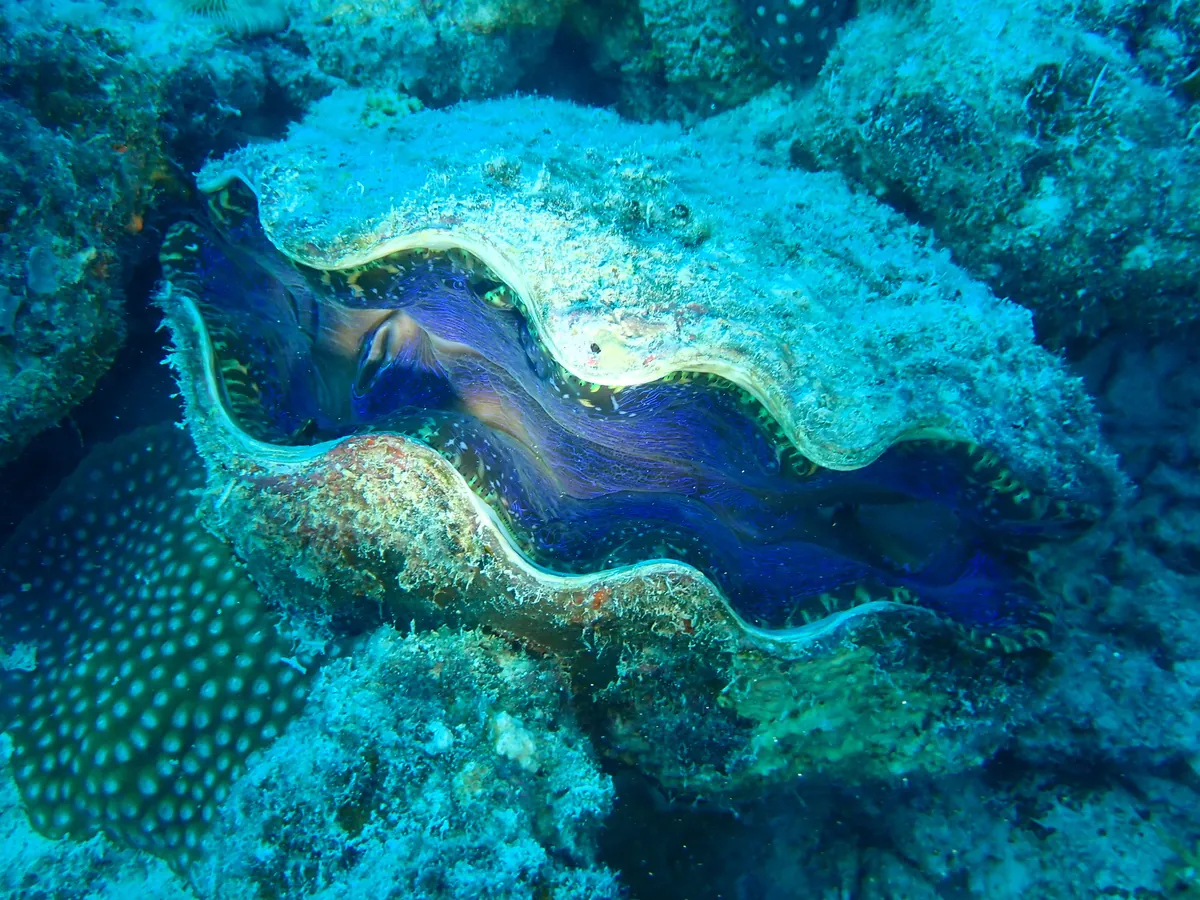
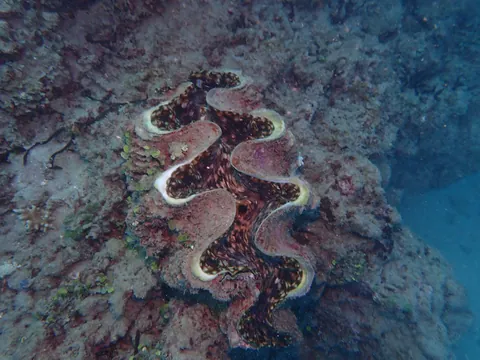
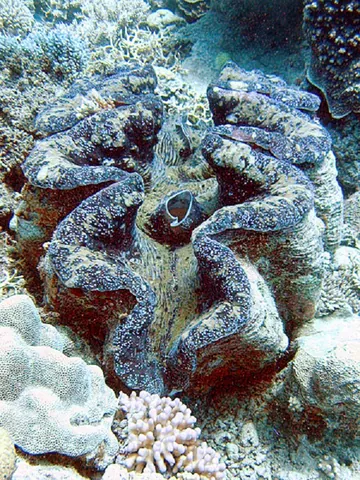
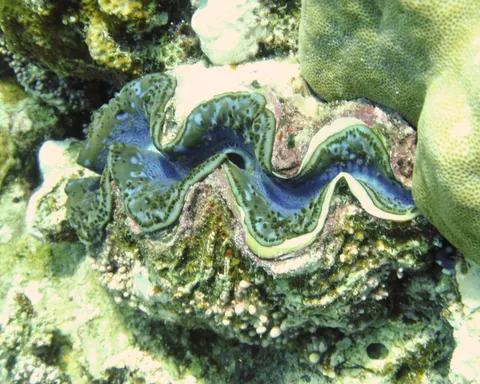
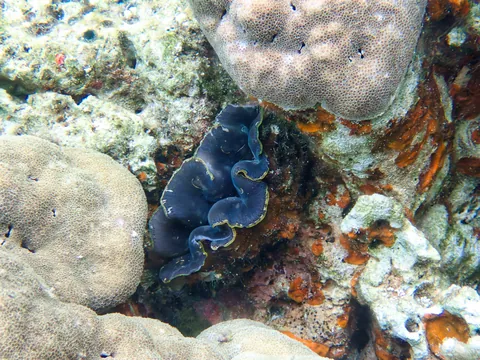
The southern giant clam is one of the biggest clams on the reef, a slow-growing giant that can live for decades wedged into the same spot. It reaches up to 60 cm across, with 50 cm being typical.
Also known as: smooth giant clam, tridacna derasa, tridacna derasa (röding, 1798)
The giant clam Tridacna gigas grows even larger and has a rougher shell with only four to five folds; this species' smoother, scute-free shell with six to seven folds sets it apart.
Its thick shell is smooth compared to most giant clams, with six to seven shallow folds running across it and no scaly ridges on the surface. The fleshy mantle that shows between the shell edges is patterned with wavy stripes or spots in mixes of orange, yellow, black and white, often with bright blue or green lines running through it.
It lives on the outer edges of reefs, on reef flats, barrier reefs and in atoll lagoons, from shallow water down to about 20 m. It is found across the tropical Indo-Pacific, from Australia and Indonesia to islands further into the Pacific.
Like other giant clams, it hosts algae in its tissue that make food through photosynthesis, so it feeds partly on sunlight as well as filtering the water. Young clams attach themselves to coral with fine threads, while older ones often let go and settle loose on the reef. Clams start life as males and later become hermaphrodites, spawning mainly in spring and summer.
This was one of the first giant clam species ever bred in captivity, pioneered at a hatchery in Palau, and most individuals sold today come from clam farms rather than the wild.
Describe what you saw and we name it, then keep every species you find in your Oceandex.