Boring Giant Clam
Tridacna crocea
Tridacna maxima
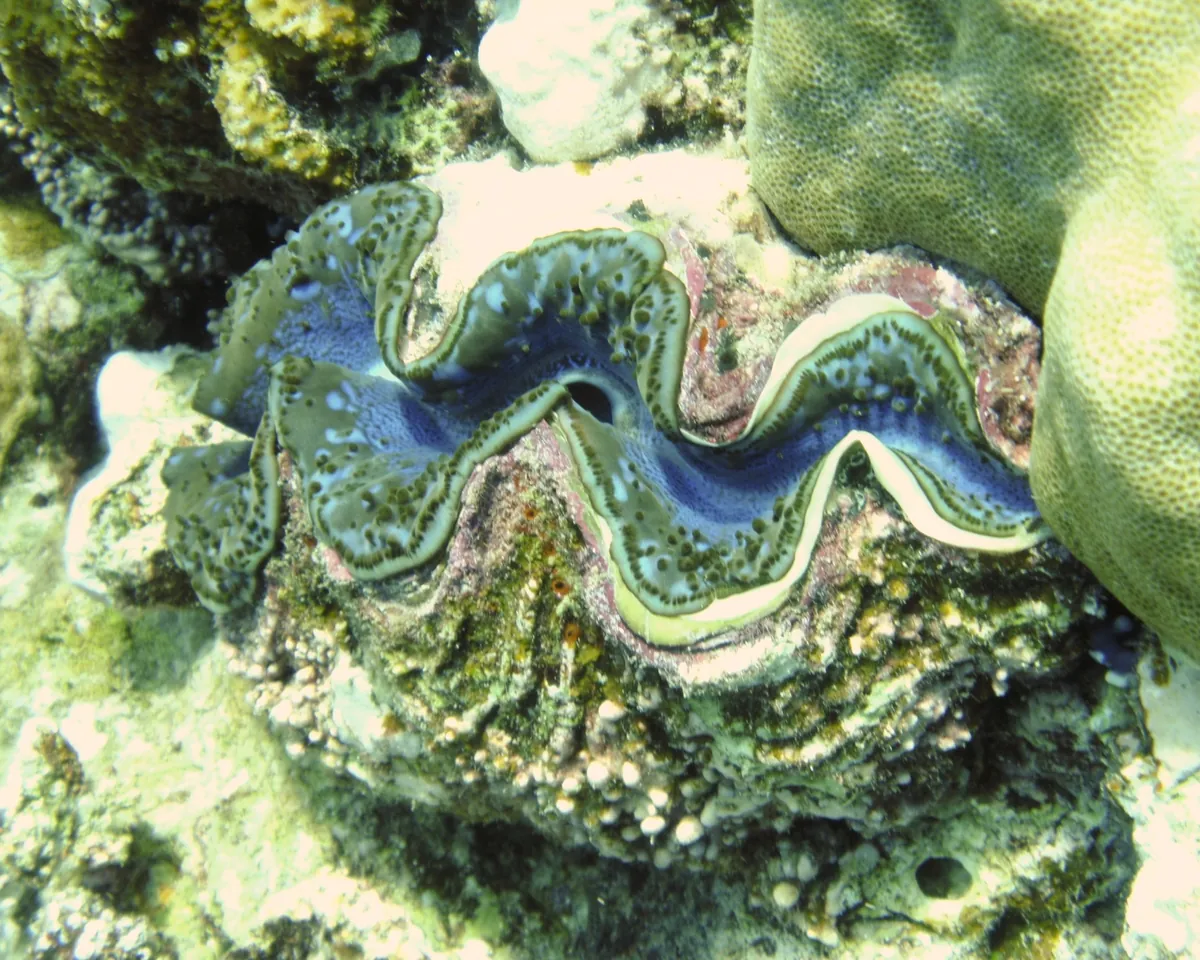
The small giant clam is a large bivalve, a shellfish with two hinged halves, that sits fixed in the reef with its brilliantly coloured mantle spread to the sun. It is the smallest-sized of the widely seen giant clams, reaching about 41.7 cm but commonly around 25 cm, and it lives from the shallows down to about 35 m.
Also known as: burrowing clam
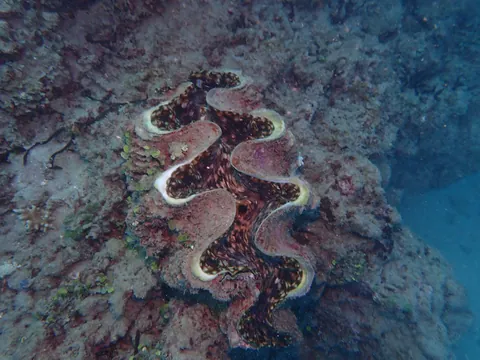
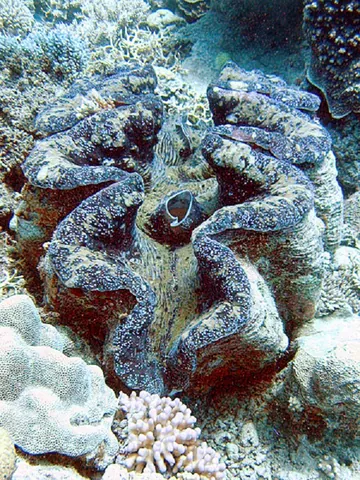
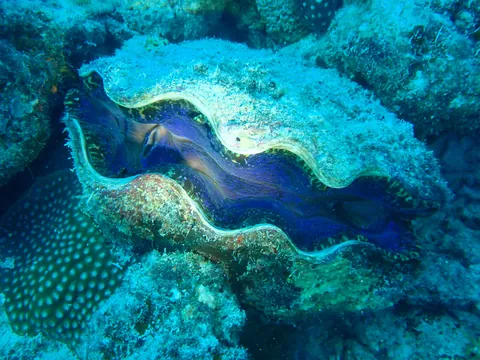
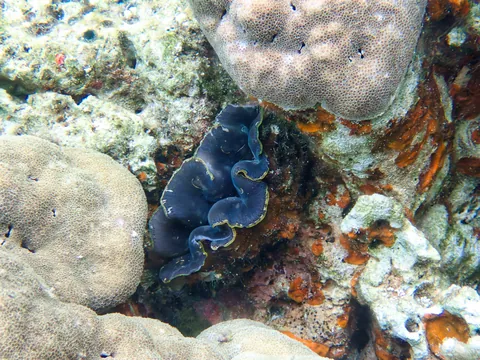
Look at where the flesh meets the shell. In this clam the mantle spills over the rim and covers the shell edges, so you see colour rather than shell when it is open. The shell itself has bold, deep furrows running out from the hinge, and the clam is usually fixed down hard or half-buried in coral rather than lying loose. Do not use mantle colour, which varies from clam to clam.
The heavy shell is deeply grooved, with strong ridges and furrows running from the hinge to the rim. Adults fix themselves down with a byssus, a tuft of tough threads that comes out through a hole beside the hinge. When the clam is open, the fleshy mantle spreads over the shell rim and hides it. The mantle can be bright blue, green or brown, often patterned, and the colours come from crystal-like pigment cells that are thought to shield the clam from strong sunlight or to gather light for the algae inside it.
This is the most widespread of the giant clams, found across the tropical Indo-Pacific from East Africa and the Red Sea to the islands of the Pacific. Look for it in bright, sunlit shallows: reef flats, the reef areas of lagoons, and down to the intertidal zone. It sits on rock or sand, or wedged part-way into living coral. It needs good light, because much of its food is made by algae living in its tissue.
The adult clam does not move. It draws water through its body, taking oxygen with its gills and straining out plankton, but it does not need to filter as hard as other clams because tiny algae called zooxanthellae live inside it and pass it food they make from sunlight. It also absorbs dissolved nutrients straight through its skin. If you swim too close, the mantle pulls in and the shell closes. Each clam starts adult life as a male and later becomes both sexes at once. Spawning is triggered by the moon, the time of day, and by sperm and eggs already in the water. A clam releases its sperm first and its eggs later, so it cannot fertilise itself.
Where the mantle looks white, there is no white pigment. The clam packs red, blue and green pigment cells tightly together and your eye mixes them into white, much like the pixels of a screen. Its close relatives make colour a different way.
Describe what you saw and we name it, then keep every species you find in your Oceandex.