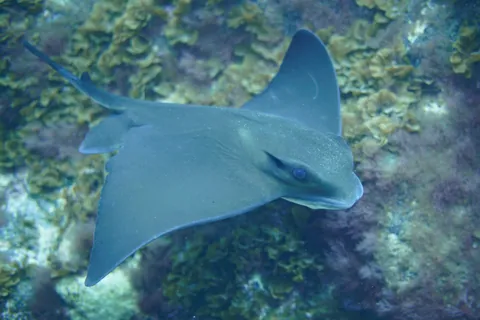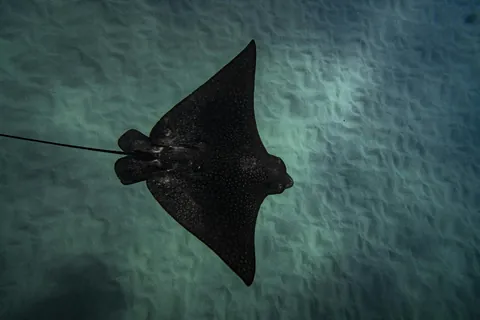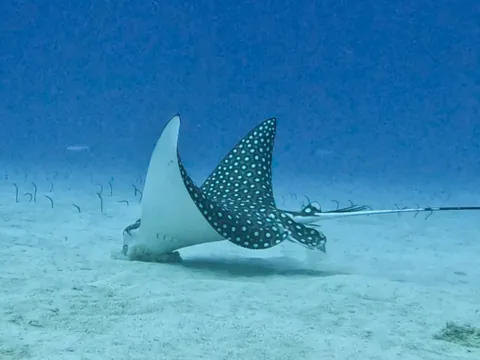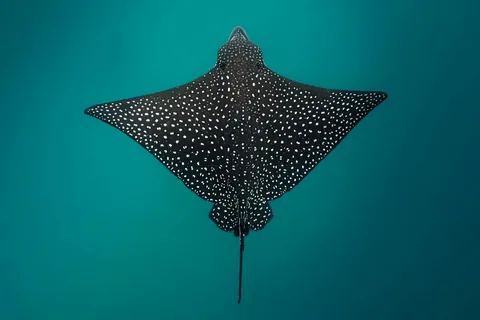
Bat Ray
Myliobatis californica
Rhinoptera bonasus
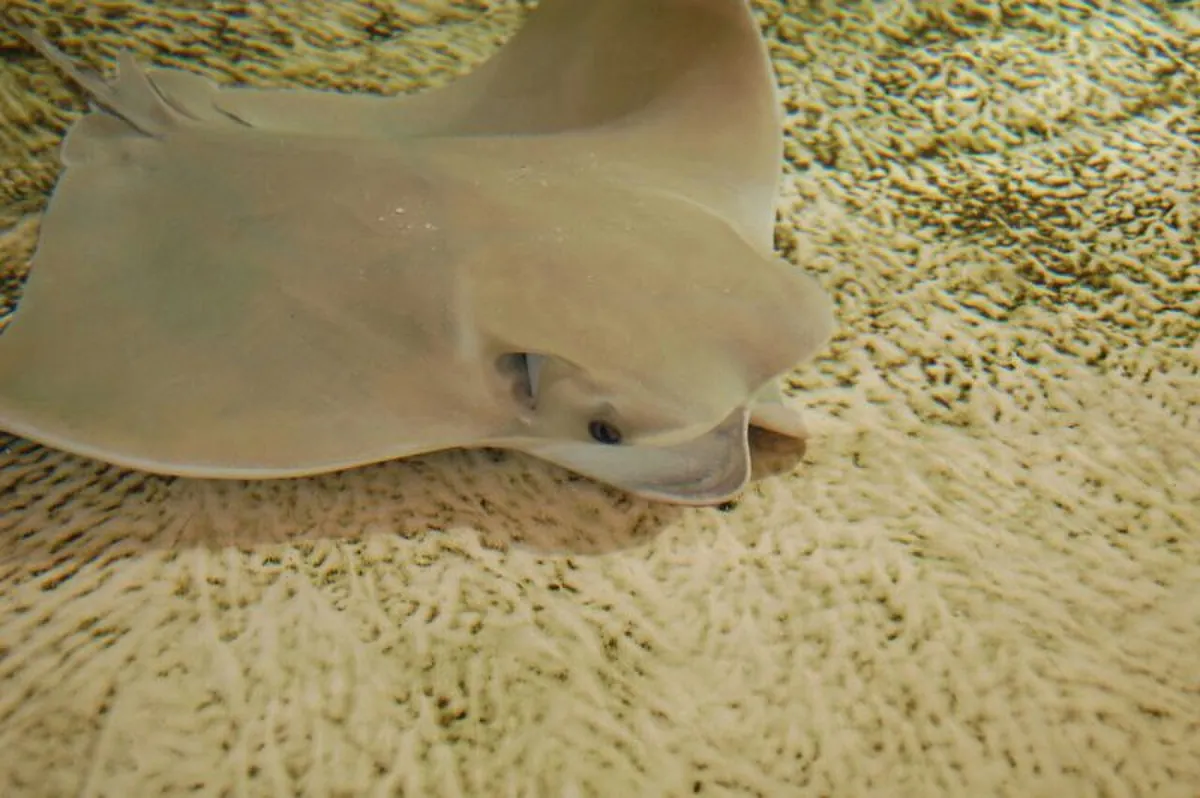
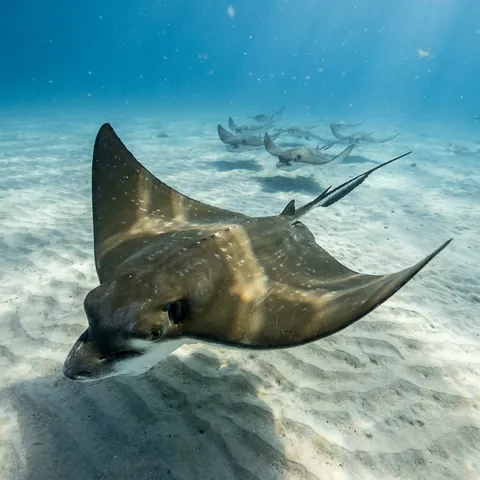
The cownose ray is a wide-winged, migratory ray that travels the Atlantic coast in huge schools. Its rounded, two-lobed snout gives it a cow-like face and its common length of about 120 cm, up to 213 cm across.
Also known as: cownose ray, cownose ray, skeete, cownose rays, cowfish, cownose ray, manta, cow-nosed ray, flapnose ray, cow-nosed ray
Fin tips breaking the surface can look like a shark from a distance; seen from above, the ray's rounded, two-lobed snout settles it.
It has a brown to olive back and a pale white or yellowish belly, with no spots or markings. The head is broad with wide-set eyes and a deep groove running below them, and the snout below that groove is split into two rounded lobes.
It lives in coastal waters and estuaries and can tolerate a wide range of salinities, moving to new areas when one gets crowded. It is often near the surface, at depths down to about 22 m, and gathers in bays such as the Chesapeake to mate and raise young in late spring and summer.
Cownose rays travel and migrate in large schools grouped by size and sex, moving north in late spring and south in fall. Males often leave their bay feeding grounds earlier than females. They have few natural predators, aside from cobia, hammerhead sharks, and people who fish for them.
It feeds on hard-shelled prey such as clams and scallops, crushing them with strong jaws built for the job. Feeding happens on the seabed, usually in the calmer light of early morning or late afternoon, with fleshy lobes near the mouth helping push prey in.
Cownose rays breed from April through October and do not mature until they reach about 70% of their full size, at age 6 to 8. The young grow inside the mother rather than in an egg case, with a gestation of 11 to 12 months, and are born live, tail first.
The cownose ray is classed as Near Threatened, mainly due to overfishing driven by the belief that it damages commercial oyster beds. Because it matures late and carries young for so long, its numbers recover slowly once a population is fished down.
Cownose rays sometimes leap clear out of the water and land with a loud smack, thought to be a way of marking territory.
Describe what you saw and we name it, then keep every species you find in your Oceandex.