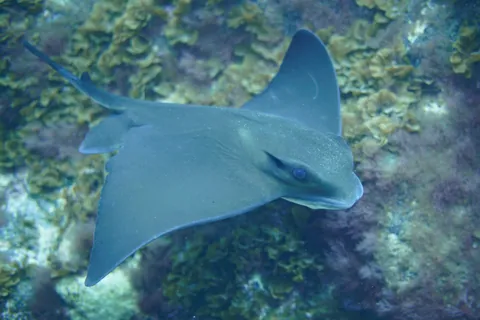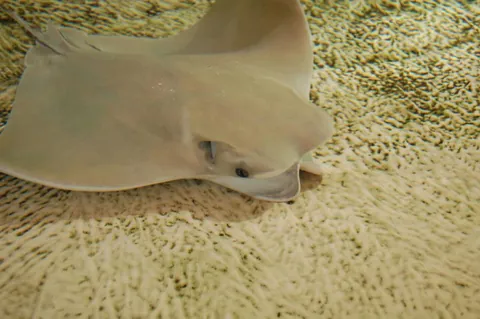
Bat Ray
Myliobatis californica
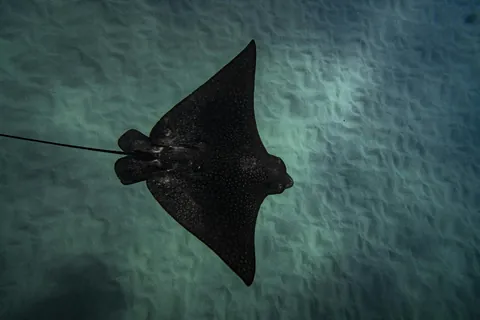
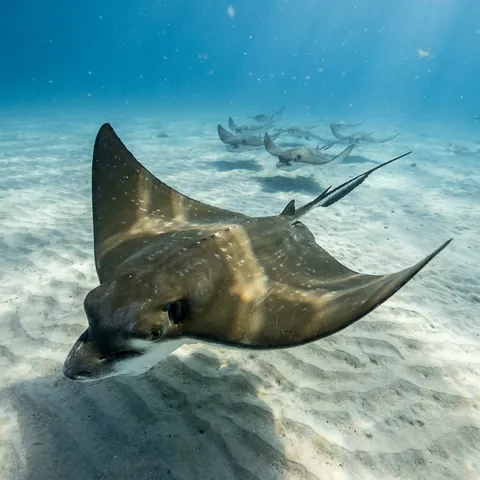
Aetobatus ocellatus
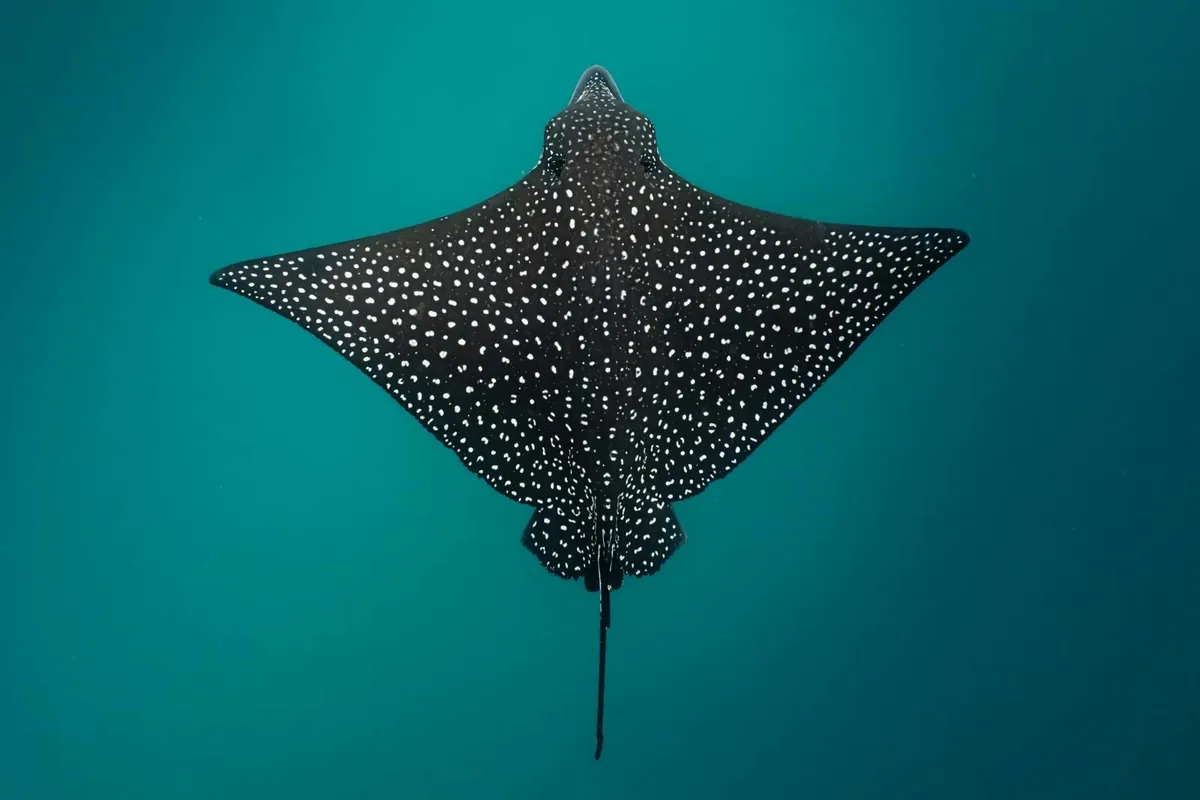
The white-spotted eagle ray is a cartilaginous fish, meaning its skeleton is made of cartilage rather than bone, in the eagle ray family. It lives in the tropical Indo-West Pacific and reaches about 153 cm, with a maximum recorded weight of about 200 kg. It is a coastal animal and also enters estuaries, the brackish mouths of rivers. It feeds on the bottom, taking snails, clams and other shelled molluscs, crustaceans, worms, octopus and fish. Females carry their young inside them: the embryos live first on yolk and then take in nutrients from a rich fluid produced in the womb, and only a few pups are born at a time. Recorded depths run from 1 m to 100 m, with most sightings around 20 to 25 m.
Also known as: western indo-pacific spotted eagle ray, ocellated eagle ray, spotted eagle-ray, beaked eagle ray, bonnet skate, duckbill ray, flying ray, jumping ray, spotted eagle ray, duckbill eagle-ray, ungurru, eagle ray, sharpwing eagle ray
Look for a large, dark, almost black diamond-shaped ray flying in open water with white spots scattered over its back, trailing a whip-like tail much longer than its body. The dark background with white spots is the key: on a passing ray, that contrast is easy to read from well away, and no handling or close approach is needed.
The upper surface is dark greenish grey to almost black and is marked with white spots, which vary in number and pattern between individuals. The tail is long, and it carries a stinging spine near its base, which is also long relative to the animal.
Until recently this ray was not counted as a separate species. It was lumped in with the spotted eagle ray, and when the two were split apart, the older name was kept for the Atlantic animals only, leaving every Indo-Pacific white-spotted eagle ray to be renamed.
Describe what you saw and we name it, then keep every species you find in your Oceandex.