Atlantic Salmon
Salmo salar
Oncorhynchus kisutch
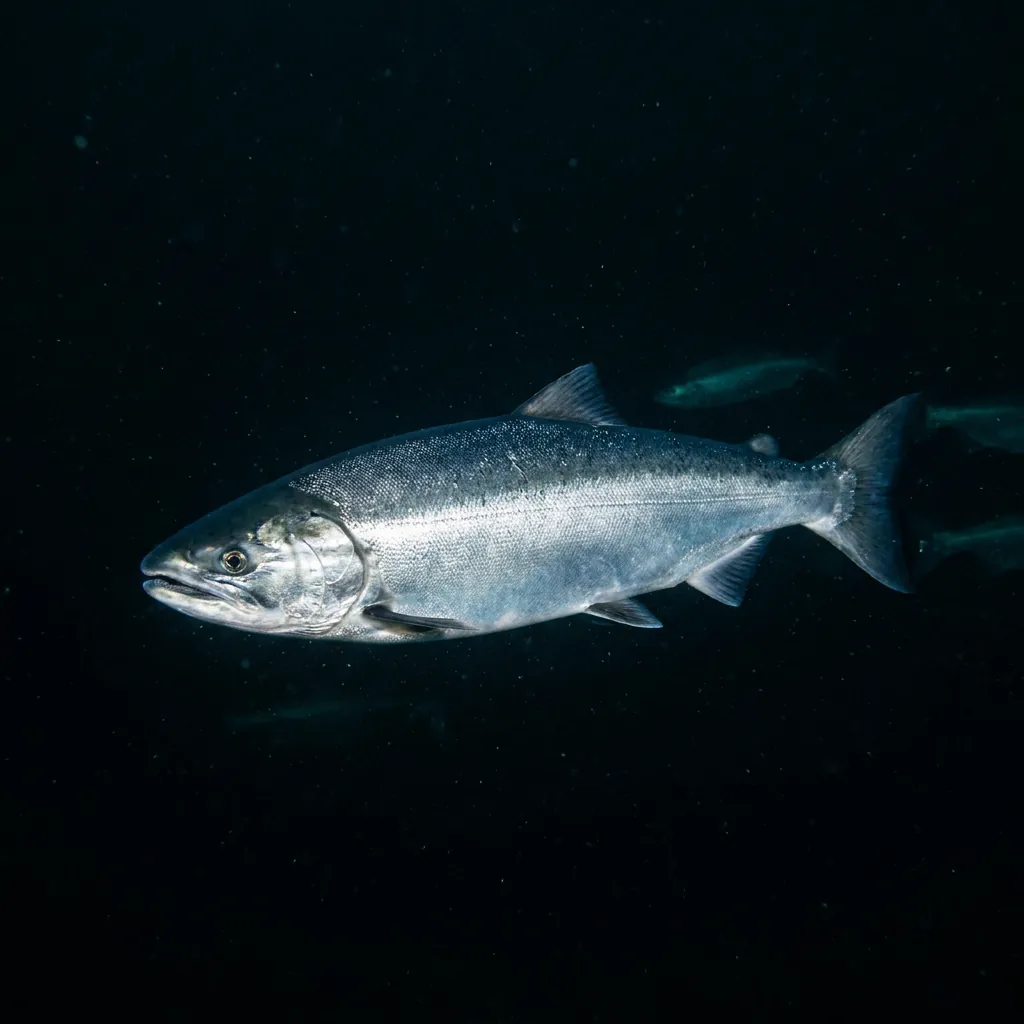
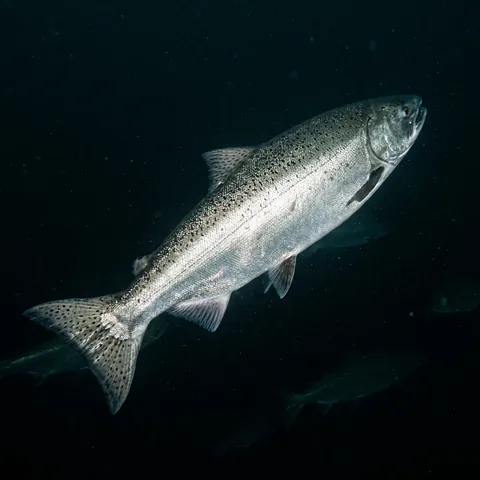
The coho salmon lives two lives in one: a sleek silver hunter at sea, then a hook-jawed, blood-red fighter in the rivers where it was born. It makes the trip from ocean to home stream just once, spawning and then dying.
Also known as: silver salmon
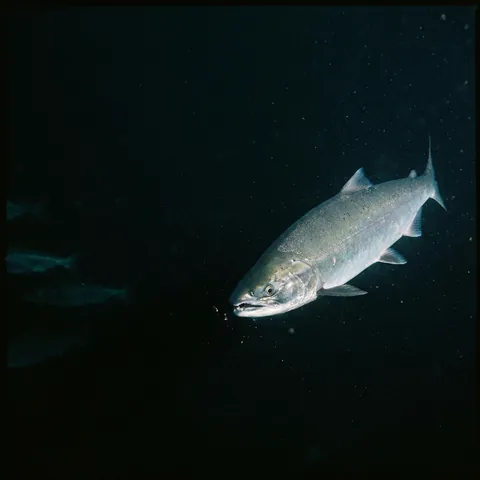
It can be confused with other Pacific salmon, especially in fresh water. Check the lower jaw: on this species the upper edge of it is pale, a mark that sets it apart from similar species.
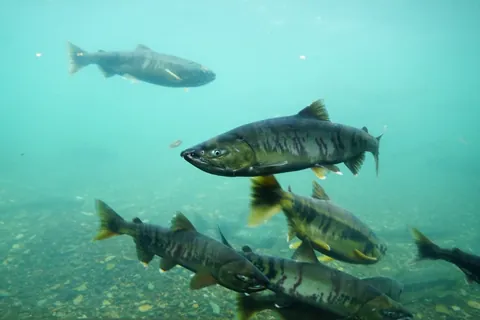
At sea it has silver sides, a dark blue back, and small spots on its back and upper tail. After it enters fresh water to spawn, its sides turn bright red, its head and back turn bluish-green, and its belly darkens, with dark spots still visible on its back. Spawning fish, especially males, grow a hooked jaw and teeth.
It is native to coastal rivers and the North Pacific Ocean, from Japan and Russia across to Alaska and south to central California. It has also been introduced into the Great Lakes region, where some populations persist with the help of ongoing stocking.
At three or four years old, adults swim up rivers and streams to spawn, pushing into water barely deep enough to cover them. Each female digs several nests in gravel by turning on her side and beating her tail, fighting off rival females for the best sites while males compete for the chance to mate with her. After the eggs are laid and fertilized, she covers them with gravel. The adults then stop feeding and die shortly after spawning.
This species has not been globally assessed, but several populations along the US west coast are listed as threatened or endangered under the US Endangered Species Act, and long-term numbers for those populations remain in decline.
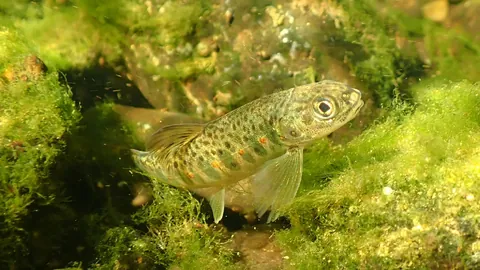
Some males, called 'jacks', skip most of their time at sea and return to spawn after just two years, far earlier than typical adults.
Describe what you saw and we name it, then keep every species you find in your Oceandex.