Atlantic Salmon
Salmo salar
salmon
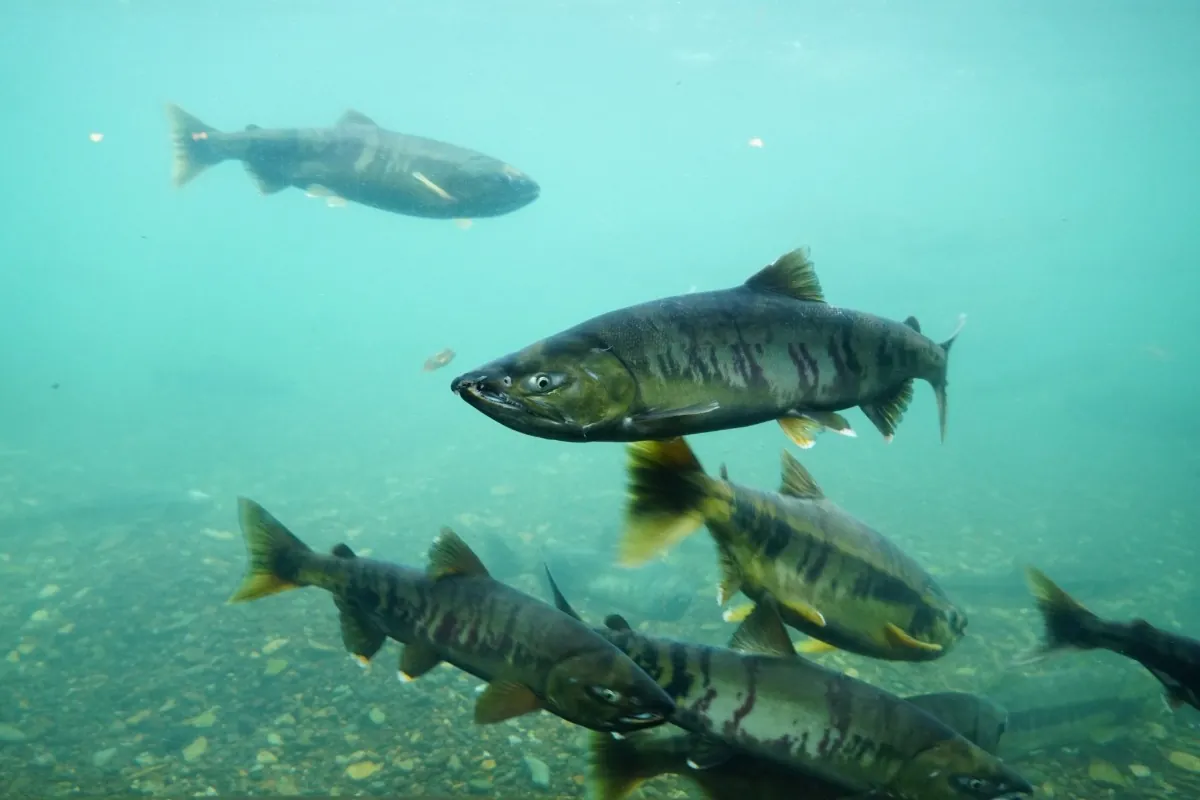
Salmon are fish that live in both fresh water and the sea, moving between the two during their life. In this app the group includes the Chinook Salmon, Sockeye Salmon, and Atlantic Salmon.
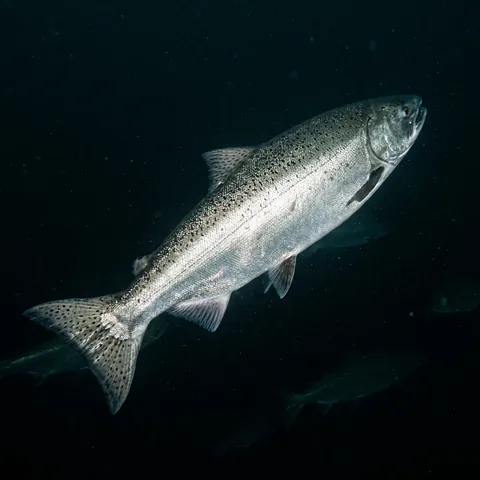
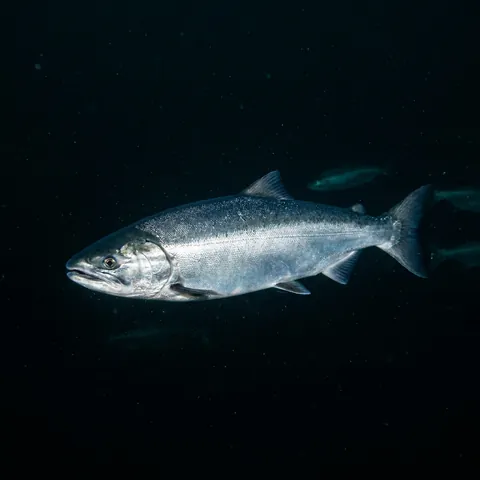
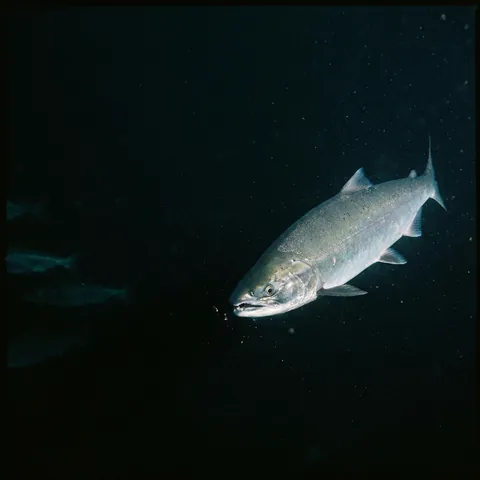
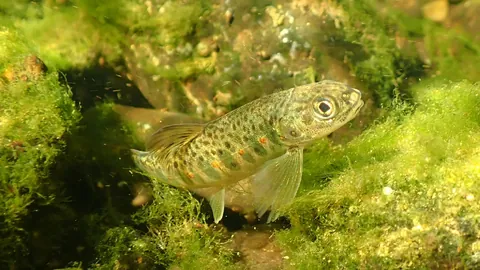
Look for a bright silvery body in salmon heading to sea, versus striped, camouflaged young in streams; this life-stage change is a key clue for this group. Size and colour vary a lot by species and by how close they are to spawning.
Young salmon in a stream show vertical camouflage stripes. As they get ready to move to the sea, they turn bright, silvery, and their scales rub off easily.
Salmon hatch in freshwater streams, often far north, then most species move to the ocean to grow before returning to fresh water to breed. Some populations stay in fresh water their whole lives instead of moving to the sea.
Most salmon hatch in a home stream, swim out to the ocean for one to five years, then return to that same stream to spawn. Their body chemistry changes to let them survive the move from fresh water to salt water and back.
Young salmon eat tiny drifting animals called zooplankton, then move on to insects, small crustaceans, and small fish as they grow. Adult salmon hunt smaller fish, squid, and krill in the open ocean.
Salmon usually return to the same stream where they hatched to lay their eggs. Only about one in ten salmon eggs survives to the next life stage.
harmless to humans
Most salmon find their way back to the exact stream where they hatched years earlier, guided by their sense of smell.
Describe what you saw and we name it, then keep every species you find in your Oceandex.