Atlantic Salmon
Salmo salar
Oncorhynchus tshawytscha
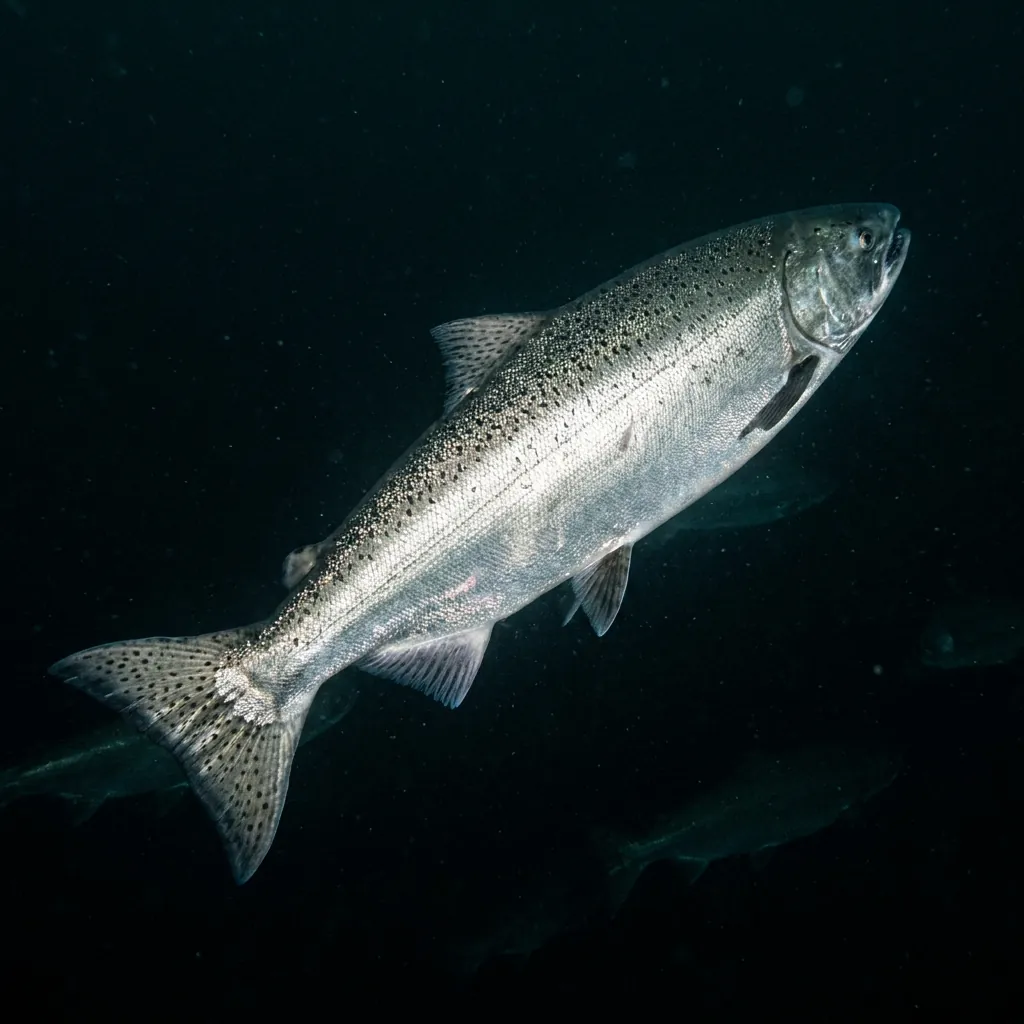
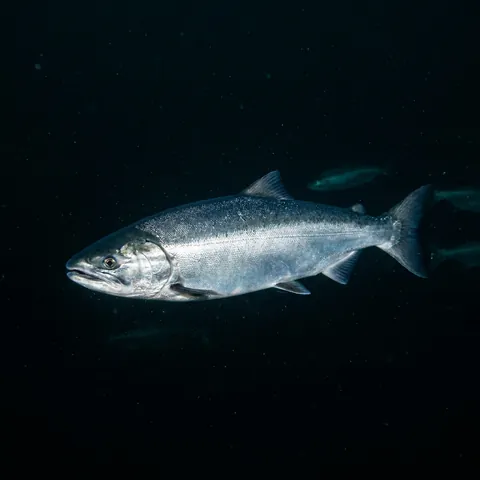
Chinook salmon are the largest of the Pacific salmon. This strong fish spends part of its life in the ocean. Then it fights its way back up the river to spawn. This journey makes it a prized catch for anglers along the way.
Also known as: king salmon, spring salmon, tyee salmon, tyee, quinnat salmon
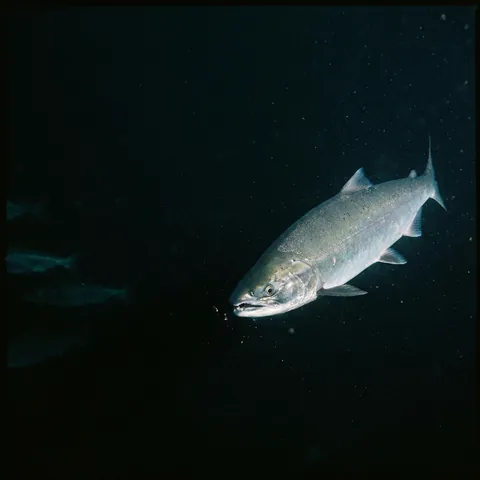
Other Pacific salmon, such as pink, coho, and chum salmon, can look similar in the water. Check inside the mouth: Chinook salmon have black gums along the lower jaw. No other Pacific salmon has this, which is why anglers also call it the blackmouth salmon.
Its back and the top of its head are blue-green, red, or purple. Its sides are silver and its belly is white. Black spots mark its tail and the top half of its body.
This fish moves between salt water and fresh water during its life. It lives in rivers along the west coast of North America and in rivers in eastern Asia. It has also been brought to river systems in other parts of the world. In some of these places it now breeds on its own, without help.
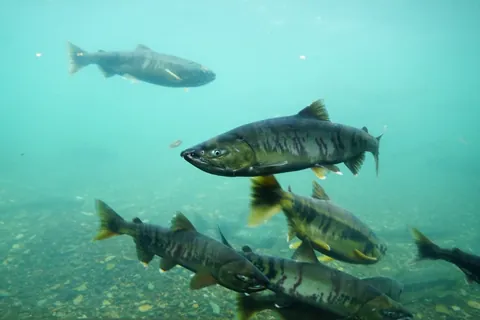
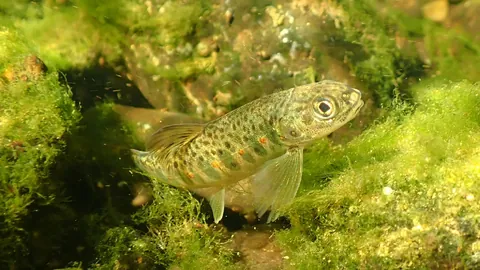
After hatching in fresh water, young Chinook move downstream to river mouths. Then they head out to the open ocean, where they grow for years before returning to the river where they were born. As spawning gets near, their silver ocean colours turn dark. Males also grow teeth like a dog's and a hooked lower jaw called a kype, which they use when competing for mates. Chinook spawn in bigger, deeper water than other salmon. After laying her eggs in a nest called a redd, the female guards it for a while before she dies. The males move on to look for other mates.
This species has not been formally checked for the IUCN Red List. Many groups of this fish are still healthy. Others have dropped in number because of overfishing, lost river and estuary habitat, dams, poor ocean conditions, and hatchery practices. Several groups in the United States are listed as threatened or endangered under the Endangered Species Act.
A group of Chinook brought to Patagonia now spawns far up the Rio Santa Cruz, a long way inland from the ocean. This whole group is thought to have come from just one batch of young fish let go decades ago.
Describe what you saw and we name it, then keep every species you find in your Oceandex.