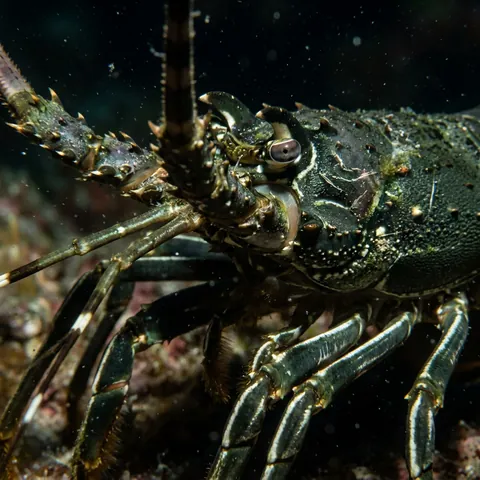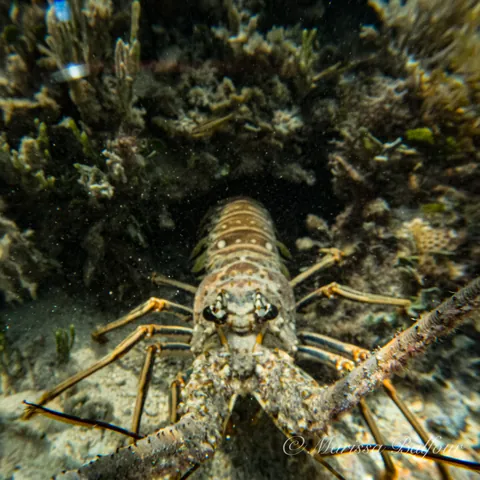
Caribbean spiny lobster
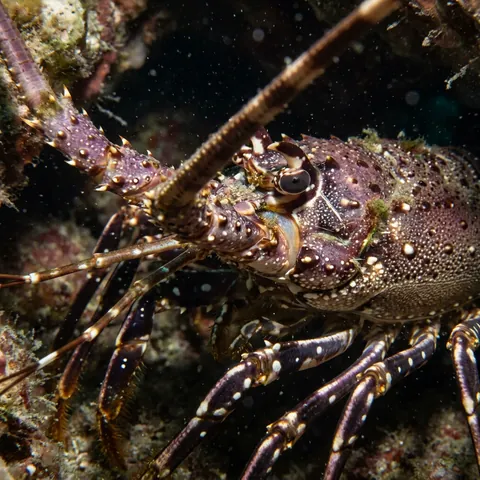
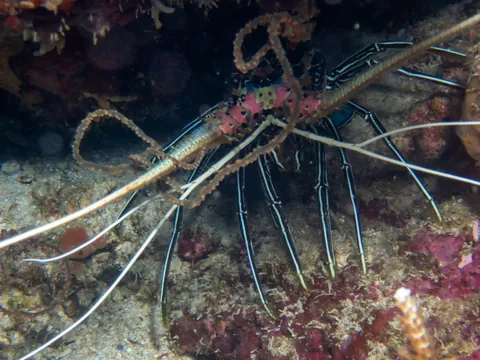
Panulirus argus
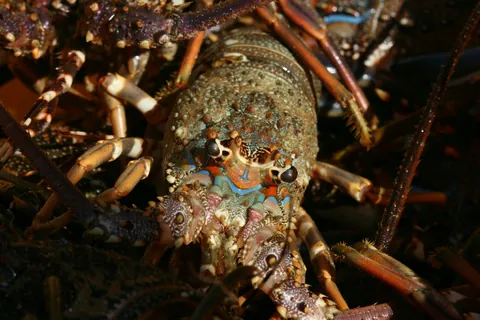
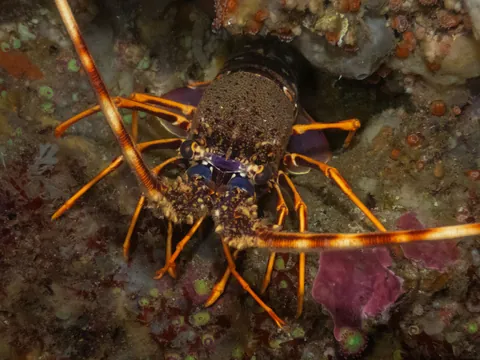
Panulirus interruptus
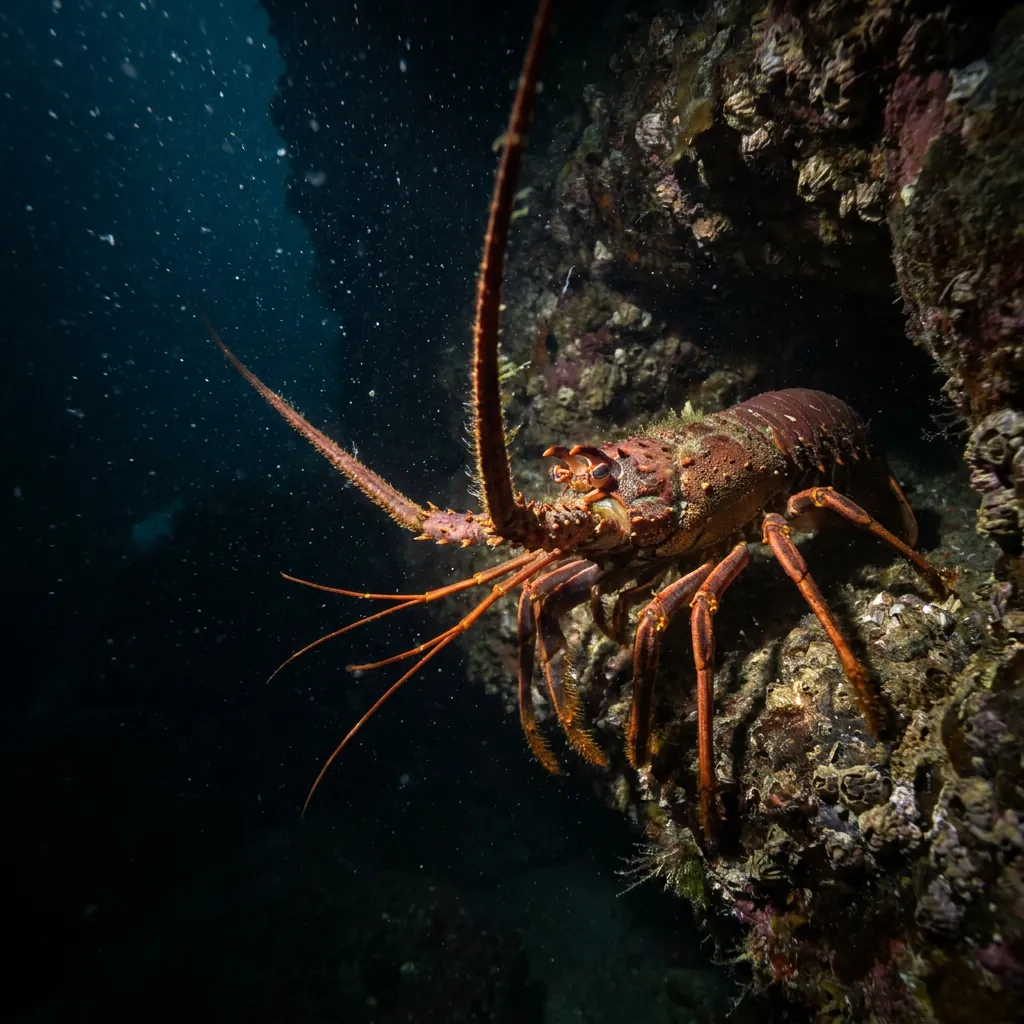
This heavyweight lobster has no claws to fight with, so it has evolved something stranger: it can rasp out a loud, startling noise from the base of its antennae. It can grow to 60 cm long.
Look for the grooves crossing the tail plate: they are interrupted rather than continuous, which is the mark that gives this species its name. Its plain brownish-red body, without the pale bands or spots some other spiny lobsters show, confirms the identification.
A large spiny lobster with two long, spiny antennae and no big claws on its legs. The body is a brownish-red color, and the legs share this tone but carry one or more lighter streaks running along them. Its eyes sit on brightly colored eye-spots, and grooves cross the tail plate, interrupted rather than running straight across.
Lives on rocky reefs along the Pacific coast from central California to Mexico, from tide pools down to about 150 m. Juveniles shelter in shallow beds of surf grass and bushy algae, while adults favor deeper rocky ground.
Hides in rocky crevices by day, often in small groups, with only its long antennae poking out. At night it comes out to feed on sea urchins, clams, mussels, and worms, and can call other lobsters to a good feeding spot using scent cues. Sheephead, sea bass, sharks, octopuses, and sea otters all hunt it.
Lacking claws to fight with, this lobster defends itself by rubbing tissue at the base of each antenna against a smooth patch under its eye, producing a loud rasping sound that startles predators into loosening their grip.
Describe what you saw and we name it, then keep every species you find in your Oceandex.