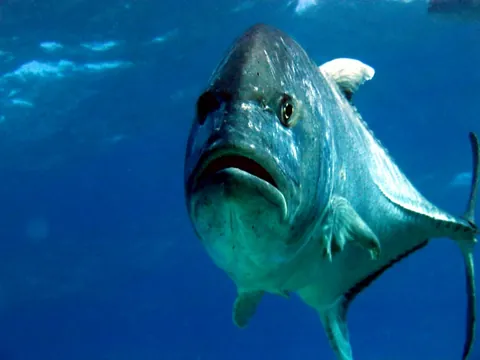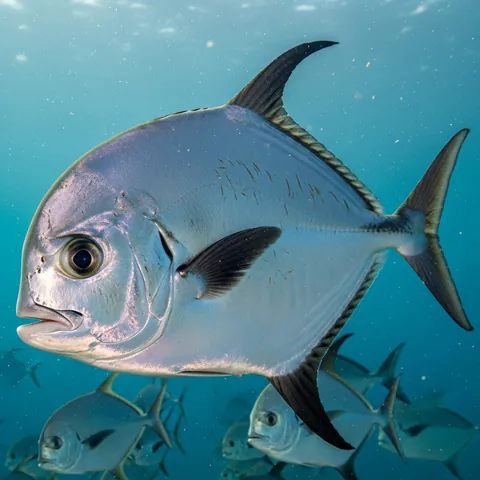
Alexandria pompano
Alectis alexandrina
Caranx crysos
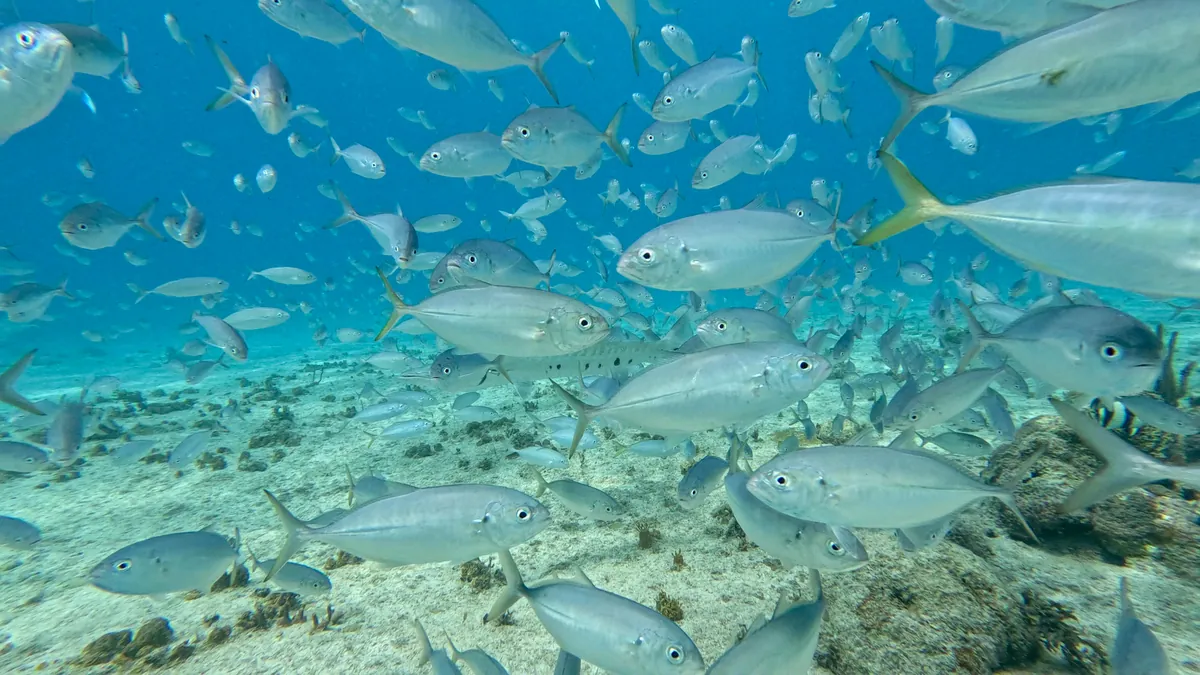
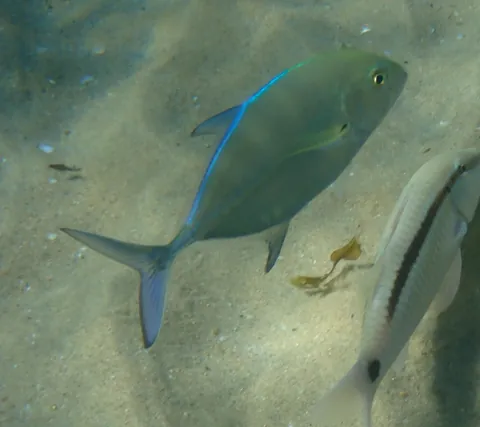
The blue runner is a fast, wide-ranging jack found on both sides of the Atlantic. It grows up to 70 cm and 5.05 kg, though most divers see smaller fish, closer to 40 cm.
Also known as: blue runner, blue runner, bluestripe jack, boca abou, yaru boca abau, hardtailed jack, boca abou, bluestripe jack, yellow tail cavalli, runner, horse mackerel, golden jack, mackerel, green jack, white back cavalli, jack, hardtail, crevalle, yellow mackerel, yara yag, hardnose, bluestripe jack, egyptian scad, hardtail jack, hardnose
It looks much like many other jacks in the same waters. Check the pectoral fins: they grow longer than the head and curve into a sickle shape as the fish ages, more so than in most similar species.
It has a long, streamlined body, only moderately flattened from side to side, with a slightly pointed snout.
It lives inshore over reefs and open bottom on both sides of the Atlantic, from tropical to temperate waters, and ranges down to 100 m.
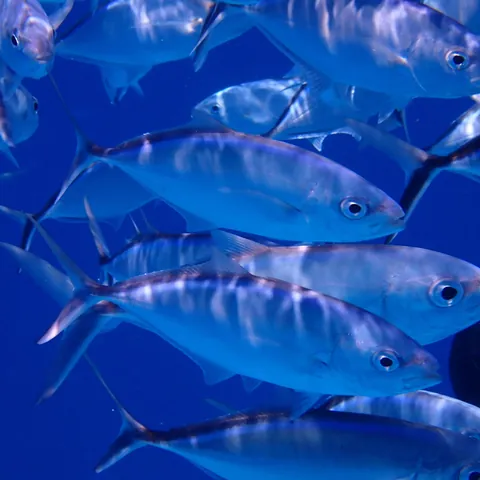
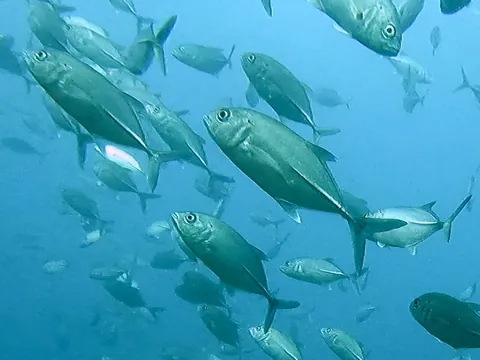
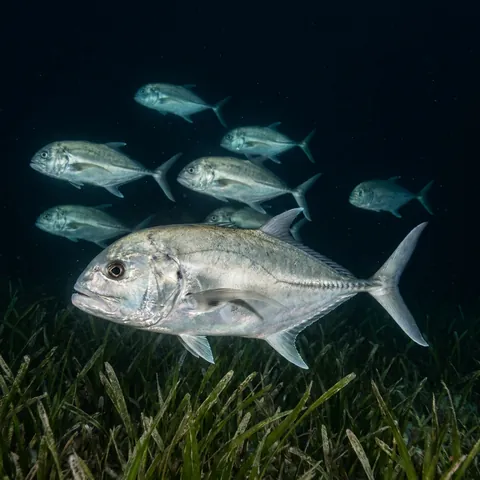
It usually swims alone or in small schools, though it can form huge aggregations of up to 10,000 fish. In some areas it is one of the most common fish species around.
It is a fast-swimming hunter, mostly taking small fish near shore, along with crabs, shrimp, and other small crustaceans. Young fish feed mainly on tiny drifting animals called zooplankton before shifting to a fish-based diet as they grow. It feeds by day and night, taking larger prey like fish mostly after dark.
It spawns offshore year-round, with peaks in the warmer months in many parts of its range. Eggs and larvae drift near the surface, and young fish often gather around floating seaweed mats before moving inshore to reefs and lagoons as they grow.
It sometimes swims alongside feeding spinner dolphins to grab scraps of food they leave behind, and has even been seen eating the dolphins' droppings.
Describe what you saw and we name it, then keep every species you find in your Oceandex.