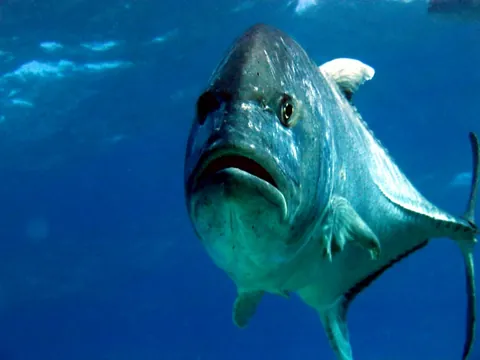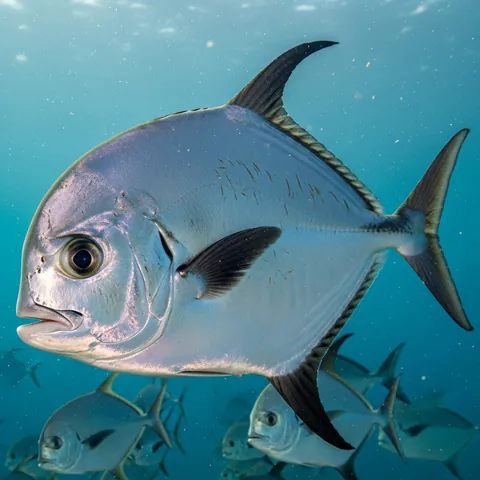
Alexandria pompano
Alectis alexandrina
Caranx hippos
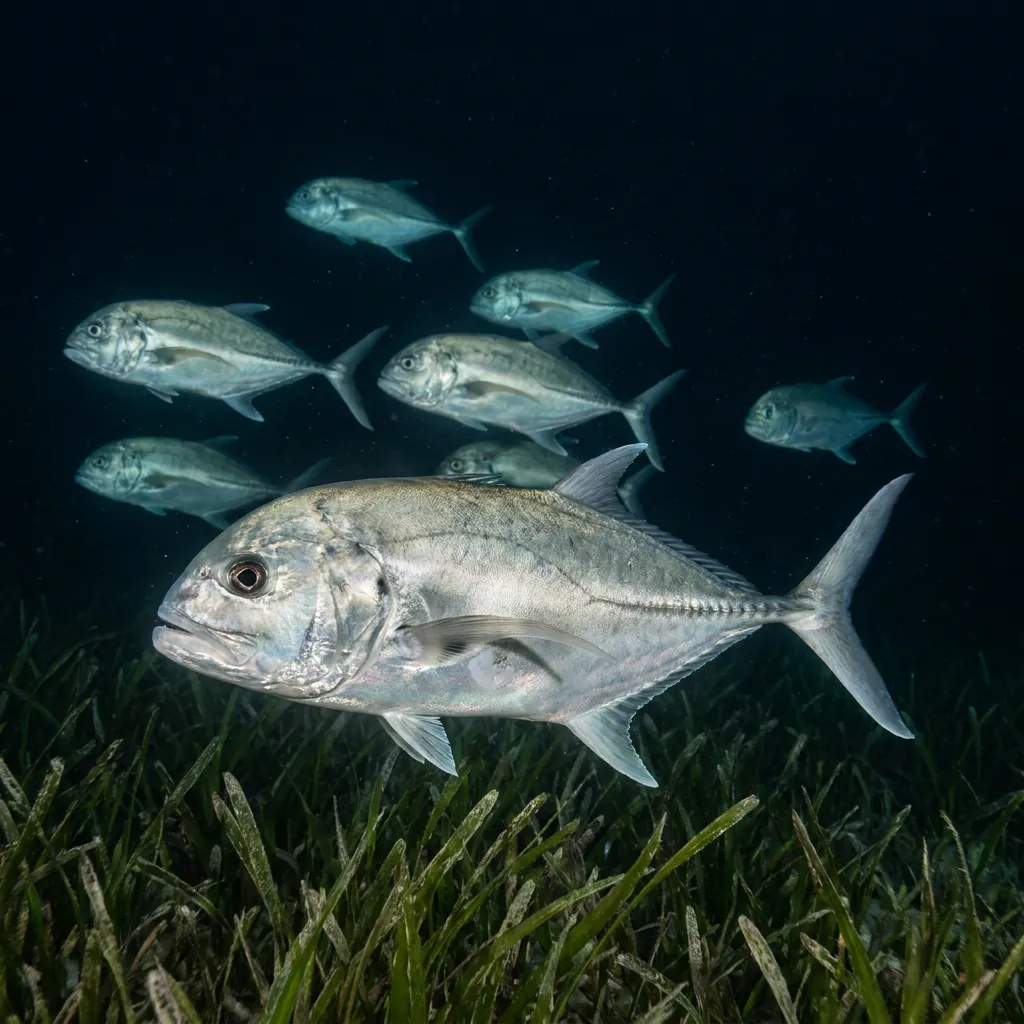
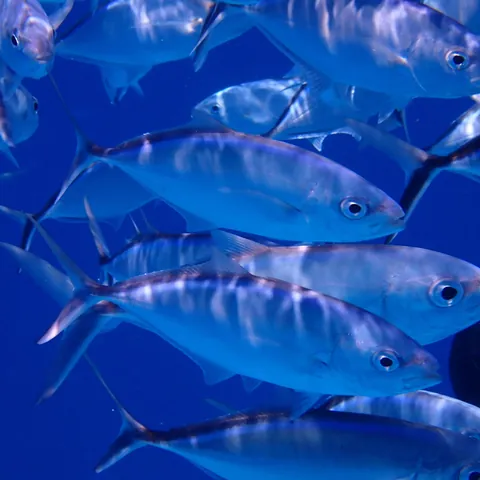
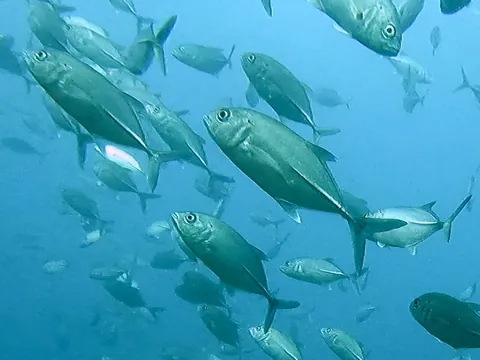
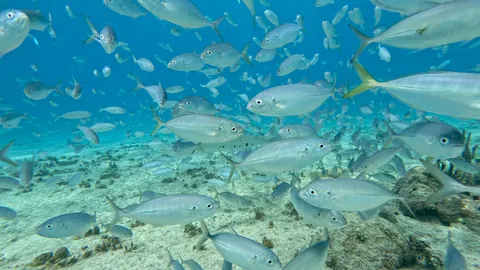
The crevalle jack is a powerful, deep-bodied hunter that patrols coastal waters and reefs in fast schools, chasing down smaller fish. It can reach 124 cm and weigh up to 32 kg, though most are far smaller.
Also known as: black-tailed trevally, blacktailed trevally, blue runner, cabali, cabalo, carangue, pacific crevalle jack, black-tailed trevally, horse-eye jack, yellow cavalli, crevalle jack, blue runner, yellow jack, kingfish, horse crevalle, jack, blacktailed trevally, crevelle jack, couvalli jack, common jack, horse mackerel, green jack, king fish, crevalle, trevally, crevalle jack, green jack, atlantic crevalle jack, jack crevalle
It can look like other deep-bodied jacks sharing the same reefs. Check the pectoral fin: on this species it is long and sickle-shaped, clearly longer than the head, a proportion that is shorter on many similar jacks.
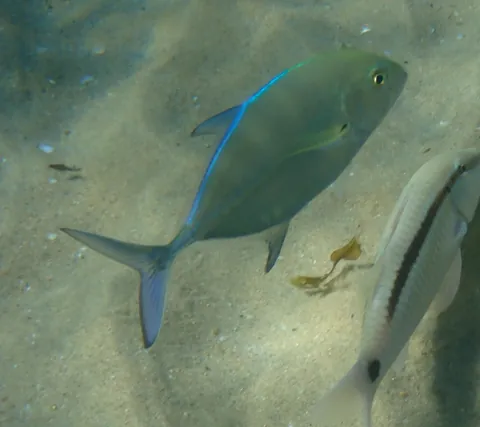
This fish has a deep, moderately flattened body, with its back curving more steeply than its belly, especially near the head. The tail is strongly forked, and the pectoral fins are long and curved, sweeping well back along the body. A raised ridge of strong scutes runs along the straight rear part of the lateral line, the sensory line along its side.
It lives in the tropical and warm temperate Atlantic, along both the Americas and the coasts of West Africa and Europe, including much of the Mediterranean. It ranges from shallow water down to 350 m, though it is usually found between 1 and 200 m.
For most of its life this fish travels in fast-moving schools, though larger individuals often become solitary and move to deeper offshore reefs. It is more active by day than at night. Some populations migrate seasonally, and fish that linger too long in cold temperate water in winter risk dying from the cold.
It is a strong predator that feeds mainly on small fish throughout its life, adding shrimp, crabs, and molluscs as secondary prey. Young fish take mostly small fish and crustaceans, while larger adults become more opportunistic, taking more invertebrates and occasionally seagrass.
This fish is known to grunt or croak when caught and pulled out of the water.
Describe what you saw and we name it, then keep every species you find in your Oceandex.