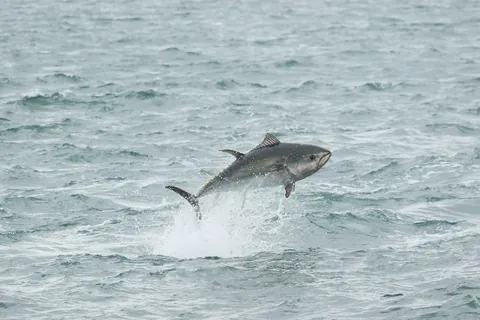
Atlantic Bluefin Tuna
Thunnus thynnus
Euthynnus lineatus
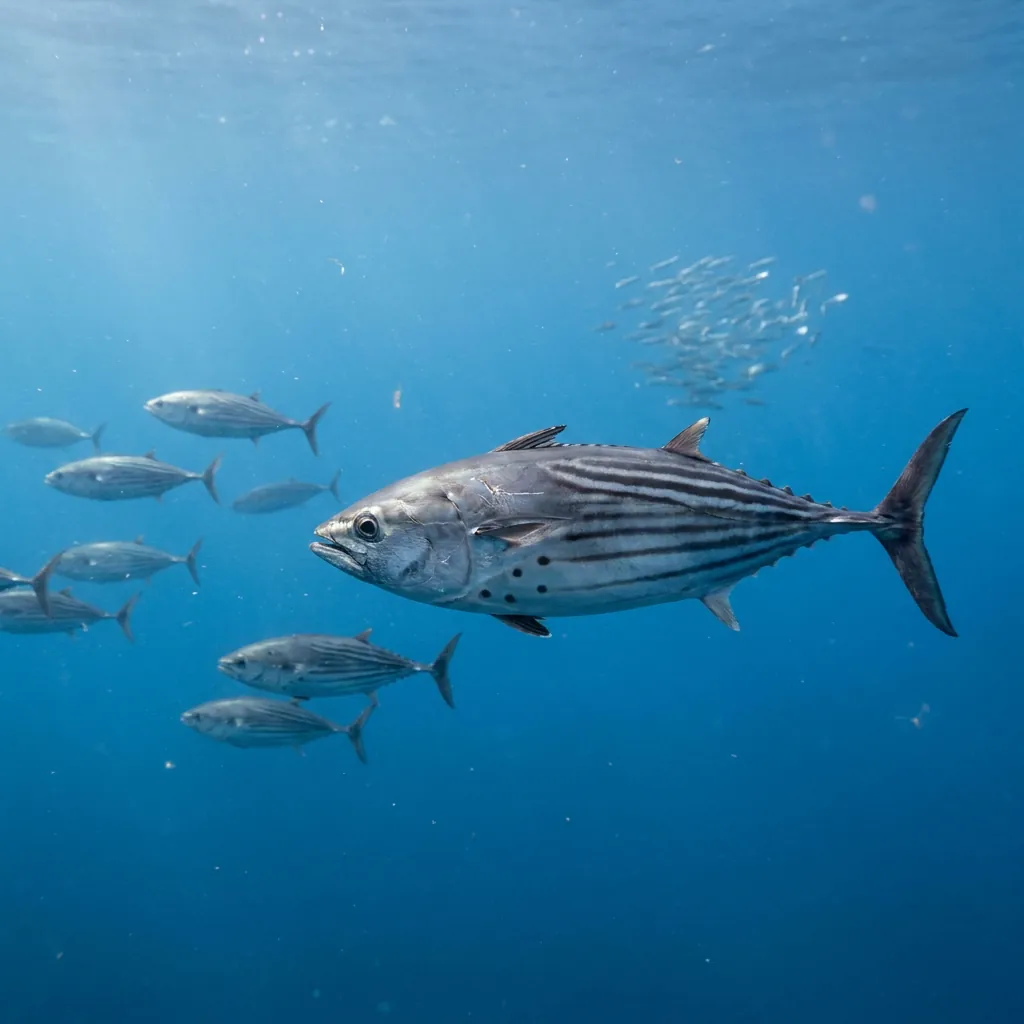
The black skipjack is a fast, warm-water tuna of the eastern tropical Pacific, often seen mixed in with schools of other tuna species.
This species looks much like other small tunas sharing its range, such as the kawakawa. Its back stripes can fade after death, but the dark spots above the pelvic fins stay visible and are the most reliable mark to check.
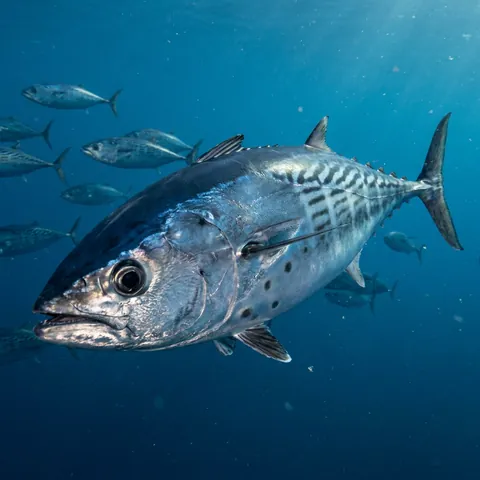
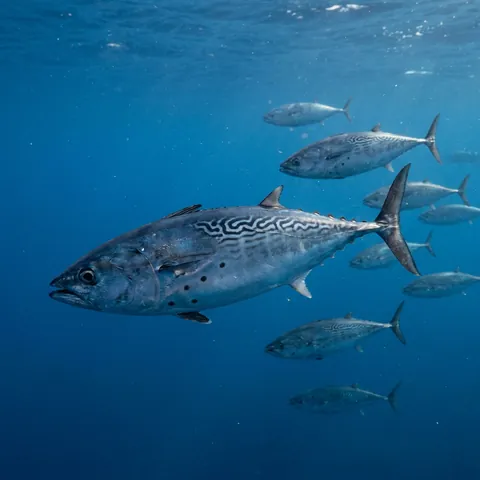
Its body is iridescent blue, marked on the back with 3 to 5 dark horizontal stripes, and it carries a scattering of black or dark grey spots above the pelvic fins. Some fish also show pale grey stripes running along the belly, though this varies between individuals. The skin is mostly scaleless, apart from the lateral line, the faint sensory stripe along its side, and a patch of larger scales behind the head.
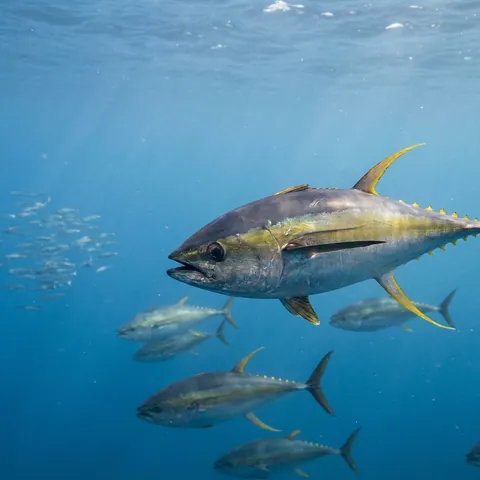
This is an open-water species that stays close to the surface and avoids water cooler than 23°C. It swims in mixed schools alongside yellowfin and skipjack tuna, hunting opportunistically for the same prey as other tuna, dolphins, and large predatory fish. Like other tuna, it must keep swimming constantly to force water over its gills and breathe.
This is the only member of its 'little tuna' group found in the eastern Pacific. Its closest relatives, the little tunny and the kawakawa, live in the Atlantic and the Indo-Pacific instead, so the three species never actually share the same water.
Describe what you saw and we name it, then keep every species you find in your Oceandex.