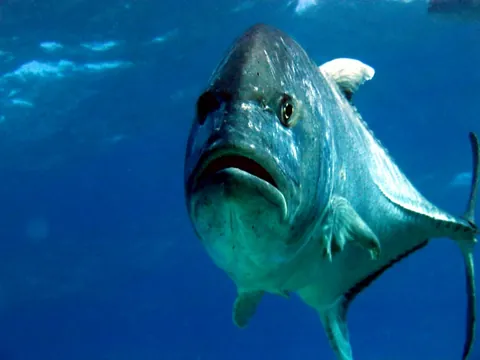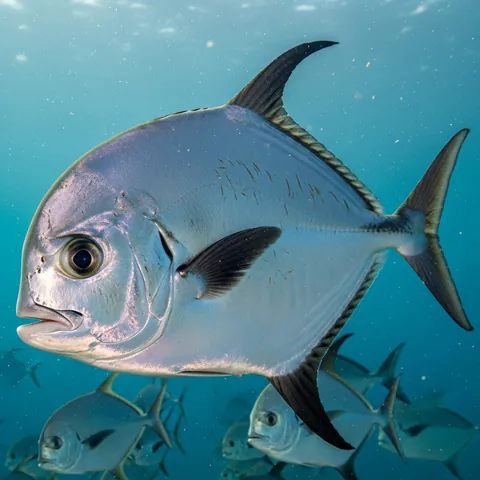
Alexandria pompano
Alectis alexandrina
Caranx ruber
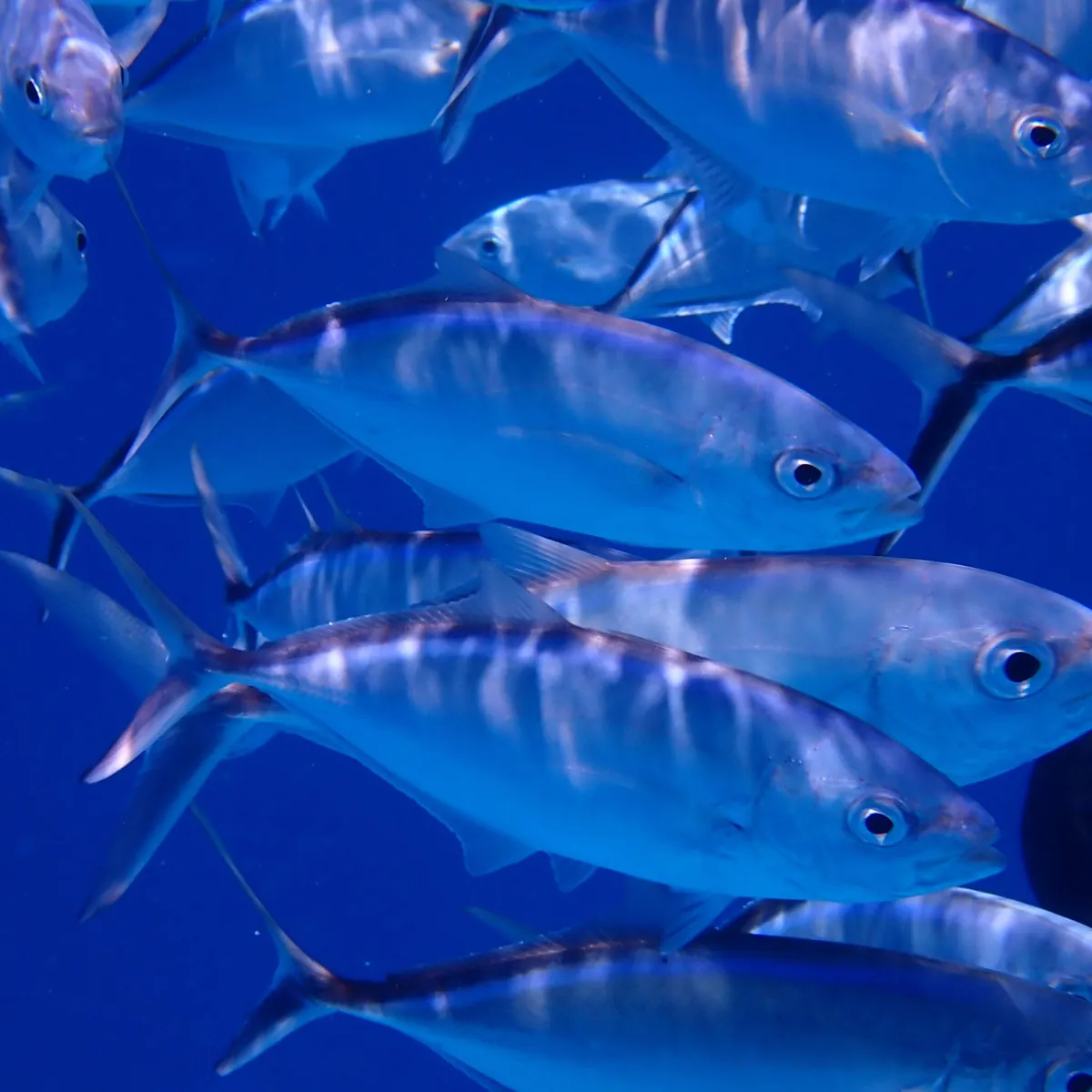
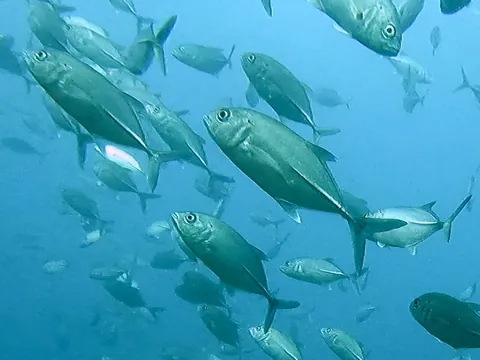
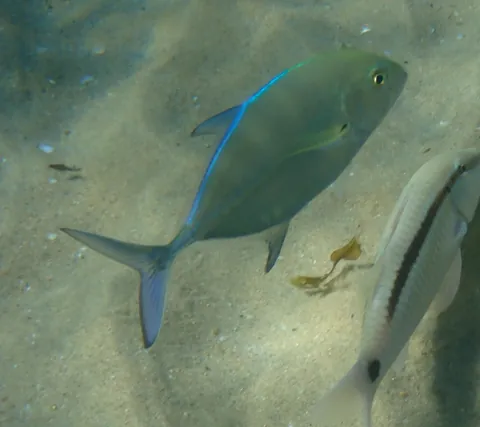
The bar jack is a sleek, fast-moving predator often seen patrolling reef edges in small groups. Its dark back stripe and flash of electric blue make it one of the easier jacks to spot on a Caribbean dive.
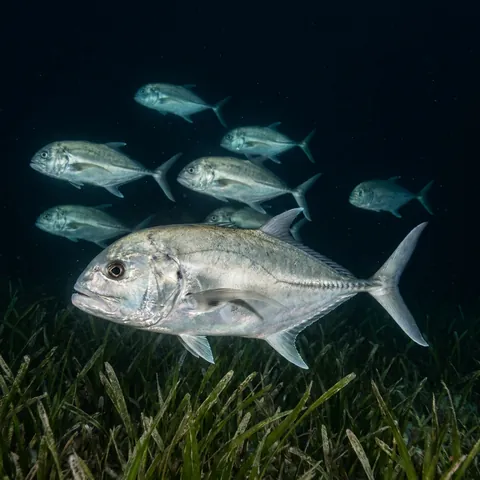
It closely resembles the crevalle jack. The clearest difference is the chest: the bar jack's chest is fully covered in scales, while the crevalle jack's chest is only partly scaled.
It has the typical jack shape: an elongated, moderately deep body, flattened from side to side, with a pointed snout. The upper body is grey to greyish blue with a silvery sheen, fading to a white belly. A dark golden-brown to blackish stripe runs along its back and continues into the lower half of the tail fin, often with a bright electric-blue line running just beneath it. Its other fins are pale and mostly clear.
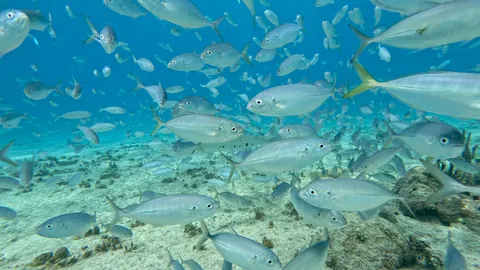
It lives in clear, shallow water around coral reefs across the tropical and subtropical western Atlantic, from the southeastern United States down through the Caribbean and the Gulf of Mexico. It moves often between reef patches over open sand, and frequently crosses into sandy lagoons to feed. Young fish shelter among floating mats of sargassum weed and around docks and pilings.
It is highly mobile, rarely staying at one reef for long, and often forms loose shoals alongside barracudas, stingrays, and sharks. It is preyed on by larger jacks, dolphinfish, mackerel, marlin, and seabirds. It has also been seen following other reef fish, such as wrasses, to snap up prey stirred up during their foraging.
It hunts both in open water and along the seafloor, feeding mostly on small fish such as blennies, gobies, wrasses, and butterflyfish, along with some crustaceans and small squid. Young fish rely more on tiny planktonic prey before shifting to a fish-based diet as they grow. Eating reef fish carrying coral toxins can make its flesh unsafe to eat.
It spawns twice a year, gathering in large schools with pairs breaking away to release and fertilise eggs in open water. Spawning runs from spring into summer, with the eggs and larvae drifting in ocean currents before the young settle near reefs. Young bar jacks often shelter among sargassum weed until they mature and move into deeper water.
Describe what you saw and we name it, then keep every species you find in your Oceandex.