Angel sharks
angel_shark
Squatina australis
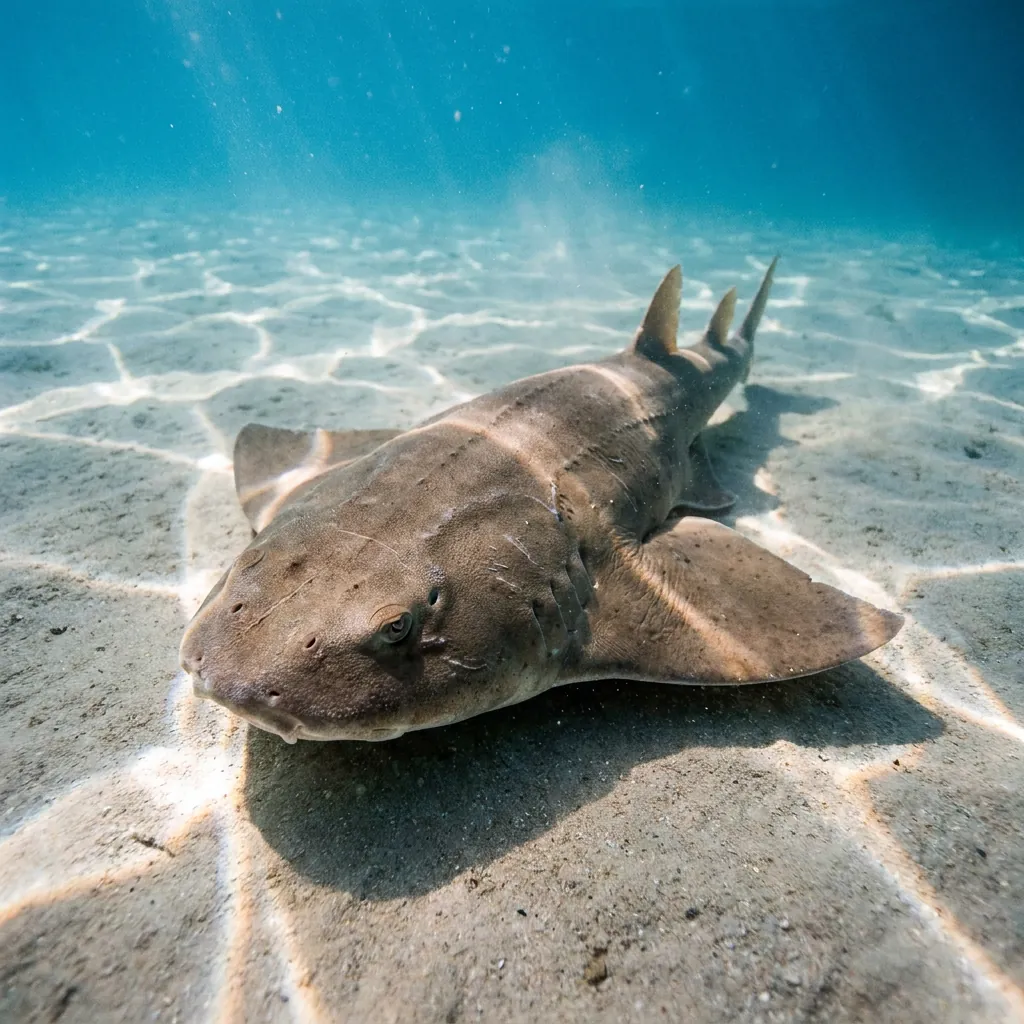
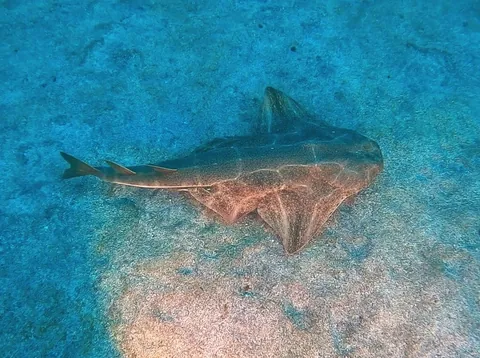
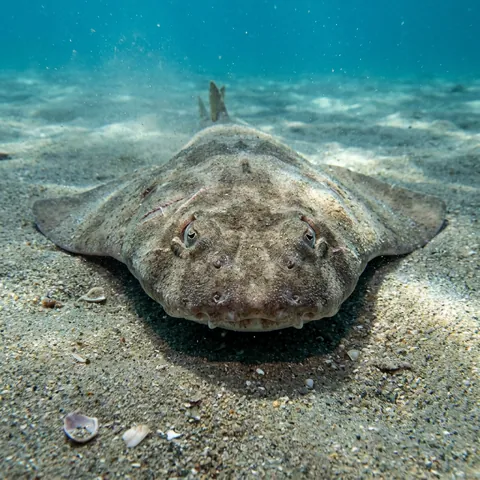
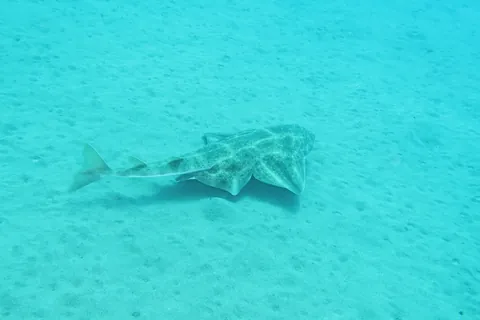
The Australian angelshark spends its days buried in the seabed, flat as a ray, waiting for a meal to swim past. It grows up to 152 cm long and is common but rarely seen.
Also known as: angel shark, angel-shark, australian angle shark [sic], australian angleshark [sic], monk-fish, monkfish, angelshark
Angelsharks can look alike, and some relatives carry large eyespots on the body. This species has none - a plain back and dark spots only on the lower tail lobe confirm it.
This shark has a broad, flat body and large, triangular pectoral fins that spread out like wings, with loose flaps at their edges. Fringed barbels sit beside the nostrils, and a pair of spiracles (breathing openings) lie just behind the eyes. Two small dorsal fins sit far back near the short tail, which carries dark spots along its lower edge. It has no large eyespots anywhere on its body.
It lives on the continental shelf off southern Australia, from close inshore down to over 200 m. It rests on sandy or muddy seabeds and in seagrass meadows, often near rocky reefs.
By day it lies half-buried in the sand, snapping up anything that comes within reach. At night it becomes more active and hunts small fish, crustaceans, and other invertebrates in the open.
The Australian angelshark is listed as least concern, with a large, stable population. It is caught and sold as food, often under the name monkfish, though its habit of lying buried makes it hard to catch except by trawl.
Describe what you saw and we name it, then keep every species you find in your Oceandex.