Angel sharks
angel_shark
Squatina squatina
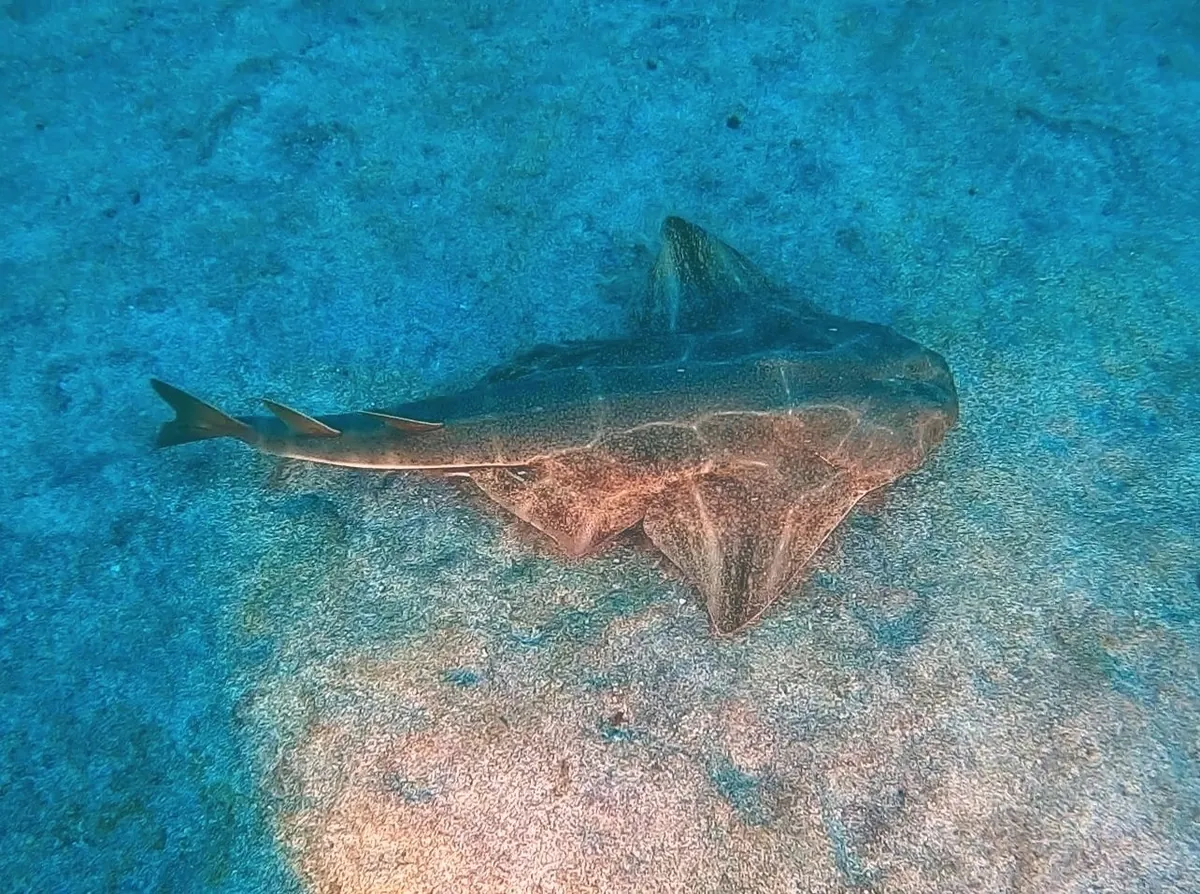
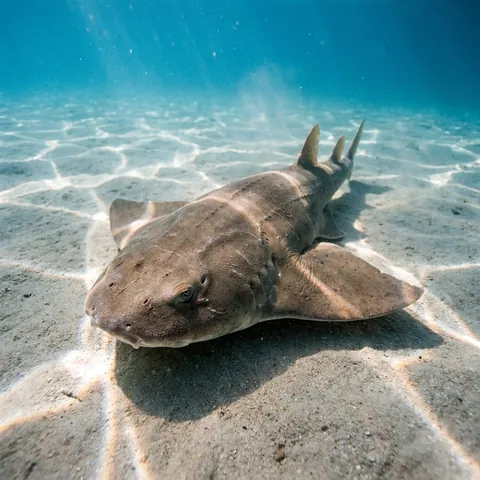
The angelshark is a large, flat-bodied shark that spends most of its life resting on the seabed. It grows to about 150 cm on average, sometimes reaching 183 cm, and lives across the northeastern Atlantic and Mediterranean.
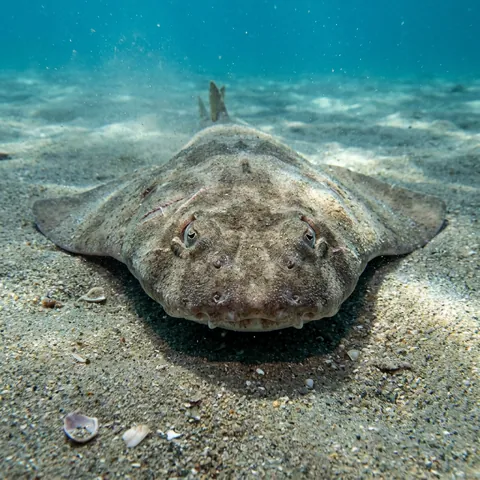
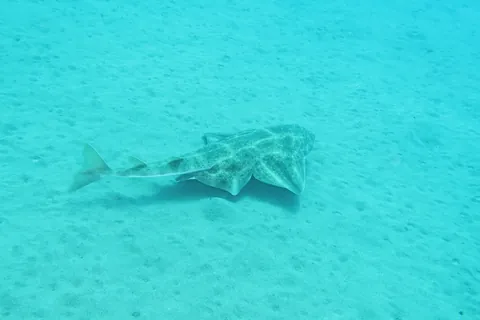
Its flat shape looks like a ray at first glance, but check the fins: an angelshark's pectoral fins are separate from its head, and it has two dorsal fins on a stout, shark-like tail.
This shark has a broad, flattened body and large, wing-like pectoral fins, giving it a ray-like outline. Its head is wide and stocky, with small eyes on top followed by a pair of larger openings just behind them, and short barbels in front of the nostrils. Colour ranges from grey to reddish or greenish-brown on top, dotted with small black and white spots, with a white underside; young sharks show a more patterned mix of pale lines and dark blotches. The tail carries two dorsal fins and a bigger lower lobe than upper, and the skin is covered in small, pointed denticles.
The angelshark lives on the seafloor of the northeastern Atlantic and the Mediterranean, favouring soft sand or mud on the continental shelf. It is usually found from close to shore down to about 150 metres, and sometimes enters brackish water near river mouths.
By day, this shark lies still on the seabed, buried under a layer of sediment with only its eyes showing. At night it becomes more active and may swim just above the bottom. It hunts by ambush, waiting for prey to come close, and may stay at a good ambush spot for several days.
The angelshark is critically endangered. Once common along the coasts of Western Europe, it has been heavily depleted by bottom trawls, trammel nets, and longlines, which catch it easily because it lives on shallow seafloor. Its slow reproduction makes it hard for numbers to recover, and it is now believed extinct in the North Sea and much of the northern Mediterranean.
In this shark, the right ovary and uterus hold more eggs and embryos than the left, a lopsided setup not found in any other angelshark species.
Describe what you saw and we name it, then keep every species you find in your Oceandex.