Angelshark
Squatina squatina
angel_shark
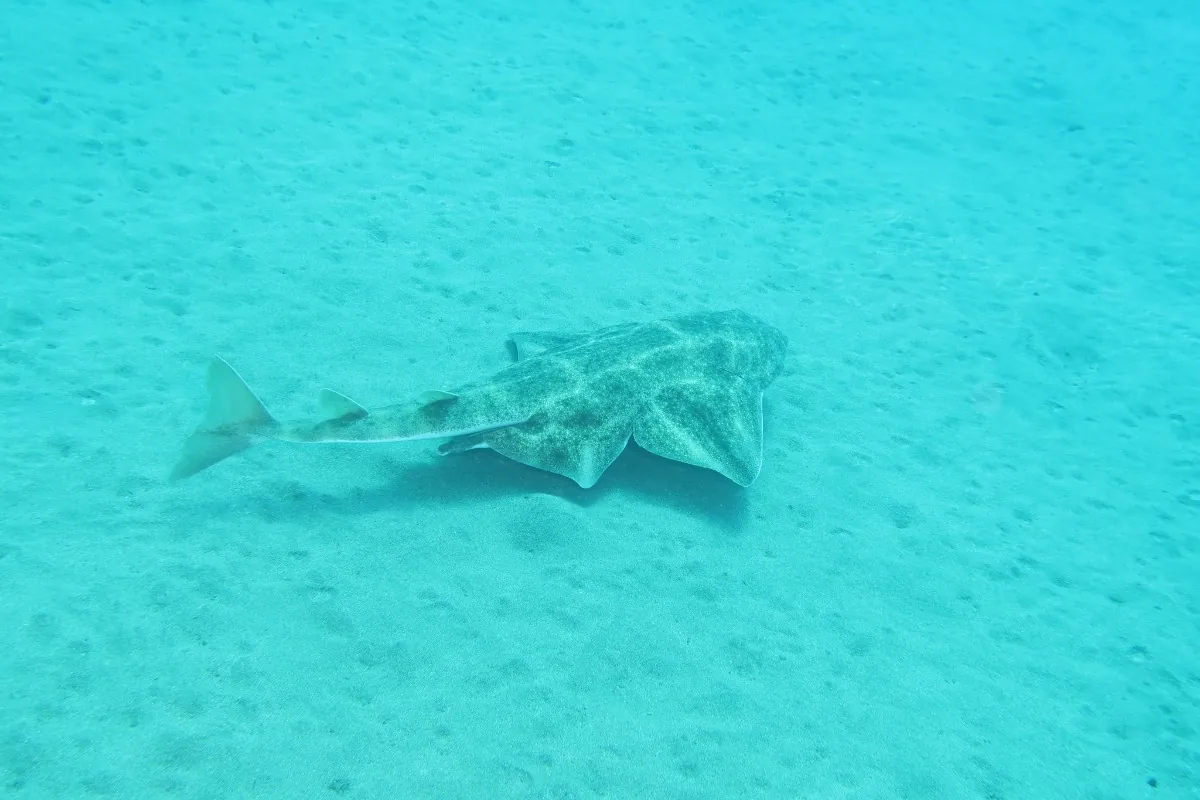
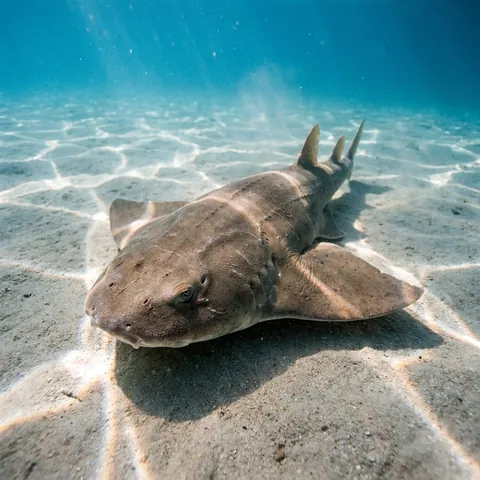
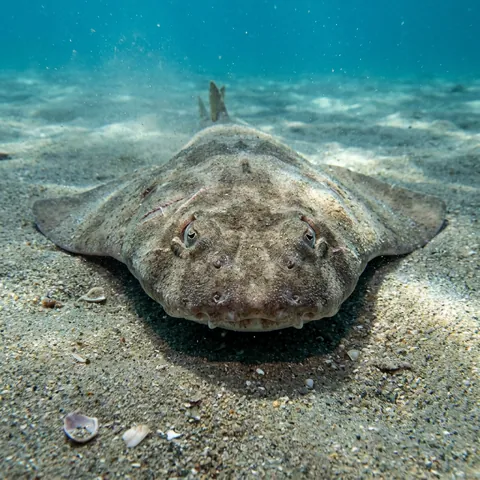
Angel sharks are flat, well-camouflaged sharks that lie hidden on the seabed. In this app the group includes the Australian Angelshark, the Pacific Angelshark, and the Angelshark.
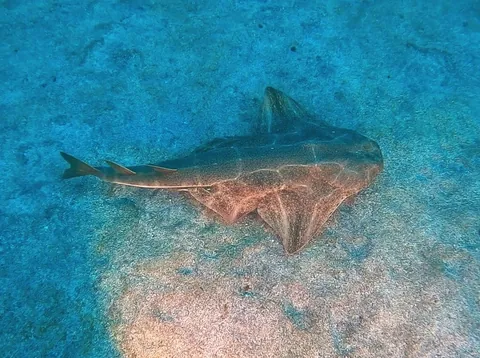
A flat, ray-like body with a shark's tail sets angel sharks apart from true rays, which have gill slits underneath rather than on top. Species in this group can be hard to tell apart by eye and often need a close look at colour and pattern.
The front half of an angel shark's body is broad and flat, while the back half looks more like a normal shark. The eyes sit on top of the head, and the five gill slits are also on the upper side of the body. The pectoral and pelvic fins are large and spread out flat like wings. There are two fins on the back and no fin under the tail. Most angel sharks grow to about 1.5 metres, though the Japanese angel shark can reach 2 metres.
Angel sharks live in shallow coastal waters, usually from about 3 to 100 metres deep, in warm and mild seas. During the day they bury themselves in sand or mud and stay hidden for long spells. At night they become more active and cruise along the seabed.
Angel sharks spend most of the day buried and still, then become active hunters at night. They breathe in an unusual way for a bottom-dwelling shark, pumping water out through flaps under the body instead of through the mouth, which helps them stay hidden. Though they seem harmless, an angel shark can bite hard if a diver comes too close to its head or grabs its tail.
Angel sharks eat fish, crustaceans, and cephalopods such as squid, ambushing prey from their hiding spot in the sand.
harmless if not disturbed — may bite if stepped on or handled
An angel shark can lie buried and hidden in the sand for weeks, waiting for prey to swim past, and it breathes through flaps under its body instead of through its mouth to avoid giving itself away.
Describe what you saw and we name it, then keep every species you find in your Oceandex.